
Sai Baba Devotion: Rozmarra Ki Bhakti Aur Shirdi Ki Shanti
April 19, 2026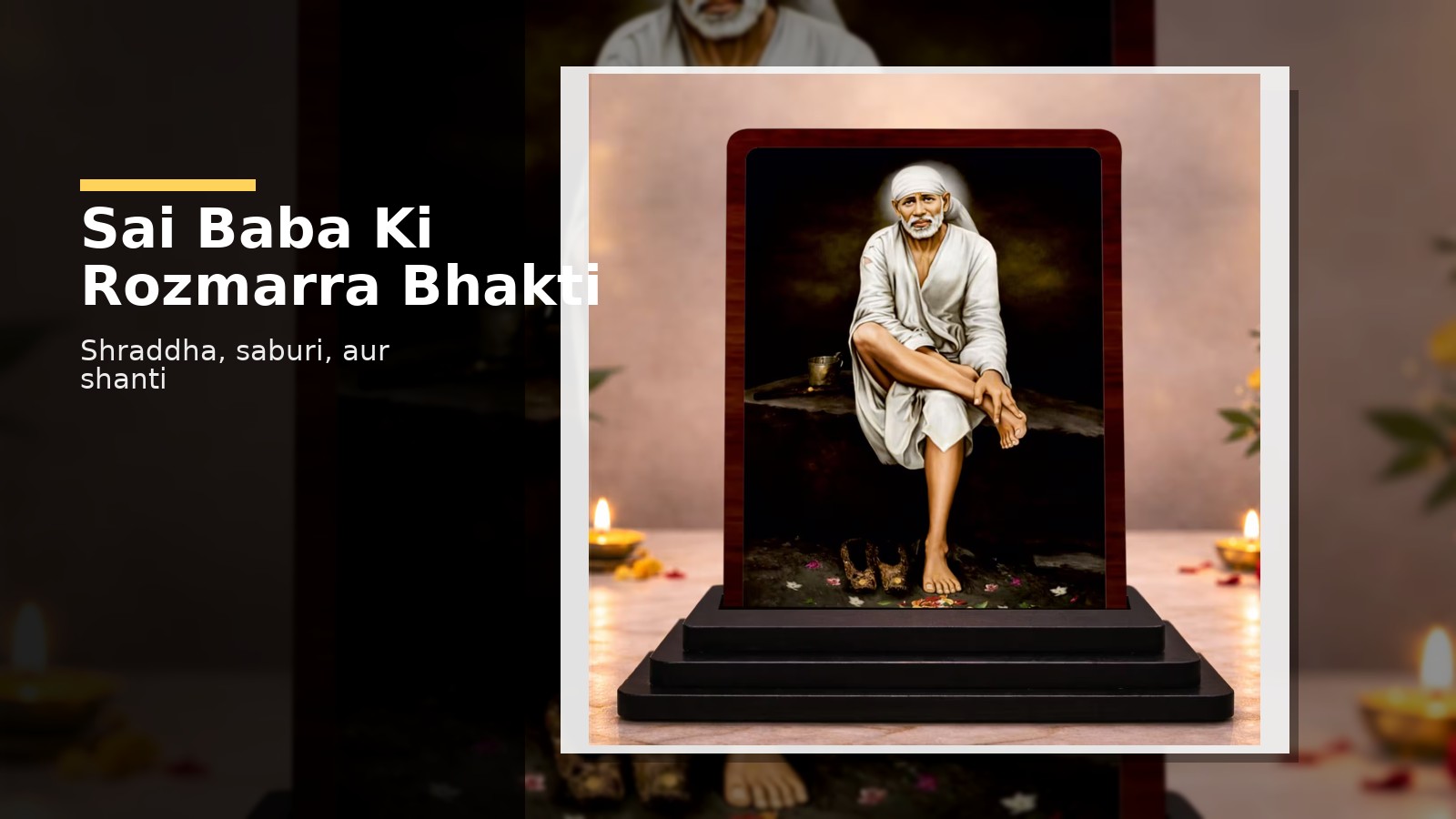
English Version
In many homes, sai baba devotion does not arrive with loud bells or grand arrangements. It sits quietly on a shelf, in a small prayer corner, in a lamp lit at dawn, and in the gentle habit of saying “Sai” before the day begins. That is the beauty of Sai Baba’s bhakti. It is simple, tender, and deeply human.
For many devotees, Sai Baba is not only a saint of Shirdi. He is a daily companion in moments of worry, gratitude, and hope. His remembrance enters ordinary life through small rituals—one flower, one diya, one prayer, one moment of silence. And yet, these small acts carry large meaning. They remind us that faith does not always need grandeur; sometimes, it only needs sincerity.
Who Was Sai Baba of Shirdi?
Sai Baba of Shirdi is remembered as a saint whose life and teachings continue to inspire people across backgrounds and generations. He lived in Shirdi, taught through example, and encouraged devotees to trust in God, remain patient, and keep faith steady even when life feels uncertain.
What makes Sai Baba’s path so beloved is that it feels close to everyday life. He spoke to rich and poor alike, welcomed people from different communities, and emphasized love, humility, and service. His message was never complicated. He showed that devotion lives in the heart, not only in ceremony.
Sai Baba Devotion and the Meaning of Small Rituals
Many people think devotion has to be grand to be real. But Sai Baba’s bhakti teaches the opposite. A simple morning prayer, a clean altar, a quiet chant, or a mindful offering can become a powerful spiritual rhythm. In a busy household, these little moments create a sense of calm.
This is where sai baba devotion feels especially comforting. It reminds devotees that the divine can be welcomed into the smallest corners of life. Even if someone has only a little time before work, school, or household duties, a short prayer to Sai Baba can ground the heart.
Common daily practices in Sai Baba bhakti
- Lighting a diya in the morning or evening
- Offering water, flowers, or a simple prasad
- Reciting Sai Baba’s naam or a short aarti
- Reading a few lines from devotional texts or stories
- Sitting quietly for a minute with gratitude and faith
These practices may look small, but they often help devotees feel centered. They bring a soft discipline to the day and create a sacred pause amid noise and responsibility.
Why Shraddha and Saburi Matter So Much
If one phrase is most closely associated with Sai Baba, it is the deep pairing of shraddha and saburi—faith and patience. These two words capture the heart of his teaching. Sai Baba devotion is not about demanding instant answers from life. It is about trusting the journey, staying rooted in prayer, and allowing time to do its quiet work.
For a devotee, shraddha means heartfelt trust. Saburi means endurance with grace. Together, they help a person walk through uncertainty without losing hope. In family life, in work struggles, in health concerns, and in personal losses, this teaching has offered comfort for decades.
That is why many households keep Sai Baba near their prayer space: not only for worship, but also as a reminder of inner steadiness.
Shirdi and the Living Tradition of Devotion
Shirdi remains the most sacred name associated with Sai Baba. Devotees visit the shrine there with longing, prayer, and gratitude. The atmosphere in Shirdi is known for its collective devotion—families, elders, children, and first-time visitors all gathered in the same spiritual current.
Shirdi is not only a place on a map. For devotees, it represents a living tradition of remembrance. People return from there with prasad, blessings, and stories of peace. Even those who cannot travel often create a little “Shirdi” at home through prayer, a photo, a lamp, and a daily offering.
Symbols and Spiritual Meaning in Sai Baba Worship
In Sai Baba worship, the most powerful symbol is often simplicity itself. A humble presence, a peaceful face, and the feeling of protection are central to how devotees connect with him. Many keep his image in prayer rooms, workplaces, or travel bags because it becomes a quiet source of reassurance.
Some common devotional symbols and meanings include:
- Diya — light, guidance, and hope
- Flowers — surrender, purity, and love
- Prasad — gratitude and sharing
- Prayer corner — a sacred pause in daily life
- Sai’s image — remembrance, protection, and trust
These symbols are not decorations alone. They help shape a devotional mood, making the home feel gentle and spiritually alive.
Famous Places of Worship and Devotional Touchpoints
When people speak about Sai Baba devotion, Shirdi naturally comes first. The main temple there is the heart of devotion for millions. But Sai Baba’s presence is also felt in countless smaller temples, prayer halls, community gatherings, and home altars across India and the world.
Many devotees also follow regular aarti timings, listen to bhajans, or keep a practice of reading Sai Satcharitra. These devotional touchpoints help the faith stay active, not only ceremonial. They turn remembrance into a living habit.
How Sai Baba Enters Everyday Family Life
One of the most touching things about Sai Baba bhakti is how naturally it enters family life. A grandmother may begin the day with his name. A mother may light a lamp before school hours. A father may quietly seek strength before work. A child may learn devotion by watching these simple acts.
In this way, Sai Baba devotion is passed down not just through books, but through lived example. It becomes a family rhythm. It teaches children that prayer is not separate from life—it is woven into the day like a thread of calm.
Many homes also keep a small Sai Baba image in the prayer space or on a desk, especially where space is limited. A compact spiritual image can serve as a gentle visual reminder to pause, breathe, and return to faith during the day.
Why Devotees Keep Returning to Sai Baba’s Teaching
People return to Sai Baba again and again because his message remains timeless. He did not promise an easy life. Instead, he offered a way to live it with dignity, patience, and devotion. In that sense, his teachings are deeply practical.
When a person feels restless, Sai Baba devotion teaches calm. When a person is afraid, it teaches trust. When the heart feels scattered, it teaches focus. And when life feels delayed, it teaches saburi.
This is why Sai Baba remains so beloved in ordinary homes. His presence feels close to the human heart.
FAQ: Sai Baba Devotion
What is the main teaching in Sai Baba devotion?
The central teaching is shraddha and saburi—faith and patience. Devotees are encouraged to trust God, stay humble, and remain steady through life’s ups and downs.
How do people practice daily Sai Baba bhakti at home?
Most people keep a small prayer space, light a diya, offer flowers or prasad, say Sai Baba’s name, and spend a few quiet moments in prayer or gratitude.
Why is Shirdi so important for Sai Baba devotees?
Shirdi is the sacred place where Sai Baba lived and taught. It remains the most important pilgrimage site connected to his life and blessings.
Can Sai Baba devotion be simple?
Yes. Sai Baba’s message is deeply rooted in simplicity. Even a short prayer, a sincere thought, or a small daily ritual can become meaningful bhakti.
What is a gentle way to keep Sai Baba remembrance in a small home?
A tidy prayer corner, a framed image, a diya, and a quiet daily prayer are enough for many devotees. A compact devotional piece can also bring a peaceful atmosphere to small spaces.
A Quiet Ending, A Living Prayer
Sai Baba devotion teaches that faith does not always need noise. Sometimes it is the softest habits that carry the deepest power. A lamp lit at dawn, a whispered prayer before sleep, a patient heart in difficult times—these are the moments where devotion becomes real.
For devotees who wish to keep that peaceful presence visible at home or at work, a small sacred image can be a lovely companion. You may Explore the related product on our store. It is a compact devotional piece that fits beautifully into prayer corners, desks, and small home mandirs.
Hindi Version
Bahut se gharon mein sai baba devotion shor-sharabe ke saath nahi aati. Yeh dheere se shelf par, chhote prayer corner mein, subah jalaye gaye diye mein, aur din shuru karne se pehle “Sai” kehne ki aadat mein bas jaati hai. Sai Baba ki bhakti ki yahi khoobi hai—simple, narm aur dil ko chhoo lene wali.
Kaafi bhakton ke liye Sai Baba sirf Shirdi ke sant nahi hain. Woh rozmarra ki fikr, shukr aur umeed mein saath chalne wale saathi hain. Unka smaran chhote rituals ke through aata hai—ek phool, ek diya, ek prarthana, ek pal ka maun. Aur in chhoti cheezon mein bhi gehra arth chhupa hota hai. Yeh yaad dilata hai ki bhakti ko hamesha bade aayojan ki zarurat nahi hoti; kabhi-kabhi sachchai hi kaafi hoti hai.
Sai Baba Kaun The?
Shirdi ke Sai Baba ko ek aise sant ke roop mein yaad kiya jata hai jinki zindagi aur shiksha aaj bhi logon ko prerit karti hai. Woh Shirdi mein rahe, apne aacharan se seekh di, aur bhakton ko yeh samjhaya ki Ishwar par bharosa rakho, sabr rakho, aur jab zindagi anishchit lage tab bhi aasha ko mat chhodo.
Unki bhakti isliye bhi itni priya hai kyunki yeh roz ki zindagi ke bahut kareeb lagti hai. Unhone ameer-gareeb sabko apnaya, alag-alag samudayon ke logon ko seva aur prem ka sandesh diya. Unki baat kabhi jatil nahi thi—unhone dikhaya ki bhakti sirf pooja-vidhi mein nahi, dil mein hoti hai.
Sai Baba Devotion Aur Chhote Rituals Ka Arth
Bahut log samajhte hain ki bhakti tabhi sach hoti hai jab woh bahut badi ho. Lekin Sai Baba ki bhakti iske ulta sikhati hai. Subah ki ek chhoti prarthana, saaf mandir-kona, dheere se ki gayi aarti, ya shanti ke saath ki gayi arpan—yeh sab ek gehra spiritual rhythm bana dete hain. Busy ghar mein yeh chhote pal mann ko sambhalte hain.
Yahin par sai baba devotion sabse zyada comforting lagti hai. Yeh yaad dilati hai ki divya shakti ghar ke sabse chhote kone mein bhi aamantrit ki ja sakti hai. Chahe kisi ke paas office, school ya ghar ke kaam se pehle sirf kuch minute hi hon, Sai Baba ko ki gayi chhoti si prarthana bhi dil ko sthir kar sakti hai.
Ghar mein Sai Baba bhakti ke aam niyam
- Subah ya shaam diya jalana
- Phool, jal, ya halka sa prasad chadhana
- Sai Baba ka naam lena ya chhoti aarti karna
- Kuch panktiyan bhajan ya katha ki padhna
- Ek minute shukr aur vishwas ke saath baithna
Yeh sab chhota lag sakta hai, par inhi se din mein ek sacred pause banta hai. Mann thoda shaant hota hai aur ghar mein spiritual warmth mehsoos hoti hai.
Shraddha Aur Saburi Itni Mahatvapurn Kyun Hain?
Sai Baba se sabse zyada judi hui baat hai shraddha aur saburi—vishwas aur sabr. Yeh do shabd unki shiksha ka dil hain. Sai Baba devotion yeh nahi kehti ki zindagi se turant jawab maang lo. Yeh sikhati hai ki safar par bharosa rakho, prarthana mein sthir raho, aur waqt ko apna kaam karne do.
Bhakt ke liye shraddha ka matlab hai dil se bharosa. Saburi ka matlab hai grace ke saath jhelna aur tikna. Dono milkar insaan ko mushkil waqt mein bhi himmat dete hain. Parivarik zindagi, kaam ke dabav, sehat ki chinta aur personal dukh—in sab mein yeh shiksha bahut saal se sahara bani hui hai.
Isliye bahut se gharon mein Sai Baba ko pooja-sthal mein isliye rakha jata hai ki woh sirf pooja ka hissa nahi, balki andar ki sthirata ki yaad bhi hain.
Shirdi Aur Bhakti Ki Jeevit Parampara
Shirdi ka naam aate hi Sai Baba ki bhakti ka sabse pavitra roop yaad aata hai. Wahan ka darshan bhakton ke liye aastha, prarthana aur krutagyata ka anubhav hota hai. Shirdi ka vatavaran samuhik bhakti ke liye mashhoor hai—parivar, buzurg, bachche aur pehli baar aane wale log sab ek hi spiritual pravah mein hote hain.
Shirdi sirf ek jagah nahi. Bhakton ke liye yeh yaad aur shanti ki jeevit parampara hai. Log wahan se prasad, aashirvad aur sukoon ki kahaniyan lekar laut-te hain. Jo log safar nahi kar pate, woh bhi ghar par photo, diya aur daily prayer ke through apni chhoti si Shirdi bana lete hain.
Sai Baba Pooja Mein Chinh Aur Arth
Sai Baba worship mein sabse bada chinh aksar saadhgi hi hoti hai. Unka humble swaroop, shaant chehra, aur protection ka ehsaas bhakton ke connection ka hissa hain. Bahut log unki tasveer prayer room, office desk, ya safar bag mein rakhte hain kyunki woh ek narm reassurance ban jaati hai.
Kuch aam devotional chinh aur unka arth:
- Diya — roshni, disha aur aasha
- Phool — samarpan, pavitrata aur prem
- Prasad — krutagyata aur saanjha karna
- Prayer corner — rozmarra zindagi mein pavitra viram
- Sai ki image — smaran, raksha aur vishwas
Yeh cheezein sirf sajawat nahi hoti. Inse ghar ka mahaul narm, shaant aur spiritual ban jata hai.
Shirdi Se Jude Famous Devotional Touchpoints
Sai Baba devotion ki baat hoti hai to Shirdi sabse pehle aata hai. Wahan ka main temple lakhon bhakton ke liye aastha ka kendr hai. Lekin Sai Baba ki upasthiti chhote temples, prayer halls, community gatherings aur home altars mein bhi mehsoos hoti hai.
Bahut se bhakt aarti timings follow karte hain, bhajan sunte hain, ya Sai Satcharitra padhne ki aadat banaye rakhte hain. Yeh sab bhakti ko zinda aur active rakhta hai. Sirf ritual nahi, ek jeevit aadat banata hai.
Kaise Sai Baba Parivarik Zindagi Mein Aate Hain
Sai Baba bhakti ki sabse pyari baat yeh hai ki woh family life mein kitni naturally aa jati hai. Dadi ya nani din ki shuruaat unke naam se kar sakti hain. Maa school se pehle diya jala sakti hai. Papa kaam par nikalne se pehle unse bal maang sakte hain. Bachcha inhi chhoti aadaton ko dekhkar bhakti seekhta hai.
Is tarah Sai Baba devotion sirf kitaabon se nahi, jeene ke tareeke se aage badhti hai. Yeh parivarik rhythm ban jaati hai. Bachchon ko sikhati hai ki prayer zindagi se alag nahi hoti—woh din ke saath bun jaati hai.
Bahut se gharon mein chhote prayer space ya desk par Sai Baba ki image rakhi jaati hai, khaaskar jab jagah kam ho. Ek compact spiritual image din bhar mein dhyaan, saans aur vishwas ki yaad dila sakti hai.
Bhakt Baar-Baar Sai Baba Ki Sharan Mein Kyun Aate Hain?
Log Sai Baba ke paas baar-baar isliye laut-te hain kyunki unka sandesh aaj bhi timeless lagta hai. Unhone aasaan zindagi ka vaada nahi kiya. Unhone zindagi ko maryada, sabr aur bhakti ke saath jeene ka raasta diya. Is sense mein unki teachings bahut practical hain.
Jab mann bechain ho, Sai Baba shanti sikhate hain. Jab darr ho, vishwas sikhate hain. Jab dhyaan bikhar jaye, focus sikhate hain. Aur jab zindagi delay kare, tab saburi sikhate hain.
Yahi wajah hai ki Sai Baba aam gharon mein itne priya hain. Unki upasthiti dil ke bahut kareeb lagti hai.
FAQ: Sai Baba Devotion
Sai Baba devotion ka mukhya sandesh kya hai?
Iska sabse bada sandesh shraddha aur saburi hai—vishwas aur sabr. Bhakton ko Ishwar par bharosa rakhne, namr rehne aur zindagi ke utar-chadhav mein sthir rehne ki salaah di jaati hai.
Ghar par daily Sai Baba bhakti kaise ki jaati hai?
Aksar log chhota prayer space rakhte hain, diya jalate hain, phool ya prasad chadhate hain, Sai Baba ka naam lete hain, aur kuch shaant pal prarthana ya gratitude mein bitate hain.
Shirdi Sai Baba bhakton ke liye itna mahatvapurn kyun hai?
Shirdi woh pavitra sthaan hai jahan Sai Baba rahe aur unhone shiksha di. Yeh unke jeevan aur aashirvaad se juda sabse mahatvapurn tirthsthan hai.
Kya Sai Baba devotion simple ho sakti hai?
Haan. Sai Baba ka sandesh saadhgi par adharit hai. Chhoti si prarthana, sachcha vichar, ya daily ritual bhi meaningful bhakti ban sakta hai.
Chhote ghar mein Sai Baba ki yaad ko kaise banaye rakha ja sakta hai?
Saaf prayer corner, framed image, diya aur roz ki shaant prarthana kaafi hoti hai. Ek compact devotional piece bhi chhoti jagah mein sukoon bhara mahaul bana sakta hai.
Ek Narm Ant, Ek Jeevit Prarthana
Sai Baba devotion humein sikhati hai ki bhakti hamesha shor mein nahi hoti. Kabhi-kabhi sabse gehri taqat chhoti aadaton mein hoti hai. Subah ka diya, raat ki dheemi prarthana, mushkil waqt mein patient dil—yahi woh pal hain jahan bhakti sach mein jeevit hoti hai.
Jo bhakt ghar ya office mein is shaant upasthiti ko visible rakhna chahte hain, unke liye ek chhoti sacred image bahut pyari saathi ban sakti hai. Aap Explore the related product on our store. kar sakte hain. Yeh ek compact devotional piece hai jo prayer corners, desks aur chhote home mandirs mein sundar lagta hai.