
Shiv Ji History: Why the World Needed Mahadev
April 12, 2026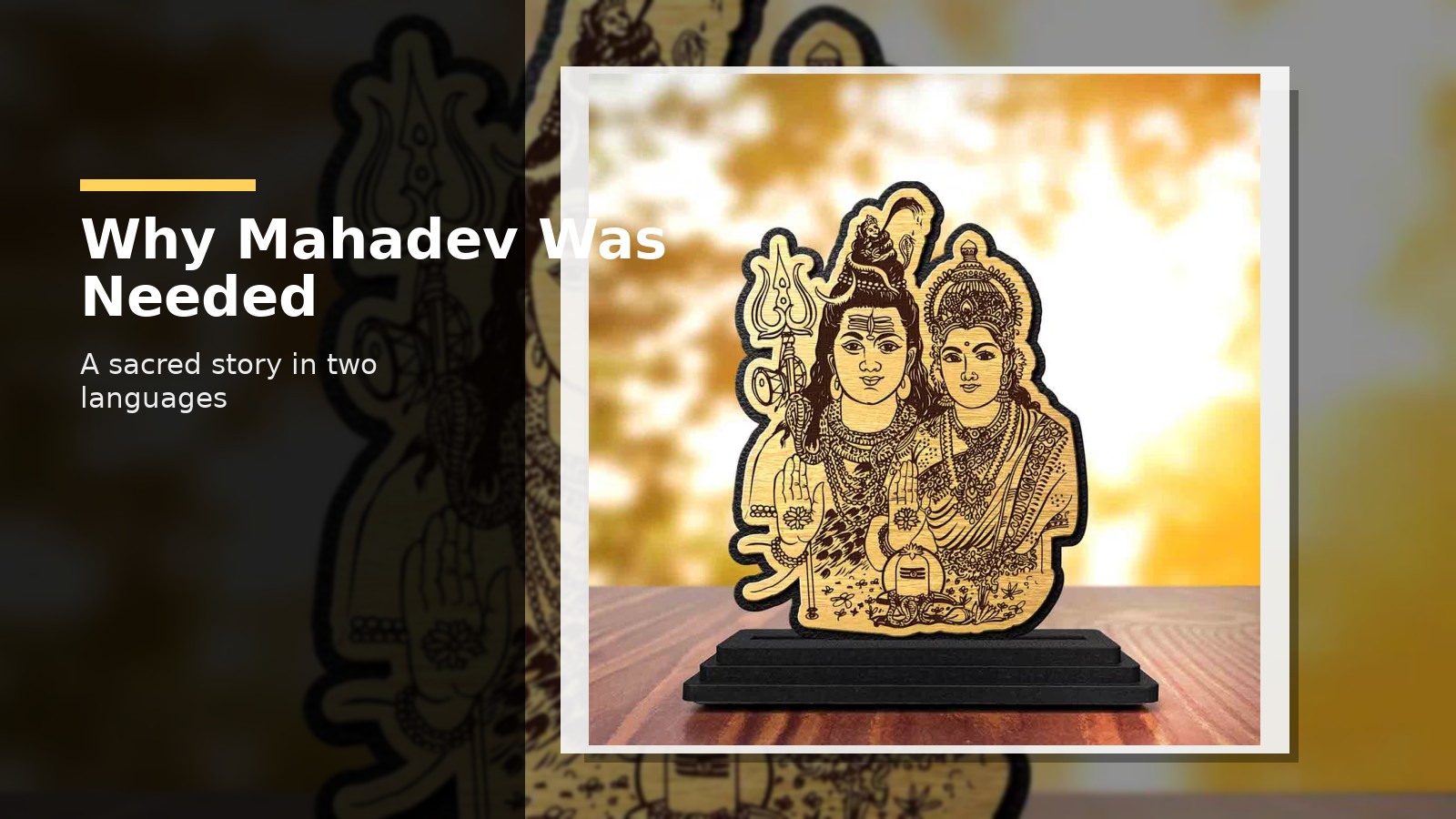
English Version
When people speak of shiv ji history, they are not only remembering a deity; they are remembering a presence that feels like stillness in the middle of chaos. In sacred memory, Shiv Ji is not introduced as someone who arrives to show power alone. He is remembered as Mahadev, the one who holds the world when it becomes too heavy, too restless, too full of conflict.
That is why the old stories around Shiv Ji do not feel distant. They feel like a soft bell in the heart. They ask a simple question: why did the world need Shiv Ji? And the answer, in the language of devotion, is beautiful. The world needed someone who could absorb pain without being broken, remain calm without being cold, and bless both the seeker and the troubled soul without judgment.
Who Is Shiv Ji in Sacred Memory?
Shiv Ji, also called Shiva, Mahadev, Bholenath, and Rudra in different forms of devotion, stands at the center of one of the most loved traditions in Hindu spirituality. He is part of the divine trinity, yet he often feels the most intimate to devotees because his form carries both gentleness and fierceness.
He is the ascetic in the Himalayas, the destroyer of illusion, the householder with Parvati, the loving father of Ganesha and Kartikeya, and the yogi who sits in deep meditation. In one form, he is silence. In another, he is the cosmic dance of creation and dissolution. This is what makes Shiv Ji history so moving: it is not a story of one single mood, but of many truths living together.
The Early Legends: Why the World Needed Mahadev
In the early legends, the world is often shown as a place of imbalance. There is creation, but also vanity. There is energy, but also restlessness. There is devotion, but also pride. In such a world, Shiv Ji is remembered as the one who restores inward balance.
One of the most beloved ideas in Shiv Ji history is that Mahadev listens even to the humblest devotee. He is called Bholenath because he is said to be simple in heart, easily pleased by true devotion. A leaf of bilva, a drop of water, a sincere chant of “Om Namah Shivaya” — these are enough when offered with love.
Another cherished legend tells how Shiv Ji drank the poison, halahala, that emerged during the churning of the ocean. This is more than a mythic episode; it is a spiritual image. It tells devotees that the divine does not stand far away from suffering. The divine absorbs what threatens the world. For many hearts, this is exactly why the world needed Shiv Ji: because every age needs someone who can hold poison and transform fear into protection.
Shiv Ji History and the Inner Meaning of His Form
To understand shiv ji history, it helps to look at the symbols around him. Each one carries a message that devotees have loved for generations.
- Trishul — often seen as the power to rise above the three gunas: sattva, rajas, and tamas.
- Damaru — the rhythm of creation, the pulse from which order and sound emerge.
- Third eye — insight that sees beyond appearances.
- Serpent — fear mastered, time embraced, ego conquered.
- Ganga in his hair — grace held gently, not violently.
- Shivling — for many devotees, the formless divine presence beyond narrow shape and limit.
These are not just sacred symbols. They are reminders for daily life. They tell the devotee to remain still when the world becomes loud, to stay humble when blessed, and to remember that strength is not always noisy.
The Family Story That Touches the Heart
Among the many reasons people return to Shiv Ji again and again is his family story. His bond with Parvati, the tenderness of his home, the love for Ganesha, and the protective grace around Kartikeya make him feel close to ordinary life. He is not only the cosmic yogi; he is also a father, husband, and beloved presence in the home of devotion.
This is why families often keep Shiv-Parvati images in prayer spaces. The story carries a gentle message: spiritual strength and household love can live together. Detachment does not mean coldness. Meditation does not mean distance from love. Shiv Ji history shows how divine life can include both stillness and affection.
Famous Temples and Living Devotion
Shiv Ji’s presence is felt not only in stories but in temples where bells, incense, and chanting create a living atmosphere of faith. Some of the most well-known Shiva temples and pilgrimage sites include:
- Kashi Vishwanath in Varanasi, one of the most revered Jyotirlingas.
- Kedarnath, high in the Himalayas, where devotion meets mountain silence.
- Somanath, remembered for resilience and sacred history.
- Rameshwaram, deeply significant in the wider devotional landscape.
- Mahakaleshwar in Ujjain, known for its powerful midnight worship traditions.
Visiting a Shiv temple often feels different from simply reading about one. The air itself seems to slow down. Devotees light lamps, offer water and milk, and chant with a faith that is older than memory. This is where legend becomes lived experience.
Festival Significance: When Devotion Rises in One Voice
One of the most important celebrations connected with Shiv Ji history is Maha Shivratri. On this night, devotees fast, pray, chant, and keep vigil with devotion. The festival is not only about ritual; it is about remembrance. It invites the heart to stay awake to the divine.
Many devotees also observe special Mondays, or Somvar vrat, with Shiva prayers. Across regions, these observances may look different, but the feeling is the same: surrender, trust, and gratitude. In homes and temples, the chant of “Har Har Mahadev” becomes more than a slogan. It becomes a shared breath of devotion.
Why Devotees Feel Close to Shiv Ji
Shiv Ji is often beloved because he is not presented as unreachable. He is fierce, yes, but also compassionate. He is timeless, yet deeply personal. He is the one who sits in meditation, but also the one who answers the sincere cry of a devotee.
That emotional closeness is a major part of shiv ji history. People do not only worship him for blessings; they trust him with sorrow, uncertainty, and transformation. In this way, Shiv Ji becomes less like a distant figure and more like a divine companion through life’s storms.
Common Questions About Shiv Ji History
Why is Shiv Ji called Mahadev?
Mahadev means “the great god.” Devotees use this name to honor his supreme and compassionate presence.
What is the spiritual meaning of the Shivling?
For many devotees, the Shivling represents the formless, infinite divine reality beyond ordinary boundaries.
Why is Maha Shivratri so important?
It is believed to be a sacred night for worship, fasting, and spiritual awakening, dedicated to Lord Shiva.
What makes Shiv Ji different from other deities in devotion?
His form combines ascetic detachment, fierce protection, and deep compassion, which is why people from many walks of life feel drawn to him.
A Gentle Closing Thought
In the end, Shiv Ji history is not only about ancient legends. It is about the human need for balance, mercy, courage, and inner stillness. The world needed Shiv Ji because the world, then and now, needs a power that can hold destruction without becoming destructive, and a love that can remain calm even in the storm.
If you are building a small prayer corner or looking for a devotional piece that carries that peaceful presence, you may also like the Om Wooden Idol 4×5 Inch for Home. Explore the related product on our store.
Hindi Version
Jab hum shiv ji history ki baat karte hain, to hum sirf ek devta ki kahani yaad nahi karte. Hum us shanti ko yaad karte hain jo shor ke beech bhi bani rahe. Hum Mahadev ko yaad karte hain — woh shaktisampann bhi hain aur karunamayi bhi, kathor bhi hain aur komal bhi.
Sacred memory mein Shiv Ji ko aise devta ke roop mein yaad kiya jata hai jo duniya ke bojh ko sambhalte hain. Katha ka sawal simple hai: duniya ko Shiv Ji ki zarurat kyun thi? Bhakti ki bhasha mein jawab bahut sundar hai. Duniya ko aise devta ki zarurat thi jo dard ko samet sake, ahankar ko tod sake, aur sacchi shraddha par kripa barsa sake.
Shiv Ji Kaun Hain?
Shiv Ji, jinko Shiva, Mahadev, Bholenath aur Rudra ke naam se bhi jana jata hai, Hindu dharm ki sabse priya divya paramparaon mein se ek ke kendr mein hain. Ve Trimurti ka hissa hain, lekin bhakton ke liye ve bahut apne se lagte hain.
Unka roop yogi ka hai, grihasth ka bhi hai, sanyasi ka bhi hai, aur rakshak ka bhi. Himalaya ki nishchal shanti, Parvati ke saath prem, Ganesha aur Kartikeya ke pita ka sneh, aur bhram todne wali drishti — sab Shiv Ji mein ek saath milte hain. Isi liye shiv ji history itni anokhi aur hriday sparshi lagti hai.
Prarambhik Kathayein: Duniya Ko Mahadev Ki Zarurat Kyun Thi?
Purani kathao mein duniya ko aksar asantulan se bhara hua dikhaya gaya hai — kahin ahankar, kahin chanchalta, kahin samvedna, aur kahin kasht. Aise samay mein Shiv Ji ko santulan laane wale devta ke roop mein yaad kiya gaya.
Unhe Bholenath isliye kaha jata hai kyunki ve sachche prem se jaldi prasann ho jaate hain. Bilva patra, jal ki boond, aur “Om Namah Shivaya” ka jap — ye sab bhakti se arpit ho to kaafi maana gaya hai.
Samudra manthan ki prasiddh katha mein jab halahala vish nikla, to Shiv Ji ne usse grahan kiya. Yeh sirf ek katha nahi, ek adhyatmik sandesh hai: duniya ko aise rakshak ki zarurat hoti hai jo vish ko bhi apne andar samet kar srishti ko bachaye. Yahi wajah hai ki bhakton ke liye Shiv Ji sirf devta nahi, sankat mein sahara bhi hain.
Shiv Ji Ke Symbol Aur Unka Arth
Shiv Ji ki chhavi mein har chinh apna sandesh deta hai:
- Trishul — teen gunon se upar uthne ka sanket.
- Damaru — srishti ke naad aur lay ka prateek.
- Tritiya netra — aisi drishti jo satya ko dekh sake.
- Saanp — bhay par vijay aur samay par niyantran.
- Jata mein Ganga — kripa ka komal roop.
- Shivling — anant aur nirakar divyata ka sanket.
Ye sab sirf alankaar nahi, balki jeevan ke liye yaad dilane wale sandesh hain: shor mein bhi shaant rehna, milne par namr rehna, aur shakti ko ahankar se alag rakhna.
Parivarik Katha Aur Bhakti Ki Narmi
Shiv Ji ko itna apna isliye bhi mana jata hai kyunki unki family story dil ko chhoo leti hai. Parvati ke saath unka prem, Ganesha ki katha, aur Kartikeya ke prati unka sneh — ye sab dikhata hai ki adhyatmikta aur grihasth jeevan saath chal sakte hain.
Isi wajah se bahut se gharon mein Shiv-Parvati ki murti ya tasveer rakhi jati hai. Sandesh bahut saaf hai: man ki shanti aur parivarik prem ek saath reh sakte hain.
Prasiddh Mandir Aur Jeevit Bhakti
Shiv Ji ki upasna sirf kahaniyon mein nahi, mandiron mein bhi jeevit hai. Kuch prasiddh Shiv sthalon mein shamil hain:
- Kashi Vishwanath, Varanasi
- Kedarnath, Himalaya ki god mein
- Somanath, apni pavitra virasat ke liye prasiddh
- Rameshwaram, bhakti ke bade kendron mein se ek
- Mahakaleshwar, Ujjain
Mandir mein ghanti, dhoop, jal aur mantra ka anubhav kitab se alag hota hai. Wahan katha jeevan ban jati hai.
Maha Shivratri Aur Bhakti Ka Utsav
Maha Shivratri Shiv Ji history ka bahut mahatvapurn hissa hai. Is raat bhakt vrat rakhte hain, jap karte hain, aur jagran mein bhakti se jaagte rehte hain. Yeh keval anushthan nahi, smaran ka din hai — devta ko hriday mein jagaye rakhne ka samay.
Bahut se log Somvar vrat bhi rakhte hain. Alag kshetron mein vidhi bhale alag ho, bhavna ek hi hoti hai: shraddha, samarpan aur dhanyavaad.
Bhakton Ko Shiv Ji Itne Priya Kyun Hain?
Shiv Ji door nahi lagte. Ve bhayankar hote hue bhi karunamayi hain. Ve yogi bhi hain aur prem ke rakshak bhi. Bhakt unse sirf vardaan nahi maangte, apni chinta, dard aur badlav bhi saunp dete hain.
Yahi shiv ji history ka sabse gehra bhaav hai — Mahadev ko bhakt apne jeevan ke sankat mein saathi maante hain.
Aam Prashn
Shiv Ji ko Mahadev kyun kaha jata hai?
Mahadev ka arth hai “mahan dev.” Yeh naam unki divyata aur karuna ko darshata hai.
Shivling ka adhyatmik arth kya hai?
Bahut se bhakton ke liye Shivling nirakar, anant divya satya ka prateek hai.
Maha Shivratri kyun mahatvapurn hai?
Yeh Shiv Ji ki bhakti, vrat aur adhyatmik jagran ki pavitra raat mani jati hai.
Shiv Ji bhakti mein itne vishesh kyun hain?
Unka roop sanyam, karuna aur shakti — teeno ka sundar sangam hai.
Antim Vichar
Ant mein, shiv ji history sirf purani kathayein nahi hai. Yeh us manushya-hirday ki zarurat ki kahani hai jo shanti, daya, sahas aur sthirata dhoondhta hai. Duniya ko Shiv Ji ki zarurat isliye thi kyunki har yug ko aise Mahadev ki zarurat hoti hai jo vinaash ko bhi sambhal sake aur bhakt ko bina kisi shart ke gale laga sake.
Agar aap apne pooja-sthal mein ek shaant aur bhakti-poorn sparsh lana chahte hain, to aap Om Wooden Idol 4×5 Inch for Home ko bhi dekh sakte hain. Explore the related product on our store.