
Sai Baba History: Regional Forms and Local Worship Traditions | Sai Baba Wooden Idol / Murti with Stand for Living Room, Prayer Corner & Table Top Decor ? 5×5 Inch
May 20, 2026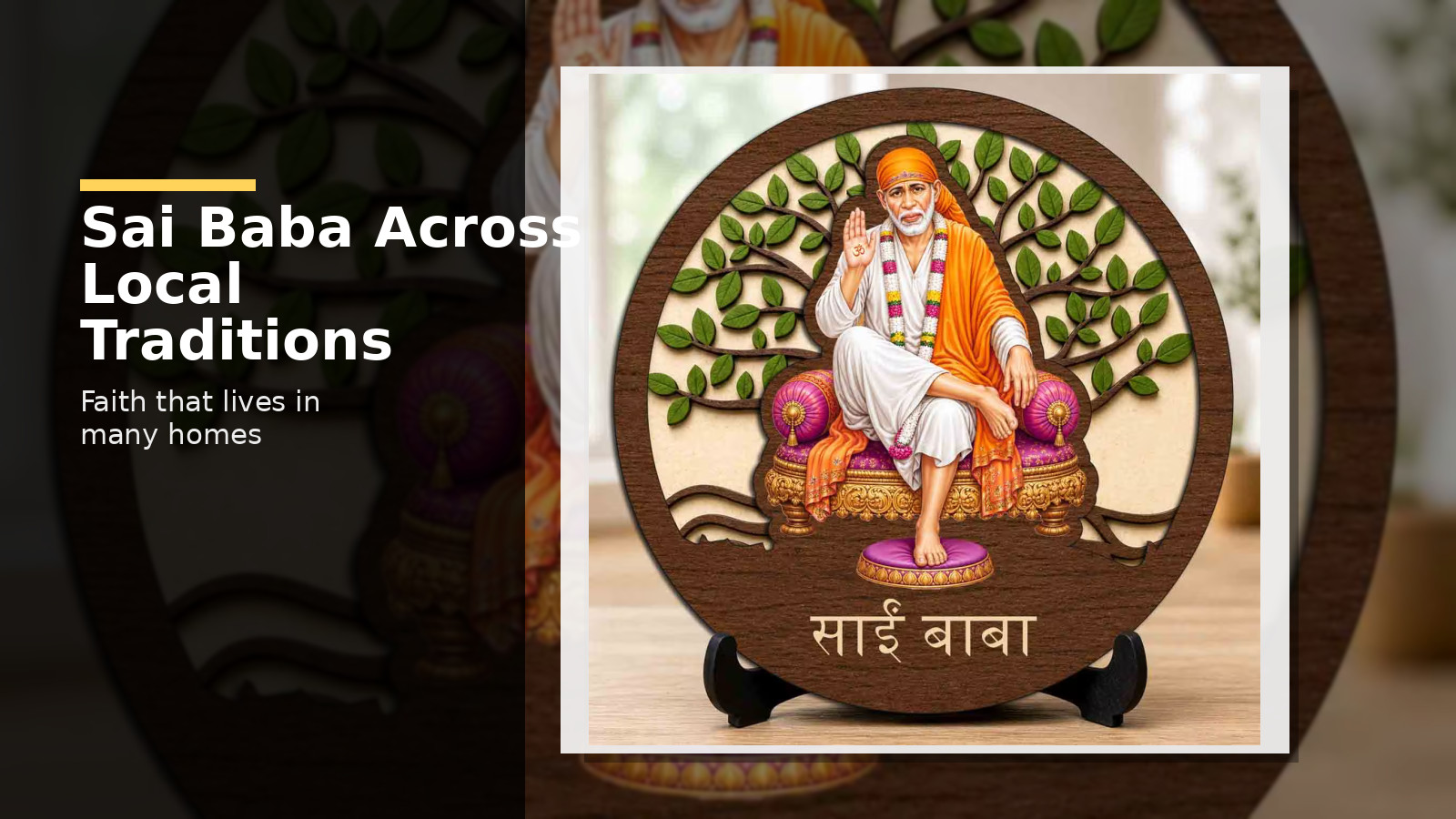
English Version
When people speak of sai baba history, they often begin with Shirdi. But the real beauty of Sai Baba devotion is that it did not stay in one lane, one language, or one kind of temple bell. It moved gently into homes, village shrines, roadside altars, small mandirs, and family prayer corners. In many places, Baba is remembered not only as the saint of Shirdi, but as a living presence who listens in the language of the heart.
This is why Sai Baba devotion feels so intimate. In one home, a grandmother lights a diya before his photo and whispers a simple prayer. In another, a temple uses the familiar aarti in the morning and evening. Somewhere else, a local community may keep Baba’s image beside other cherished deities, seeing him as a compassionate guide rather than distant figure. The form may change, but the feeling remains the same: shraddha and saburi.
Who Sai Baba Was in Devotional Memory
Sai Baba of Shirdi is remembered as a saint whose life crossed religious and social boundaries. He lived simply, gave blessings freely, and taught people to trust God, serve others, and remain patient. Much of sai baba history is carried through stories rather than formal records, which is one reason his devotion feels so human and close.
He is not worshipped only through grand declarations. He is remembered through daily habits: the first cup of tea offered with faith, a flower placed before his image, a quiet reading of Sai Satcharitra, and the calm of a shrine that feels like home. That humble continuity has allowed his worship to grow in many regional forms.
Regional Forms of Sai Baba Worship
Across India, Sai Baba appears in different devotional moods. Some regions emphasize temple-style worship, while others keep a more folk and family-centered practice. The saint remains the same, but the local tradition gives the devotion its own flavor.
- Maharashtra: Strong Shirdi-centered devotion, with regular aarti, bhajan gatherings, and pilgrim culture.
- North India: Baba is often worshipped in small neighborhood shrines and home mandirs with simple offerings.
- South India: Many temples and houses keep Sai Baba as part of a broader spiritual space, with disciplined daily puja.
- Urban homes and offices: Devotees place his image on desks or shelves for peace, focus, and a quiet spiritual reminder.
These regional forms are not a dilution of faith. They are a sign of how naturally Sai Baba entered everyday life. Like a beloved elder who is welcomed in many different houses, Baba’s presence adapts without losing his essence.
Local Traditions That Keep His Devotion Alive
In many local worship styles, the emphasis is less on grandeur and more on belonging. A small shrine may use a brass lamp, a few flowers, incense, and a framed image. In some homes, devotees offer ugadi style simplicity, in others aarti and prasad become part of the evening rhythm. Some communities observe Thursday as a special Sai day, gathering for prayers and bhajans.
One of the most touching parts of Sai Baba devotion is how it blends into family life. A child may learn to bow before Baba before an exam. An elder may pray to him during illness or worry. A young professional may keep his photo near the work table, asking for calm and wisdom. These are not dramatic rituals, but they are deeply lived rituals.
Temple Tradition and Folk Devotion Together
Sai Baba’s worship stands at a beautiful meeting point: formal temple practice on one side, and folk devotion on the other. In a temple, you may find rhythmic aarti, orderly offerings, and pilgrim discipline. In a village or home, you may find a more personal bond, where Baba is spoken to like a trusted guide in the family.
This is why his devotion continues so strongly. It does not demand that every devotee worship in the same way. Instead, it allows the heart to take the lead. A temple may preserve tradition, while a small home altar carries memory, hope, and everyday gratitude.
Famous Shrine Culture Around Sai Baba
Shirdi remains the most important center of Sai Baba devotion, and the pilgrimage there still shapes how devotees understand him. The aartis, the darshan queues, the sacred atmosphere, and the remembered footprints of Baba all deepen the emotional bond. Many devotees return from Shirdi feeling that they have not merely visited a place, but entered a living current of faith.
Beyond Shirdi, countless local Sai shrines have grown in neighborhoods, temples, and institutions. These smaller places may not attract large pilgrim crowds, but they hold something precious: everyday continuity. They keep Sai Baba history alive in ordinary time, not only in pilgrimage season.
Symbols Devotees Associate with Sai Baba
People often recognize Sai Baba through simple devotional symbols:
- Udi: Sacred ash associated with healing faith and trust.
- Shirdi aarti: Morning and evening prayer rhythms that create belonging.
- Satya and saburi: Truth and patience, the quiet moral heart of his message.
- Simple robes and posture: A saintly life rooted in humility, not display.
- Samadhi Mandir: A place of pilgrimage, remembrance, and prayerful silence.
These symbols are powerful because they do not feel distant. They belong to lived devotion. They remind devotees that faith is not only something to read about; it is something to practice in small, patient ways.
Festival Significance and Weekly Devotion
While Sai Baba is not tied to one single festival in the same way some deities are, his devotion remains active through weekly prayers, aarti, and special gatherings. Thursday is especially meaningful for many devotees. In homes and temples, people sing bhajans, offer flowers, and read from the Sai literature with steady love.
In some places, Sai Baba-related observances are woven into local religious calendars and community prayer events. This flexibility is one reason his worship feels so alive. It is not locked in one season; it continues wherever faith is practiced sincerely.
Why Sai Baba History Still Feels Personal Today
The heart of sai baba history is not only in events, but in the way devotees experience him now. A mother praying for her child, a shopkeeper opening the day with Baba’s name, an elder offering quiet thanks after recovery—these are modern echoes of an older devotion.
Sai Baba’s message still feels close because it is gentle. He does not arrive with noise; he arrives with steadiness. He reminds people that patience is strength, and faith is not weakness. In a changing world, that is a comfort many hearts still need.
A Small Reminder for Your Prayer Space
For devotees who like to keep a simple and graceful image at home, a compact form can be very meaningful. If you are looking for a neat devotional display for a prayer corner, desk, or small mandir shelf, you may also explore the related product on our store.
Frequently Asked Questions
Why is Sai Baba worship so widespread?
Because his teachings of shraddha and saburi speak to everyday life. People from different regions and backgrounds feel that Baba understands their worries and hopes.
What are the common ways people worship Sai Baba at home?
Devotees usually keep his photo or idol in a clean prayer corner, offer flowers or incense, light a diya, and pray on Thursdays or during morning and evening aarti.
Is Sai Baba worship only associated with Shirdi?
No. Shirdi is the central pilgrimage place, but Sai Baba devotion is also deeply present in homes, neighborhood shrines, and local temples across India.
What is the main teaching remembered in Sai Baba history?
The most remembered teachings are shraddha and saburi, meaning faith and patience. Devotees also remember his compassion, humility, and care for all people.
Why do many devotees keep Sai Baba in offices and study spaces?
Because his image is associated with peace, calm focus, and a sense of spiritual support during daily work and study.
Hindi Version
जब लोग sai baba history की बात करते हैं, तो बात अक्सर शिरडी से शुरू होती है। लेकिन Sai Baba भक्ति की सबसे सुंदर बात यही है कि वह सिर्फ एक जगह, एक भाषा, या एक ही तरह के मंदिर तक सीमित नहीं रही। वह धीरे-धीरे घरों में, गांव के छोटे देवालयों में, सड़क किनारे बने छोटे altar में, और परिवार के पूजा-कक्षों में बस गई। कई जगहों पर बाबा को सिर्फ शिरडी के संत के रूप में नहीं, बल्कि दिल की भाषा सुनने वाले जीवित सहारे के रूप में याद किया जाता है।
इसी वजह से Sai Baba की भक्ति इतनी आत्मीय लगती है। किसी घर में दादी सुबह दीया जलाकर उनकी तस्वीर के आगे धीमे से प्रार्थना करती हैं। कहीं मंदिर में सुबह-शाम आरती होती है। कहीं स्थानीय परंपरा में बाबा की छवि दूसरे पूज्य देवताओं के साथ रखी जाती है। रूप बदलता है, लेकिन भावना वही रहती है: श्रद्धा और सबुरी।
Sai Baba कौन थे?
शिरडी के Sai Baba को एक ऐसे संत के रूप में याद किया जाता है जिनका जीवन धार्मिक और सामाजिक सीमाओं से ऊपर था। वे बहुत सादगी से रहते थे, सबको आशीर्वाद देते थे, और लोगों को परमात्मा पर भरोसा रखने, सेवा करने और धैर्य बनाए रखने की सीख देते थे। sai baba history का बहुत बड़ा हिस्सा औपचारिक दस्तावेज़ों से नहीं, बल्कि कथाओं और भक्तिपरंपरा से आगे बढ़ा है। इसी कारण उनकी भक्ति बहुत मानवीय और निकट महसूस होती है।
उनकी पूजा केवल बड़े अनुष्ठानों में नहीं दिखती। वह रोज़मर्रा की आदतों में दिखती है: श्रद्धा से चढ़ाया गया पहला कप चाय, उनकी तस्वीर के सामने रखा एक फूल, Sai Satcharitra का शांत पाठ, और घर जैसा लगने वाला छोटा-सा मंदिर। इसी सरलता ने उनकी भक्ति को कई क्षेत्रीय रूपों में फैलने दिया।
Sai Baba पूजा के क्षेत्रीय रूप
भारत के अलग-अलग हिस्सों में Sai Baba अलग-अलग भक्ति-रूपों में दिखाई देते हैं। कहीं मंदिर-शैली की पूजा प्रमुख है, तो कहीं घर और मोहल्ले की भक्ति अधिक मजबूत है। संत वही रहते हैं, लेकिन स्थानीय परंपरा उनकी आराधना को अपना स्वाद देती है।
- महाराष्ट्र: शिरडी-केंद्रित गहरी भक्ति, नियमित आरती और भजन परंपरा।
- उत्तर भारत: छोटे मोहल्ला मंदिरों और घर के mandir में सरल पूजा।
- दक्षिण भारत: कई घरों और मंदिरों में अनुशासित दैनिक पूजा के साथ Sai Baba का स्थान।
- शहरी घर और कार्यालय: शेल्फ, डेस्क, या prayer corner में उनकी छवि, ताकि दिन में शांति और स्मरण बना रहे।
ये क्षेत्रीय रूप भक्ति को कम नहीं करते। वे यह दिखाते हैं कि Sai Baba कैसे रोज़मर्रा के जीवन में सहजता से प्रवेश कर गए। जैसे कोई प्रिय बुज़ुर्ग अलग-अलग घरों में समान स्नेह से स्वीकार किए जाते हैं, वैसे ही Baba की उपस्थिति भी हर जगह अपने मूल भाव को बनाए रखती है।
स्थानीय परंपराएं जो भक्ति को जीवित रखती हैं
कई स्थानीय पूजा-शैलियों में भव्यता से ज़्यादा अपनापन महत्वपूर्ण होता है। एक छोटा-सा shrine brass lamp, कुछ फूल, धूप, और framed तस्वीर से सज जाता है। कुछ घरों में गुरुवार विशेष दिन माना जाता है, कहीं आरती और प्रसाद शाम की दिनचर्या का हिस्सा बन जाते हैं।
Sai Baba भक्ति का सबसे कोमल पक्ष यही है कि वह परिवार के भीतर उतर जाती है। कोई बच्चा परीक्षा से पहले बाबा को प्रणाम करना सीखता है। कोई बुज़ुर्ग बीमारी के समय उनसे प्रार्थना करता है। कोई युवा काम की मेज़ पर उनकी तस्वीर रखकर शांति और बुद्धि की प्रार्थना करता है। ये अनुष्ठान भले छोटे हों, लेकिन भीतर से बहुत गहरे होते हैं।
मंदिर परंपरा और लोकभक्ति साथ-साथ
Sai Baba की पूजा एक सुंदर संगम पर खड़ी है: एक ओर formal temple practice, दूसरी ओर folk devotion। मंदिर में नियमित आरती, व्यवस्थित चढ़ावा, और pilgrimage discipline दिखाई देता है। घर या गांव में बाबा को परिवार के भरोसेमंद मार्गदर्शक की तरह याद किया जाता है।
इसी वजह से उनकी भक्ति इतनी टिकाऊ है। वह हर भक्त को एक ही ढांचे में नहीं बाँधती। मंदिर परंपरा श्रद्धा को संजोती है, और घर का छोटा altar याद, आशा, और रोज़मर्रा के कृतज्ञ भाव को संभालता है।
शिरडी के अलावा स्थानीय Sai shrine संस्कृति
शिरडी Sai Baba भक्ति का सबसे बड़ा केंद्र है। वहीं की aarti, darshan की कतारें, पावन वातावरण, और Baba के जीवन से जुड़ी स्मृतियाँ भक्तों के मन में गहरी छाप छोड़ती हैं। बहुत से भक्त Shirdi से लौटकर यह महसूस करते हैं कि वे सिर्फ एक जगह नहीं गए, बल्कि श्रद्धा की एक जीवित धारा से जुड़ आए।
लेकिन शिरडी के बाहर भी अनगिनत छोटे Sai shrines हैं—मोहल्लों में, कार्यालयों में, संस्थानों में, और घरों में। ये छोटे स्थान भले विशाल तीर्थ न हों, पर इनकी अहमियत बहुत बड़ी है। ये Sai Baba history को सिर्फ तीर्थ-यात्रा के मौसम में नहीं, बल्कि रोज़मर्रा के समय में भी जीवित रखते हैं।
Sai Baba से जुड़े प्रमुख प्रतीक
भक्त Sai Baba को कुछ सरल प्रतीकों से पहचानते हैं:
- उदी: पवित्र भस्म, जिसे आस्था और उपचार-विश्वास से जोड़ा जाता है।
- शिरडी आरती: सुबह-शाम की प्रार्थना, जो सामूहिक अपनापन देती है।
- सत्य और सबुरी: उनकी सीख का सबसे गहरा नैतिक सार।
- सादे वस्त्र और विनम्र मुद्रा: दिखावे से नहीं, सादगी से भरा जीवन।
- समाधि मंदिर: स्मरण, दर्शन और मौन प्रार्थना का पवित्र स्थान।
ये प्रतीक इसलिए प्रभावशाली हैं क्योंकि वे दूर के नहीं लगते। वे जीती-जागती भक्ति से जुड़े हैं। वे याद दिलाते हैं कि आस्था सिर्फ पढ़ने की चीज़ नहीं, बल्कि छोटे-छोटे धैर्यपूर्ण कर्मों की साधना है।
त्योहार और साप्ताहिक भक्ति
Sai Baba किसी एक बड़े त्योहार से बंधे नहीं हैं, जैसे कुछ अन्य देव-रूप होते हैं। उनकी भक्ति साप्ताहिक आरती, भजन, और विशेष gathering के माध्यम से जीवित रहती है। गुरुवार बहुत से भक्तों के लिए खास दिन है। घरों और मंदिरों में फूल चढ़ते हैं, भजन गाए जाते हैं, और Sai साहित्य का पाठ किया जाता है।
कई जगहों पर स्थानीय धार्मिक कैलेंडर और सामुदायिक प्रार्थनाओं में भी Sai Baba से जुड़े आयोजन शामिल हो जाते हैं। यही लचीलापन उनकी भक्ति को इतना जीवंत बनाता है। यह किसी एक मौसम में नहीं रुकती; जहाँ भी सच्ची श्रद्धा होती है, वहाँ चलती रहती है।
आज भी Sai Baba history इतनी निजी क्यों लगती है
sai baba history का हृदय सिर्फ घटनाओं में नहीं, बल्कि भक्तों के आज के अनुभव में है। अपने बच्चे के लिए प्रार्थना करती माँ, दुकान खोलते समय बाबा का नाम लेने वाला व्यापारी, स्वास्थ्य लाभ के बाद चुपचाप धन्यवाद देने वाला बुज़ुर्ग—ये सब पुरानी भक्ति की आधुनिक प्रतिध्वनियाँ हैं।
Sai Baba का संदेश आज भी करीब लगता है क्योंकि वह कोमल है। वह शोर के साथ नहीं आते; वह स्थिरता के साथ आते हैं। वे याद दिलाते हैं कि धैर्य शक्ति है, और आस्था कमजोरी नहीं। बदलती दुनिया में यह सांत्वना बहुत से दिलों की ज़रूरत बनी हुई है।
आपकी पूजा-स्थान के लिए एक छोटा सा संकेत
जो भक्त घर में सरल और सुंदर स्वरूप रखना चाहते हैं, उनके लिए compact रूप बहुत अर्थपूर्ण हो सकता है। अगर आप prayer corner, desk, या छोटे mandir shelf के लिए एक neat devotional display देख रहे हैं, तो आप our store पर related product भी explore कर सकते हैं।
अक्सर पूछे जाने वाले प्रश्न
Sai Baba की भक्ति इतनी व्यापक क्यों है?
क्योंकि उनकी सीख—श्रद्धा और सबुरी—रोज़मर्रा के जीवन से जुड़ती है। अलग-अलग क्षेत्र और पृष्ठभूमि के लोग महसूस करते हैं कि Baba उनकी चिंता और आशा को समझते हैं।
घर पर Sai Baba की पूजा कैसे की जाती है?
भक्त आम तौर पर उनकी तस्वीर या मूर्ति को स्वच्छ पूजा स्थान पर रखते हैं, फूल या धूप चढ़ाते हैं, दीया जलाते हैं, और गुरुवार या सुबह-शाम आरती करते हैं।
क्या Sai Baba की पूजा केवल शिरडी तक सीमित है?
नहीं। शिरडी मुख्य तीर्थस्थल है, लेकिन Sai Baba की भक्ति घरों, मोहल्लों के shrine, और भारत भर के स्थानीय मंदिरों में भी बहुत गहरी है।
Sai Baba history की सबसे याद की जाने वाली सीख क्या है?
सबसे अधिक याद की जाने वाली सीख श्रद्धा और सबुरी है, यानी विश्वास और धैर्य। भक्त उनकी करुणा, विनम्रता, और सबके प्रति प्रेम को भी याद रखते हैं।
लोग Sai Baba को office और study space में क्यों रखते हैं?
क्योंकि उनकी छवि शांति, एकाग्रता, और दैनिक काम में आध्यात्मिक सहारा देने से जुड़ी मानी जाती है।