
English Version
buddha history is often told as the story of a prince who became the awakened one. But for many families, temples, and quiet prayer corners, it is also a living story—one carried through devotion, memory, and the gentle belief that Buddha’s presence still brings peace. When elders speak of Buddha, they do not only recall dates or places. They speak of calm faces before an idol, of lamps lit at dawn, of vows made in sorrow, and of the strange comfort that comes when the mind grows still.
This is where Buddha history becomes more than a record of the past. It becomes a devotional thread running through homes, monasteries, festivals, and everyday acts of mindfulness. In that thread, devotee stories and temple lore have always had a special place. Some stories are about inner change, some about guidance in difficult times, and some about the deep reassurance people feel when they sit before the Buddha image and bow their heads in silence.
Who Is Buddha in Devotional Tradition?
In the Buddhist tradition, Buddha means the awakened one—the one who discovered the path beyond suffering through wisdom, compassion, and disciplined awareness. Historical accounts place Siddhartha Gautama in ancient India, where he lived as a prince before renouncing royal life in search of truth. His awakening under the Bodhi tree in Bodh Gaya became the heart of a spiritual journey that continues to inspire millions.
Devotional practice around Buddha is not centered on asking for miracles in the usual sense. It is often centered on transformation: peace of mind, moral strength, compassionate living, and the courage to see life clearly. Yet across communities, people still speak with devotion about blessings received, obstacles softened, and a sense of protection that came after sincere prayer, chanting, or pilgrimage.
Buddha History Through Temple Lore and Devotee Testimony
In many temples and monasteries, the most moving part of Buddha history is not a grand claim but a quiet testimony. A devotee may say, “I came with grief, and I left lighter.” Another may describe how regular chanting helped the family through illness or uncertainty. These are not stories of spectacle; they are stories of faith meeting daily life.
Temple lore often preserves this gentle kind of miracle. A traveler finds unexpected calm after entering a shrine. A child learns stillness by watching elders offer flowers and incense. A household facing conflict begins to gather for evening reflection before the Buddha image. In such moments, the sacred is not dramatic—it is intimate.
- Quiet blessings: peace, steadiness, and emotional clarity.
- Devotee stories: personal experiences of comfort during hardship.
- Temple traditions: offerings, chanting, meditation, and pilgrimage.
- Living faith: the way Buddha’s teachings continue in modern homes.
Miracles in the Buddhist Sense
When people search for miracles in Buddha history, they sometimes expect tales of dramatic intervention. But Buddhist spirituality often understands miracle in a different way. The greatest miracle may be the mind that becomes free from anger. The deepest wonder may be a heart that learns compassion. The most lasting blessing may be a family that finds peace after long unrest.
In that sense, the miracle is not always something visible from the outside. It may appear as patience in a difficult conversation, discipline in practice, or a small but real release from fear. Many devotees describe these changes with gratitude, and their testimony keeps the tradition alive in a deeply human way.
Famous Places Connected to Buddha History
Several sacred places remain central to Buddha history and devotion. Each one carries a different mood of pilgrimage and remembrance.
- Bodh Gaya: the place of awakening under the Bodhi tree.
- Sarnath: where Buddha gave his first sermon.
- Kushinagar: associated with Buddha’s mahaparinirvana.
- Lumbini: traditionally revered as his birthplace.
For devotees, visiting these places is not only about history. It is about standing in spaces where the teachings feel close and the mind naturally slows down. Pilgrimage becomes a kind of prayer with the feet—one step at a time, one breath at a time.
Symbols That Carry the Teaching
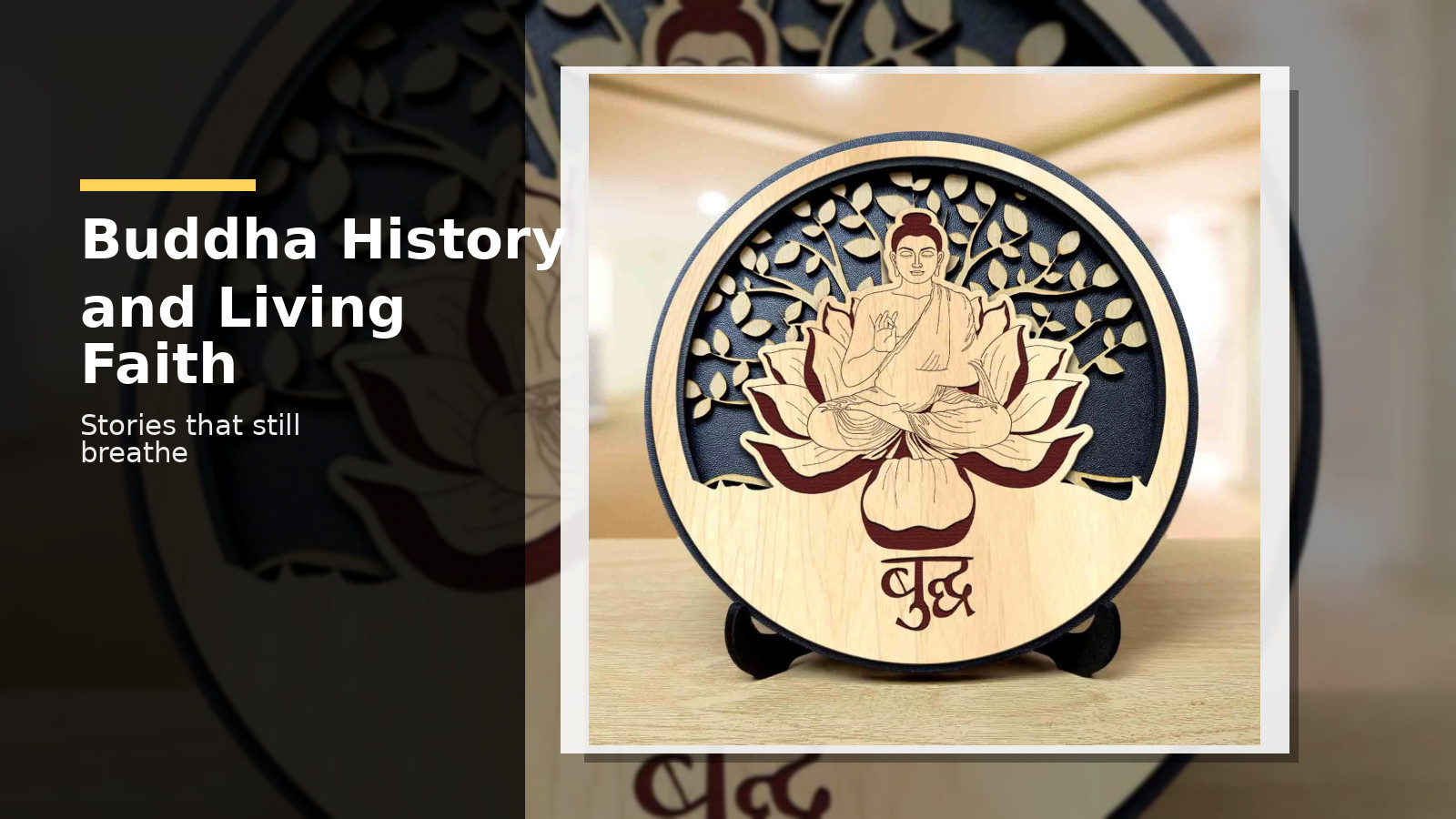
Buddha history is also carried through symbols that speak without words. The lotus reminds devotees that beauty can rise from muddy waters. The Bodhi tree speaks of awakening through patience and inner stillness. The seated posture reflects meditation, balance, and composure. The calm face of Buddha in an idol or painting invites the viewer to soften the mind.
These symbols are not merely decorative. They help devotees remember the heart of the path. A lamp before the image, a small offering of flowers, or a clean prayer space becomes part of daily reverence. For many families, such details create a home atmosphere where silence itself feels sacred.
Festival Significance and Everyday Devotion
Across Buddhist communities, special days linked to the Buddha’s life are observed with prayer, reflection, and acts of generosity. In many places, devotees mark important dates by visiting monasteries, listening to teachings, offering dana, and spending time in meditation. These observances keep Buddha history alive in a living rhythm rather than a distant memory.
Even outside festivals, daily devotion matters. A morning bow, a mindful cup of tea, a few minutes of silence, or a family recitation can become a small shrine of awareness. This is how living faith continues: not only in large ceremonies, but in ordinary discipline repeated with love.
Why Buddha History Still Feels Close Today
Many spiritual traditions remain alive because they speak to the deepest human need: how to live with suffering without becoming hard, and how to meet life without losing compassion. Buddha history continues to feel close because it does not ask devotees to escape the world. It teaches them to meet the world wisely.
That is why the stories endure. A grandmother tells a grandchild how a quiet prayer eased her worry. A monk’s teaching becomes a family habit. A small Buddha idol on a shelf becomes a reminder to breathe before reacting. The tradition survives not only through books, but through lived reverence.
A Gentle Place for Faith at Home
Many people choose a Buddha image or engraved idol for a prayer corner, shelf, or desk because it helps keep that atmosphere of calm present in everyday life. If you are creating such a space, a thoughtfully made piece like the Buddha Round Engraved Idol can bring a peaceful spiritual touch to your home mandir, office table, or gifting moment. Used with sincerity, it becomes less an object and more a reminder of stillness, gratitude, and mindful living.
FAQs
What is the main message of Buddha history?
The main message is the path to awakening through wisdom, compassion, ethical living, and meditation.
Are there miracle stories in Buddha tradition?
Yes, but many are understood as inner miracles—peace, transformation, courage, and release from suffering—rather than only dramatic events.
Which places are most important in Buddha history?
Bodh Gaya, Sarnath, Kushinagar, and Lumbini are among the most important places associated with Buddha’s life.
Why do devotees keep Buddha images at home?
Many people keep Buddha images at home as a symbol of peace, mindfulness, and spiritual remembrance.
How is Buddha worshiped in living traditions?
Through prayer, meditation, offerings, chanting, pilgrimage, and daily acts of compassion and awareness.
Hindi Version
buddha history ko aksar ek rajkumar ki kahani ke roop mein sunaaya jaata hai jo jagrut ho gaya. Lekin kai parivaron, viharon, aur ghar ke chhote se prayer corner mein yeh sirf itihaas nahi hota—yeh ek jeeti-jaagti bhakti ki kahani hoti hai. Buddhi aur shanti se bhari yeh kahani peedhi-dar-peedhi aage badhti hai, jaise koi dheemi si aarti, jo man ko shaant kar deti hai.
Buddha ka naam lete hi log sirf dates ya places yaad nahi karte. Bade-buzurg aksar deep jalane ki subah, shant chehre ke saamne kiye gaye pranam, aur dukh ke samay maange gaye sahaare ki baat karte hain. Buddha history isi wajah se sirf pichhle waqt ka record nahi, balki aaj ki zindagi se judi hui ek pavitra dhaar ban jaati hai.
Buddha Kaun Hain? Devotional Drishti Se
Buddhist parampara mein Buddha ka arth hai “jagrat” ya “awakened one.” Paramparik itihas ke anusaar Siddhartha Gautama ancient India mein janme, rajkumar ke jeevan se virakt hokar satya ki khoj mein nikal pade. Bodh Gaya mein Bodhi vriksh ke neeche unki awakening Buddha history ka sabse mahatvapurn adhyay bani.
Bhakti ke sandarbh mein Buddha se prarthana aksar kisi chamatkar ki maang tak simit nahi hoti. Yahan prarthana ka arth hota hai: man ki shanti, daya, discipline, aur jeevan ko spasht drishti se dekhne ki shakti. Phir bhi, bhakton ke anubhav batate hain ki sachchi shraddha se ki gayi upasana se mann halka hota hai aur jeevan mein nayi drishti aati hai.
Temple Lore Aur Devotee Testimony Mein Buddha History
Kai vihar aur temples mein Buddha history ka sabse sparsh karne wala hissa koi bada daava nahi, balki ek narm sa anubhav hota hai. Koi bhakt kehta hai, “Main dukh lekar aaya tha, aur halka hokar gaya.” Koi parivaar batata hai ki meditation aur chanting ne mushkil samay mein unhe sambhala. Yeh kahaniyan dhamaakedar chamatkar ki nahi, balki bhakti aur jeevan ke milan ki kahaniyan hain.
- Quiet blessings: man ki shanti aur sthirta.
- Devotee stories: kathin samay mein mila sahara.
- Temple traditions: offering, chanting, meditation, aur pilgrimage.
- Living faith: gharon mein Buddha ki seekh ka jeevit rehna.
Chamatkar Ka Arth Buddha Parampara Mein
Jab log Buddha history mein miracles dhoondhte hain, to unhe aksar koi bahut bada aur pratyaksh chamatkar chahiye hota hai. Lekin Buddhist spiritual understanding mein chamatkar ka arth alag hota hai. Sabse bada chamatkar ho sakta hai gusse se mukti, sabse gahra aashcharya ho sakta hai karuna se bhara hriday, aur sabse sthayi kripa ho sakti hai parivaar ka shant ho jaana.
Yeh badlav bahar se hamesha dikhai nahi dete, par bhakton ke jeevan mein yeh bahut asli hote hain. Isi liye Buddha history sirf kitab ka gyaan nahi, balki anubhav ki bhasha bhi hai.
Buddha History Se Jude Pramukh Sacred Places
Buddha history se jude kai pavitra sthaan aaj bhi shraddha ke kendr hain.
- Bodh Gaya: Bodhi vriksh ke neeche awakening ka sthaan.
- Sarnath: pehla updesh diya gaya sthaan.
- Kushinagar: mahaparinirvana se joda gaya sthaan.
- Lumbini: janm-sthal ke roop mein poojya.
In sthalon par jaakar bhakton ko lagta hai jaise Buddha ki seekh aur paas aa gayi ho. Yatra ek prarthana ban jaati hai—har kadam ke saath, har saans ke saath.
Symbols Jo Buddha Ki Seekh Sambhalte Hain
Buddha history kai symbols ke through bhi jeeti hai. Lotus ke phool ka arth hai ki keechad mein bhi sundarata khil sakti hai. Bodhi tree dhairya aur jagran ka sandesh deta hai. Dhyan mein baithi murti santulan, shanti, aur gahan sthirta ka prateek hai.
Yeh symbols sirf sajavat nahi hain. Yeh rozana ki bhakti ko yaad dilate hain. Deepak, phool, aur saaf prayer space—sab milkar ghar ko ek pavitra mahol dete hain.
Festival Significance Aur Rozana Bhakti
Buddhist samudaayon mein Buddha ke jeevan se jude vishesh din prarthana, meditation, aur daan se manaye jaate hain. In avsaron par vihar jana, teachings sunna, aur karuna ka abhyas karna Buddha history ko jeevit rakhta hai.
Rozana bhakti bhi utni hi mahatvapurn hai. Subah ka pranam, kuch pal ki shanti, ya parivaar ke saath thoda dhyan—yeh sab chhote lekin gahre tareeke hain jinse faith jeevit rehta hai.
Aaj Bhi Buddha History Itni Kareeb Kyon Lagti Hai?
Kyuki yeh seekh insani dukh ko samajhti hai. Buddha history yeh nahi kehti ki duniya se bhaag jao; yeh kehti hai ki duniya ko samajhkar, dayalu hokar, aur jagrut rehkar jiyo. Isi wajah se yeh kahani aaj bhi gharon, viharon, aur dilon mein zinda hai.
Dadi-nani jaisi kahaniyon mein jab koi kehta hai ki ek shant prarthana se man halka ho gaya, to lagta hai Buddha ki seekh aaj bhi saans le rahi hai. Aur shayad yahi sabse sundar sach hai.
Ghar Ke Liye Ek Shaant Aur Bhavya Smaran
Agar aap apne prayer corner, shelf, ya office desk ke liye koi pavitra aur shaant smaran chahte hain, to thoughtfully crafted Buddha Round Engraved Idol ek sundar vikalp ho sakta hai. Yeh devotional décor, gifting, aur daily remembrance ke liye upyukt hai—aur iski presence man ko thoda aur shaant kar deti hai.
FAQs
Buddha history ka mukhya sandesh kya hai?
Mukhya sandesh hai jagran, karuna, ethical living, aur meditation ke through dukh se mukti ka path.
Kya Buddha parampara mein miracles maane jaate hain?
Haan, lekin aksar miracles ko andarooni badlav—shanti, dhairya, aur mukti—ke roop mein samjha jaata hai.
Buddha history se jude sabse mahatvapurn sthaan kaun se hain?
Bodh Gaya, Sarnath, Kushinagar, aur Lumbini sabse prasiddh sthaanon mein se hain.
Log ghar mein Buddha murti kyon rakhte hain?
Bahut se log shanti, mindfulness, aur spiritual remembrance ke liye Buddha murti ghar mein rakhte hain.
Buddha ki living devotion kaise nibhayi jaati hai?
Prarthana, meditation, offerings, chanting, pilgrimage, aur dayalu jeevan ke through.