
Vishnu Ji History: Janm-Katha, Leela, Aur Bhakti Ka Saar
April 8, 2026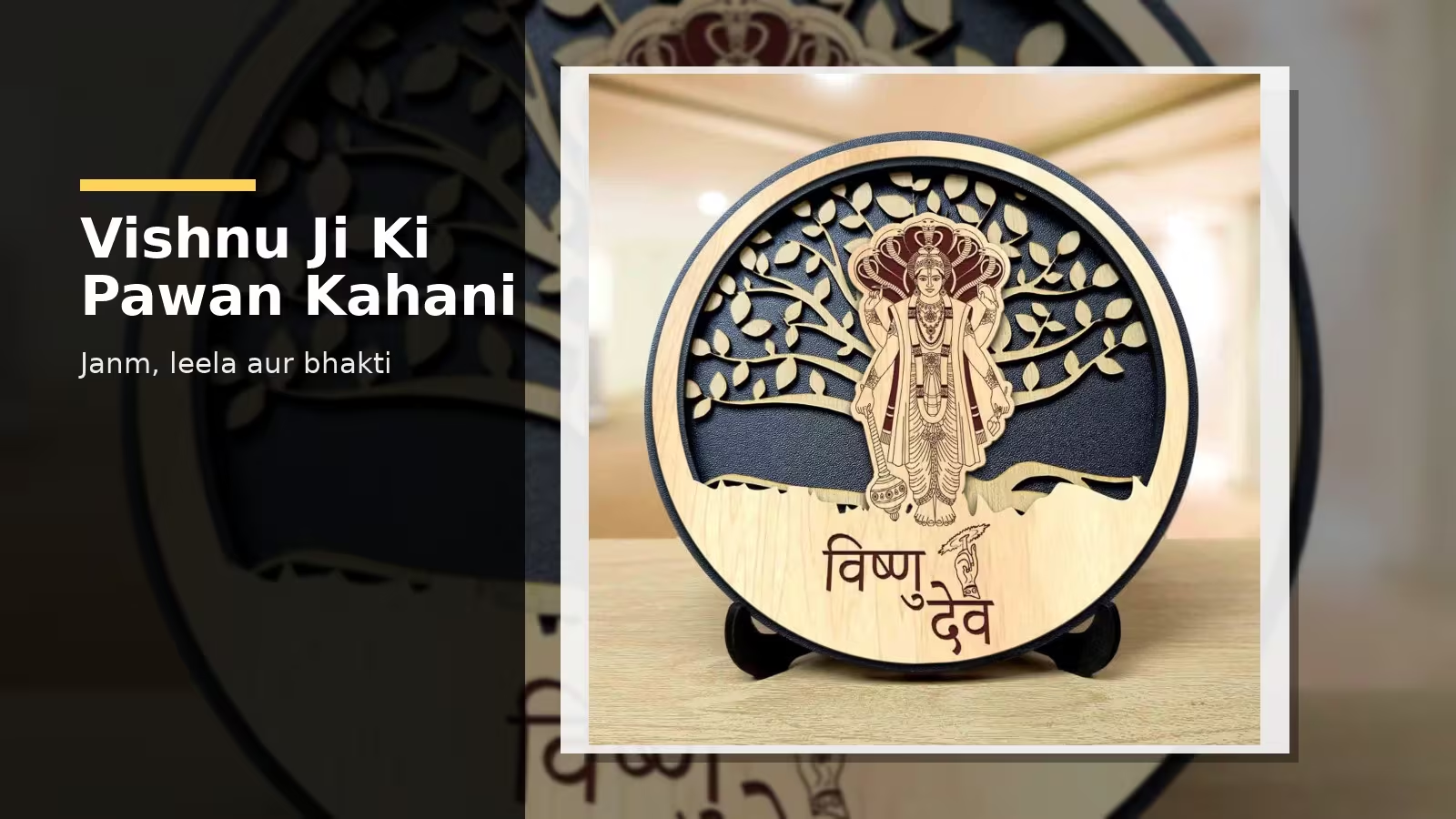
English Version
When people search for vishnu ji history, they are often looking for more than dates or names. They are looking for the soft, reassuring presence of the Preserver, the one who protects dharma, restores balance, and appears whenever the world feels tilted. In the old devotional stories, Vishnu Ji is not only a mighty deity; he is the calm strength that ordinary devotees could trust with their fears, hopes, and prayers.
His history is woven through the Vedic and Puranic imagination, through stories of cosmic order, divine sleep, and repeated descent into the world as an avatara. And perhaps that is why Vishnu Ji has remained so loved for centuries: he feels both grand and intimate, cosmic and close to the heart.
Who Is Vishnu Ji?
Vishnu Ji is known in Hindu tradition as the Preserver or Protector of the universe. Along with Brahma and Shiva, he is part of the sacred Trimurti, where Brahma creates, Vishnu sustains, and Shiva transforms.
But in lived devotion, Vishnu Ji is much more than a philosophical role. He is the divine presence who preserves life, protects righteousness, and responds to sincere prayer. Devotees often remember him as the one who comes quietly when needed, not always with thunder, but with grace.
- Role: Sustainer of cosmic order
- Main quality: Protection with compassion
- Devotional mood: Peaceful, reassuring, and loving
Vishnu Ji History and the Ancient Origin Legends
The early layers of Vishnu Ji history appear in ancient scriptures and hymns where he is associated with the all-pervading divine principle. One of the most loved images is that of Vishnu resting on Sheshnag in the cosmic ocean, while from his navel rises the lotus on which Brahma appears. This image is not just poetic; it tells devotees that creation itself rests in divine order.
In the Puranic tradition, Vishnu Ji is seen as the one who takes many forms to protect the world. These forms, called avatars, became central to his early legends and devotional identity. Ordinary people found comfort in this idea because it meant the divine was not distant. Vishnu could come near, take a relatable form, and enter the human world when righteousness needed help.
That is one reason devotees felt close to him from the earliest stories. He was not only worshipped as a remote cosmic force, but as a compassionate protector who listens, appears, and supports.
Why Ordinary Devotees Felt Close to Vishnu Ji
This is one of the most beautiful parts of Vishnu Ji history. His devotion grew not only because he was powerful, but because he was approachable in spirit. The early stories made him feel accessible to kings, sages, householders, and common people alike.
Why did people love him so deeply?
- He protects: Devotees saw Vishnu Ji as a guardian in difficult times.
- He restores balance: Whenever adharma rises, he is believed to step in.
- He appears in human-like forms: His avatars make divine compassion easier to imagine.
- He supports daily life: His worship is tied to peace, family well-being, and dharmic living.
For many homes, Vishnu Ji was not only a deity of grand temples but also the quiet centre of prayer rooms, morning rituals, and family stories told with faith.
Major Avatars in Vishnu Ji History
When people discuss vishnu ji history, they often turn to his avatars. These incarnations show how divine protection adapts to the need of each age.
- Matsya: The fish form that saves life during cosmic flood
- Kurma: The tortoise form linked with stability
- Varaha: The boar form that rescues the earth
- Narasimha: The half-man, half-lion form that protects devotee Prahlad
- Vamana: The dwarf Brahmin who humbles pride
- Rama: The ideal king and dharmic hero
- Krishna: The beloved divine guide, teacher, and friend
- Kalki: The future avatar associated with renewal
These stories are not simply dramatic tales. They teach that God is active in the world, that justice matters, and that devotion is never wasted.
Symbolism of Vishnu Ji
Vishnu Ji’s symbols are deeply meaningful and are often seen in temples, art, and devotional idols.
- Shankha (conch): The sound of sacred awakening
- Chakra (discus): Divine protection and the power to remove evil
- Gada (mace): Strength and authority rooted in dharma
- Padma (lotus): Purity, beauty, and spiritual unfolding
- Garuda: Speed, devotion, and fearless service
Together, these symbols tell a simple truth: Vishnu Ji protects not with cruelty, but with order, wisdom, and mercy.
Famous Temples Linked With Vishnu Ji
Across India, many sacred places are dedicated to Vishnu Ji and his forms. These temples are visited not only for darshan, but for peace, gratitude, and the feeling of being held by divine care.
- Srirangam Ranganathaswamy Temple – one of the most revered Vishnu temples
- Tirupati Balaji Temple – widely beloved for devotion and pilgrimage
- Padmanabhaswamy Temple – famous for its deep spiritual aura
- Jagannath Temple, Puri – associated with a powerful living tradition of worship
Each temple carries local stories, rituals, and traditions, but all point toward the same devotional heart: surrender, gratitude, and trust in divine protection.
Festival Significance and Daily Worship
Vishnu Ji is central to many festivals and devotional observances. His worship is especially vibrant during occasions connected with fasting, prayer, and spiritual renewal.
- Vaikuntha Ekadashi: A highly sacred day dedicated to Vishnu Ji
- Janmashtami: Celebrates Krishna, one of Vishnu Ji’s most beloved avatars
- Rama Navami: Honors Lord Rama, another avatar of Vishnu
- Ekadashi vrat: Observed by many devotees seeking peace and discipline
In many homes, people begin the day with a quiet prayer, Tulsi offering, chanting, or reading from sacred texts. Vishnu devotion often feels gentle and steady, like a lamp that continues to burn even in everyday life.
Spiritual Meaning of Vishnu Ji History
At its heart, Vishnu Ji history is a story of hope. It says that the universe is not abandoned, that balance can return, and that goodness is worth protecting. Devotees find in Vishnu Ji a divine friend who stands for compassion, steadiness, and righteous action.
His history also reminds us that spiritual power is not always loud. Sometimes it arrives as patience, sometimes as rescue, sometimes as a lesson wrapped in love. That is why Vishnu Ji remains one of the most cherished figures in Hindu devotion.
Why Vishnu Ji Still Matters Today
Even in modern life, people turn to Vishnu Ji for calm, courage, and direction. His stories continue to speak to families, children, elders, and seekers because they carry timeless truths:
- Live with dharma
- Trust in divine timing
- Remain humble
- Protect what is good
- Serve with devotion
That is the lasting beauty of Vishnu Ji history. It is not only about the past; it is about how sacred stories continue to shape the way people live, pray, and hope.
FAQ
What is the meaning of Vishnu Ji history?
Vishnu Ji history refers to the origin stories, legends, and devotional traditions connected with Lord Vishnu as the preserver of the universe.
Why is Vishnu Ji worshipped so widely?
He is worshipped widely because devotees see him as a protector who restores balance, supports dharma, and responds to sincere prayer.
What are the main symbols of Vishnu Ji?
His main symbols are the conch, discus, mace, lotus, and Garuda, each carrying deep spiritual meaning.
Which festivals are important for Vishnu Ji?
Vaikuntha Ekadashi, Janmashtami, Rama Navami, and Ekadashi vrats are especially important in Vishnu devotion.
Where can devotees keep a Vishnu idol at home?
Many devotees keep a Vishnu idol in a home temple, prayer corner, or a clean devotional space for daily darshan and worship.
If you wish to keep a graceful devotional piece in your prayer area, you may Explore the related product on our store.
Hindi Version
Jab log vishnu ji history search karte hain, to ve sirf tithiyon ya naamon ki khoj nahi kar rahe hote. Ve us sanatan shanti ko mehsoos karna chahte hain jo Vishnu Ji ke saath judi hai—vah Palanhar jo dharma ko sambhalte hain, santulan wapas laate hain, aur jab duniya jhukti dikhe, tab sahara bante hain. Purani kathao mein Vishnu Ji keval ek mahashaktishali devta nahi, balki ve karunaamay astitva hain jinpar aam bhakt apne darr, asha aur prarthna ko saunp dete the.
Unki history Vedic aur Puranic paramparaon mein dhire-dhire bunnti gayi—brahmandiya santulan, yog-nidra, aur avataron ki leela ke roop mein. Shayad isi liye Vishnu Ji yugo se itne priya rahe hain: ve ek saath vishal bhi hain aur hriday ke bahut kareeb bhi.
Vishnu Ji Kaun Hain?
Hindu parampara mein Vishnu Ji ko Palanhar ya Rakshak maana gaya hai. Brahma aur Shiva ke saath ve Trimurti ka hissa hain—jahan Brahma srishti karte hain, Vishnu jeevan ko sambhalte hain, aur Shiva parivartan laate hain.
Lekin bhakti ke jeevit anubhav mein Vishnu Ji sirf darshanik bhoomika nahi nibhate. Ve vah divya shakti hain jo jeevan ko sambhalti hai, nyay ka saath deti hai, aur sachche bhav se ki gayi prarthna ka uttar ban kar aati hai. Bhakt unhen aksar ek aise sahare ke roop mein yaad karte hain jo shor nahi karta, lekin shanti se saath deta hai.
- Bhoomika: Brahmandiya santulan ko sambhalna
- Pramukh gun: Karuna ke saath raksha
- Bhakti ka swabhav: Shant, bharosemand aur premamay
Vishnu Ji History Aur Pracheen Janm-Kathayein
Vishnu Ji history ke prarambhik star pracheen granthon aur stutiyon mein milte hain, jahan unhe sarvavyapi divya tattva ke roop mein dekha gaya. Ek bahut priya chitra hai Vishnu Ji ka Sheshnag par brahmandiya samudra mein shayan karna, aur unki nabhi se nikle kamal se Brahma ka prakat hona. Yeh keval kavya nahi, balki bhakt ke liye ek sandesh hai ki srishti bhi divya niyam par tiki hai.
Puranik parampara mein Vishnu Ji ko aise devta ke roop mein dekha gaya jo duniya ki raksha ke liye anek roop dharan karte hain. In roopon ko avatar kaha gaya. Aam logon ko yeh bhavna bahut apnapan deti thi, kyunki isse lagta tha ki Ishwar door nahi. Vishnu Ji zarurat padne par paas aa sakte hain, roop le sakte hain, aur manav jagat mein pravesh kar sakte hain.
Isi wajah se prarambhik kahaniyon se hi bhakt unke kareeb mehsoos karte the. Ve keval ek door ke cosmic devta nahi, balki karuna se bhare rakshak the.
Aam Bhakton Ko Vishnu Ji Itne Kareeb Kyon Lage?
Yeh Vishnu Ji history ka bahut hi sundar paksh hai. Unki bhakti isliye nahi badhi kyunki ve keval shaktishali the, balki isliye kyunki ve sabke liye sulabh the. Unki kahaniyon ne rajaon, rishiyon, grihasthon aur aam jan sabhi ko saath joda.
Log unse itna prem kyun karte the?
- Ve raksha karte hain: Sankat mein bhakt unhe guardian mante the.
- Ve santulan laate hain: Jab adharm badhta hai, ve prakat hote hain.
- Ve manav roop lete hain: Unke avatar divya karuna ko samajhna aasaan banate hain.
- Ve rozmarra jeevan se jude hain: Unki pooja shanti, parivar aur dharmic jeevan se judi hai.
Bahut se gharon mein Vishnu Ji keval mandir ke devta nahi, balki pooja ghar, subah ki aradhna aur dadi-nani ki kahaniyon ka shant kendr the.
Vishnu Ji Ke Pramukh Avatar
Jab log vishnu ji history par baat karte hain, to unke avatars ka varnan avashya aata hai. Yeh avatar batate hain ki divya raksha har yug ki zarurat ke hisab se roop badalti hai.
- Matsya: Machhli roop jo mahapralay mein jeevan bachata hai
- Kurma: Kachhua roop jo sthirata ka sandesh deta hai
- Varaha: Varaha roop jo prithvi ki raksha karta hai
- Narasimha: Adha-manav, adha-singh roop jo bhakt Prahlad ki raksha karta hai
- Vamana: Chhote brahmin roop mein abhiman ka vinash
- Rama: Adarsh rajaa aur dharmic nayak
- Krishna: Priya divya mitra, margdarshak aur gyan-data
- Kalki: Bhavishya ka avatar jo nav-srijan se joda gaya hai
Yeh kahaniyan sirf romanchak nahi hain. Ve sikhati hain ki Ishwar duniya mein sakriya hain, nyay mahatvapurn hai, aur bhakti kabhi vyarth nahi jaati.
Vishnu Ji Ke Prateek
Vishnu Ji ke prateek mandiron, chitraon aur dev-murtiyon mein aksar dekhe jaate hain.
- Shankha: Pavitra jagran ki dhvani
- Chakra: Divya raksha aur burai ko door karne ki shakti
- Gada: Dharma par adharit bal aur adhikar
- Kamal: Pavitrata aur adhyatmik vikas
- Garuda: Veg, bhakti aur nishthavaan seva
In sabka sandesh ek hi hai: Vishnu Ji krurta se nahi, balki niyam, gyan aur karuna se raksha karte hain.
Vishnu Ji Se Jude Prasiddh Mandir
Bharat mein kai pavitra sthal Vishnu Ji aur unke roopon ko samarpit hain. In mandiron mein keval darshan nahi, balki shanti, kritagyata aur divya sahara ka ehsaas milta hai.
- Srirangam Ranganathaswamy Temple – Vishnu bhakti ka ek bahut pramukh kendra
- Tirupati Balaji Temple – atyant priya tirth sthal
- Padmanabhaswamy Temple – adhyatmik gaurav aur rehansyamay shanti ke liye prasiddh
- Jagannath Temple, Puri – jeevant parampara se juda prasiddh sthal
Har mandir ki apni katha aur riti-riwaz hain, lekin sab ek hi bhakti bhav ki taraf le jaate hain: samarpan, kritagyata aur divya raksha par vishwas.
Tyohar Aur Nitya Pooja Mein Mahatva
Vishnu Ji kai vraton aur utsavon ka kendr hain. Unki bhakti Vishesh roop se un avsaron par dikhti hai jo upvas, prarthna aur adhyatmik punarjagran se jude hote hain.
- Vaikuntha Ekadashi: Vishnu Ji ko samarpit atyant pavitra din
- Janmashtami: Krishna ka janmotsav, jo Vishnu Ji ke priya avatar ka utsav hai
- Rama Navami: Bhagwan Rama ka janmotsav
- Ekadashi vrat: Shanti aur anushasan ke liye kiya jaane wala vrat
Bahut se gharon mein din ki shuruat shaant prarthna, Tulsi arpan, mantra-jap ya paath se hoti hai. Vishnu bhakti aksar ek deepak ki tarah lagti hai jo rozmarra jeevan mein bhi jalta rehta hai.
Vishnu Ji History Ka Adhyatmik Arth
Gehrai mein dekha jaaye to Vishnu Ji history asha ki kahani hai. Yeh kehti hai ki sansar akela nahi chhoda gaya, santulan wapas aa sakta hai, aur satya ki raksha ki ja sakti hai. Bhakt Vishnu Ji mein ek aise divya mitra ko dekhte hain jo karuna, sthirata aur dharmik karm ka pratik hai.
Unki history humein yeh bhi yaad dilati hai ki adhyatmik shakti hamesha shor ke saath nahi aati. Kabhi ve dhairya ban kar, kabhi uddhar ban kar, aur kabhi prem se bhari seekh ban kar aati hai. Isi wajah se Vishnu Ji aaj bhi Hindu bhakti ke sabse priya devtaon mein se ek hain.
Aaj Ke Samay Mein Vishnu Ji Ki Prasangikta
Aaj ki tez zindagi mein bhi log Vishnu Ji se shanti, himmat aur disha maangte hain. Unki kahaniyan bachchon, buzurgon, parivaron aur sadhakon sabko isliye chhuti hain kyunki ve shashwat satya sunati hain:
- Dharma ke saath jiyo
- Divya samay par vishwas rakho
- Vinamr raho
- Achhai ki raksha karo
- Bhakti se seva karo
Yahi Vishnu Ji history ki asli sundarta hai. Yeh keval ateet ki baat nahi, balki is baat ka jeevit pramaan hai ki pavitra kahaniyan logon ke jeene, prarthna karne aur asha rakhne ke tareeke ko aaj bhi gadhti hain.
FAQ
Vishnu Ji history ka kya arth hai?
Vishnu Ji history unke janm-katha se jude pracheen varnan, kathaayein aur bhakti parampara ko darshati hai, jahan unhe sansar ke palanhar ke roop mein dekha jata hai.
Vishnu Ji ki pooja itni vyapak kyon hai?
Kyunki bhakt unhe rakshak, santulan dene wale aur dharma ko sthapit karne wale devta ke roop mein maante hain.
Vishnu Ji ke mukhya prateek kaun se hain?
Shankha, chakra, gada, kamal aur Garuda unke pramukh prateek hain.
Vishnu Ji se kaun se tyohar jude hain?
Vaikuntha Ekadashi, Janmashtami, Rama Navami aur Ekadashi vrat Vishnu bhakti mein bahut mahatvapurn hain.
Kya ghar mein Vishnu idol rakhna uchit hai?
Haan, bahut se bhakt pooja ghar ya prayer corner mein Vishnu Ji ki murti rakhte hain taaki nitya darshan aur aradhna ki ja sake.
Agar aap apne pooja sthal mein ek shant aur sundar devotional piece rakhna chahte hain, to Explore the related product on our store.