
Shiv Ji History Across Regional Traditions and Forms
April 8, 2026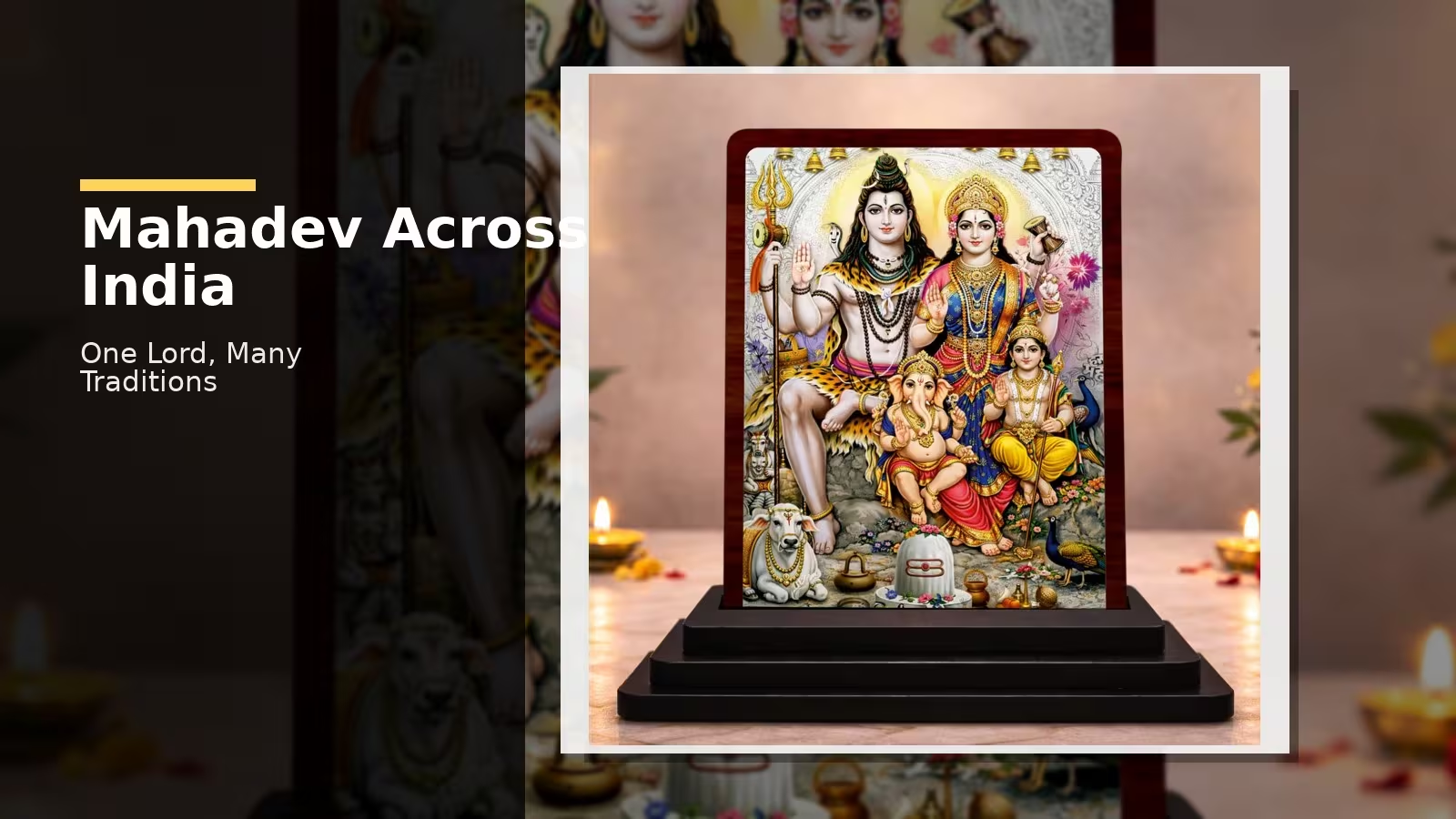
English Version
shiv ji history is not just a story from old times; it is a living stream of devotion that flows through villages, cities, mountain shrines, riverbanks, and temple courtyards. When people speak of Mahadev, they often speak with the same soft trust with which one speaks of an elder in the family. He is called Bholenath, the easy-pleased Lord, yet his presence is vast, deep, and full of mystery. Across India, different regions have loved him in different ways, and that is what makes his history feel so rich and human.
In one place, devotees remember the fierce ascetic who sits in meditation on Mount Kailash. In another, they see the gentle family deity who blesses devotion as Shiv Parvati, with Nandi waiting quietly nearby. In the South, he is worshipped with grand temple rituals and classical reverence. In the North, he is often approached through pilgrimage, fasting, and the rhythm of the sacred month of Shravan. These many traditions do not divide him. They reveal how one divine presence can be loved in many languages of the heart.
Who is Shiv Ji in devotional history?
In Hindu tradition, Shiv Ji is one of the principal deities of the Trimurti, the divine trinity that includes Brahma, Vishnu, and Shiva. He is often understood as the power of transformation. Where one phase ends, Mahadev opens the path for another. This is why devotees see him not only as a destroyer, but also as a purifier, a teacher, and a protector.
His form carries many meanings. The third eye suggests inner awakening. The crescent moon on his head hints at time and calm. The sacred river Ganga flowing from his hair is remembered as a sign of grace held in discipline. The trishul, or trident, symbolizes balance among creation, preservation, and dissolution. The damru is linked with cosmic rhythm. Even the ash on his body reminds devotees that worldly pride is temporary, while truth remains.
Yet the beauty of shiv ji history is that these symbols are not distant philosophy alone. They live in prayer, in temple bells, in the smell of incense, and in the simple offering of water and bilva leaves.
Regional forms of Shiv Ji worship across India
One of the most beautiful parts of shiv ji history is how regional traditions have kept Mahadev close to everyday life. Each part of India has its own devotional mood, and together they form a grand, seamless picture.
North India: pilgrimage, fasting, and mountain devotion
In North India, Shiva devotion often carries the energy of yatra, vows, and seasonal observance. The holy city of Varanasi is deeply associated with Mahadev, and Kashi Vishwanath remains one of the most revered Shiva temples in the country. Devotees believe that the Lord of Kashi is never far from those who remember him with sincerity.
During the month of Shravan, many devotees perform jalabhishek, offering water to the Shiva lingam with devotion and discipline. On Mondays, known as Somvar, fasting and prayer become a gentle act of surrender. In many homes, the name of Shiv Ji is whispered with the hope of peace, family harmony, and courage in difficult times.
South India: temple ritual and sacred architecture
In South India, Shiva worship is often expressed through magnificent temple traditions, ancient architecture, and deeply structured rituals. Temples dedicated to Lord Shiva stand as living centers of faith, music, and daily worship. In Tamil tradition, the Nayanar saints sang of Shiva with intense love, making devotion feel both poetic and personal.
Major Shiva shrines such as Chidambaram, where Shiva is associated with cosmic dance, and the great Jyotirlinga and regional temple traditions across the South show how deeply he is woven into sacred culture. Here, the Lord is not only meditated upon; he is served with a disciplined, ceremonial tenderness that has been preserved for centuries.
West India: fierce grace and local sacred memory
In western regions too, Shiva takes forms that feel both powerful and intimate. Local communities remember him through hill shrines, village temples, and community fairs. In some places, he is honored as a guardian of the land, in others as a family deity who protects homes and livestock. The devotion may be simple, but the feeling is deep.
East India: devotion through festivals and songs
In the East, Shiva’s presence often shines through seasonal festivals, folk songs, and local temple traditions. Devotees gather with offerings, singing, and community prayer. The mood is often warm and collective, where faith feels woven into daily life rather than kept apart from it.
Shiv Parvati: the divine family form
For many devotees, one of the most comforting images in shiv ji history is that of Shiv Parvati together with their family. This form is not only beautiful; it speaks to the sacred balance of renunciation and household life. Shiva, the great ascetic, and Parvati, the compassionate mother, show that spirituality can hold both stillness and love.
In homes, mandirs, and devotional art, Shiv Parvati with Ganesha and Kartikeya often appears as a complete divine family. This image is cherished because it feels close to ordinary human hopes: peace in the home, harmony among loved ones, and blessings for children and elders alike.
Famous Shiva temples and their devotional meaning
Many temples across India deepen our understanding of shiv ji history. Some are linked with Jyotirlinga traditions, believed by devotees to be radiant manifestations of Shiva’s light. Others are remembered through local legends, saint songs, or pilgrimage routes that have lasted for generations.
- Kashi Vishwanath in Varanasi, a sacred center of Shiva devotion.
- Somnath in Gujarat, known for its enduring spiritual significance.
- Mahakaleshwar in Ujjain, closely linked with time, protection, and bhakti.
- Kedarnath in the Himalayas, where the mountain silence itself feels devotional.
- Chidambaram in Tamil Nadu, famous for the cosmic dance tradition of Nataraja.
These temples are not just places to visit. They are living memories of how generations have understood Mahadev through prayer, hardship, joy, and grace.
Why festivals matter in Shiv Ji history
Festivals help keep devotion alive in the rhythm of the year. Mahashivratri is one of the most important nights for Shiva worship. Devotees stay awake, chant his name, offer bel leaves, milk, and water, and remember the union of discipline and compassion that Shiv Ji represents.
The month of Shravan also holds special importance in many regions. The entire season feels like a pilgrimage of the heart. Even those who cannot travel to great temples often create a small sacred corner at home, light a lamp, and offer sincere prayer.
Through such traditions, shiv ji history continues to breathe in the present. It is not locked in the past. It lives in the daily act of remembering.
Symbols devotees return to again and again
Across regional traditions, certain symbols keep returning because they speak directly to the heart:
- Shiva lingam as a symbol of the formless divine
- Trishul as balance and protection
- Nandi as loyal devotion and patience
- Damru as the rhythm of creation
- Bilva leaves as a cherished offering in Shiva worship
These are not only ritual objects. They are reminders. They help devotees feel that Mahadev is near, listening, steady, and compassionate.
A gentle devotional thought for today
When we read shiv ji history through regional traditions, we understand something tender: faith does not always speak in one voice. Sometimes it sounds like a temple bell in the South, sometimes like a mountain breeze in Kedarnath, sometimes like a family prayer in a North Indian home. Yet the feeling is the same. It is the feeling of bowing before the One who holds stillness and change together.
If you wish to keep that sacred presence close in a small corner of your home, Explore the related product on our store. The Shiv Parivar wooden idol can be a simple, graceful way to keep daily remembrance near.
FAQ
Why is Shiv Ji worshipped in so many different forms?
Because devotees experience Mahadev through different emotional and cultural traditions. Some focus on the meditative ascetic, some on the family form, and some on the cosmic Nataraja. All are expressions of one divine presence.
What is the most important symbol in Shiva worship?
The Shiva lingam is one of the most recognized sacred symbols, representing the formless aspect of Shiva and the mystery of divine presence.
Why is Mahashivratri so special?
Mahashivratri is a major night of prayer, fasting, and जागरण for devotees of Shiva. It is seen as a time for deep spiritual remembrance and inner discipline.
Which temples are most famous in Shiv Ji history?
Temples like Kashi Vishwanath, Somnath, Mahakaleshwar, Kedarnath, and Chidambaram are among the most widely revered Shiva temples in India.
What does Shiv Parvati represent?
Shiv Parvati represents the sacred harmony of renunciation and household life, strength and compassion, stillness and love.
Hindi Version
shiv ji history sirf purani kahaniyon ka naam nahi hai; yeh bhakti ki woh dhara hai jo gaon, shehar, pahadon, nadiyon ke kinare, aur mandiron ki deewaron mein aaj bhi beh rahi hai. Jab log Mahadev ka naam lete hain, to aksar unki awaaz mein wahi narm vishwas hota hai jo hum kisi bade-buzurg ki baat sunte waqt mehsoos karte hain. Unhein Bholenath kaha jata hai, jo jaldi prasann ho jate hain, lekin unki mahima kitni gahri hai, yeh unki history aur unki pooja ki alag-alag paramparaon se samajh aata hai.
Ek jagah log unhein Kailash par dhyaan mein baithe yogi ke roop mein yaad karte hain. Doosri jagah unhein Shiv Parvati ke parivarik roop mein pooja jata hai, jahan Nandi bhi shant bhakti ke saath khada hota hai. South India mein unki pooja bade mandir, niyamit ritual aur classical shraddha ke saath hoti hai. North India mein Shravan, Somvar vrat aur tirth-yatra ke roop mein Mahadev ka naam liya jata hai. Yeh sab alag nahin karte, balki dikhate hain ki ek hi Ishwar ko kitni alag bhashaon mein mehsoos kiya ja sakta hai.
Shiv Ji kaun hain?
Hindu parampara mein Shiv Ji Trimurti ke pramukh devtaon mein se ek hain. Unhein badlav ke devta maana jata hai. Jahan ek daur khatam hota hai, Mahadev wahan naye marg ka darwaza kholte hain. Isliye bhakt unhein sirf vinash ke devta nahi, balki shuddhi karne wale, sikhane wale aur raksha dene wale roop mein bhi dekhte hain.
Unke roop mein kai arth chhupe hain. Teesri aankh antar-jagran ka sanket hai. Sar par chandra samay aur shaanti ka bodh karata hai. Jataon se behati Ganga karuna aur niyantran ka prateek hai. Trishul srishti, sthiti aur lay ke santulan ka sanket deta hai. Damru srishti ke naad se joda jata hai. Sharir par bhasm yeh yaad dilati hai ki ahankar mitne wala hai, satya hi shesh rehta hai.
Regional traditions mein Shiv Ji ki pooja
Shiv Ji history ka sabse sundar pehlu yeh hai ki alag-alag kshetron ne Mahadev ko rozmarra ke jeevan ke bahut kareeb rakha. Har jagah ka bhakti-bhav alag hai, lekin sab milkar ek hi pavitra chitra banate hain.
North India: yatra, vrat aur pahadi bhakti
North India mein Shiv bhakti mein yatra, niyam aur Shravan ka vishesh mahatva hota hai. Kashi Vishwanath, Varanasi mein, Mahadev ke sabse punyatam sthalon mein se ek mana jata hai. Bhakt maante hain ki Kashi ke Swami unse kabhi door nahi hote.
Shravan mahine mein jalabhishek ka vishesh mahatva hota hai. Somvar ke vrat, doodh, jal aur belpatra ka arpan, aur naam-jap bhakti ko aur gehra bana dete hain. Gharon mein bhi Shiv Ji ka naam shanti, parivarik sukh aur sankat se nikalne ki shakti ke liye liya jata hai.
South India: mandir parampara aur shastriya pooja
South India mein Shiv pooja bhavya mandiron, pracheen shilpakala aur niyamit rituals ke roop mein dikhti hai. Tamil bhakti parampara mein Nayanar santon ne Shiv Ji ko bahut prem aur kavita ke saath gaaya. Chidambaram jaisi paramparaon mein Nataraja roop mein Mahadev ko cosmic dance ke swaroop mein dekha jata hai. Yahan bhakti sirf dhyaan nahi, balki sewa aur anushasan bhi hai.
West aur East India mein sthaniya shraddha
West India mein pahaadi shrines, gaon ke mandir aur lok-utsav Mahadev ki yaad ko zinda rakhte hain. East India mein tyohar, lok-geet aur samudayik pooja ke madhyam se unki upasthiti mehsoos ki jati hai. Har jagah bhakti ka swar alag hai, par bhav ek hi hai.
Shiv Parvati: parivarik aur pavitra roop
Bahut se bhakton ke liye Shiv ji history ka sabse apna-sa roop Shiv Parvati ka hai. Yeh roop tyag aur grihasth jeevan ke santulan ko dikhata hai. Shiv Ji, jo maha-yogi hain, aur Parvati, jo karuna aur mamta ki pratik hain, milkar yeh batate hain ki adhyatmikta mein shaanti bhi ho sakti hai aur prem bhi.
Ghar ke mandiron aur dharmik chitrakala mein Shiv Parvati ke saath Ganesh aur Kartikeya ka parivarik roop bhi bahut priya maana jata hai. Yeh chitra manushya ki apekshao ke bahut kareeb lagta hai: ghar mein shanti, parivaar mein ekta, aur sabhi sadasyon par kripa.
Prasiddh Shiva mandir aur unka mahatva
India ke anek mandir Shiv Ji history ko aur gehra banate hain. Kuch Jyotirlinga parampara se jude hain, jise bhakt Mahadev ki alokik jyoti ka prakat roop maante hain. Kuch mandir saint poetry, sthaniya kathaon aur purani yatra-paramparaon se apni pehchan rakhte hain.
- Kashi Vishwanath — Varanasi ka pavitra Shiv kendra
- Somnath — atal shraddha aur adhyatmik taakat ka prateek
- Mahakaleshwar — samay, raksha aur bhakti se juda mandir
- Kedarnath — Himalaya ki nishabd pavitrata se bhara tirth
- Chidambaram — Nataraja aur cosmic dance ki prasiddh sthali
Yeh mandir sirf dekhne ki jagah nahi, balki pidhiyon ki bhakti yaad karne ki jeevit sthaliyan hain.
Tyohar Shiv Ji history mein kyon mahatvapurn hain?
Tyohar bhakti ko saal ke rhythm mein zinda rakhte hain. Mahashivratri Shiv upasana ka sabse mahatvapurn raaton mein se ek hai. Bhakt jaagran karte hain, mantra japte hain, belpatra, jal aur doodh arpan karte hain, aur Mahadev ke discipline aur karuna ko yaad karte hain.
Shravan ka mahina bhi bahut pavitra maana jata hai. Jo log bade mandiron tak nahi ja pate, woh ghar mein hi chhota-sa mandir sajakar deep jalate hain aur shraddha se prarthana karte hain. Isi tarah Shiv Ji history aaj ke jeevan mein bhi saans leti rehti hai.
Bhakton ke priya prateek
- Shiva lingam — nirakar divyata ka prateek
- Trishul — santulan aur raksha ka sanket
- Nandi — nishtha aur dhairya ka roop
- Damru — srishti ke naad ka prateek
- Belpatra — Shiv pooja ka priya arpan
Yeh sab sirf ritual ke saman nahi hain. Yeh yaad dilaate hain ki Mahadev paas hain, sun rahe hain, aur kripa kar rahe hain.
Aaj ki ek narm si bhakti-soch
Jab hum Shiv Ji history ko regional traditions ke saath padhte hain, to ek narm sach samajh aata hai: bhakti hamesha ek hi bhasha mein nahi bolti. Kabhi South ke mandir ki ghanti lagti hai, kabhi Kedarnath ki pahadi hawa, kabhi North India ke ghar ka shant prarthana-kshan. Bhav sab mein ek hi hai — us Parmeshwar ko naman jo sthirata aur badlav, donon ko saath sambhalte hain.
Agar aap apne ghar ke chhote se pooja-sthan mein is pavitra yaad ko aur kareeb rakhna chahte hain, to Explore the related product on our store. Shiv Parivar wooden idol ek saadha, sundar aur shraddha-purna vikalp ho sakta hai.
FAQ
Shiv Ji ki pooja itne alag roopon mein kyon hoti hai?
Kyuki bhakt Mahadev ko alag-alag bhav aur sanskritik paramparaon mein mehsoos karte hain. Koi unhein yogi roop mein dekhta hai, koi parivarik roop mein, aur koi Nataraja ke roop mein. Yeh sab ek hi divyata ke alag roop hain.
Shiv pooja ka sabse prasiddh prateek kaun sa hai?
Shiva lingam sabse prasiddh pavitra prateekon mein se ek hai. Yeh Shiv ke nirakar swaroop aur divya rahasya ka sanket deta hai.
Mahashivratri itni mahatvapurn kyon hai?
Mahashivratri Shiv bhakton ke liye vrat, jaagran aur gahri prarthana ki raat hai. Yeh antar-sadhana aur samarpan ka samay maana jata hai.
Shiv Ji history mein kaun se mandir sabse prasiddh hain?
Kashi Vishwanath, Somnath, Mahakaleshwar, Kedarnath aur Chidambaram bharat ke prasiddh Shiv mandiron mein se hain.
Shiv Parvati kya darshata hai?
Shiv Parvati tyag aur grihasth jeevan, shakti aur karuna, shaanti aur prem ke pavitra santulan ko darshata hai.