
Shiv Ji Ke Roop, Aayudh Aur Vahan Ka Mahatva
April 18, 2026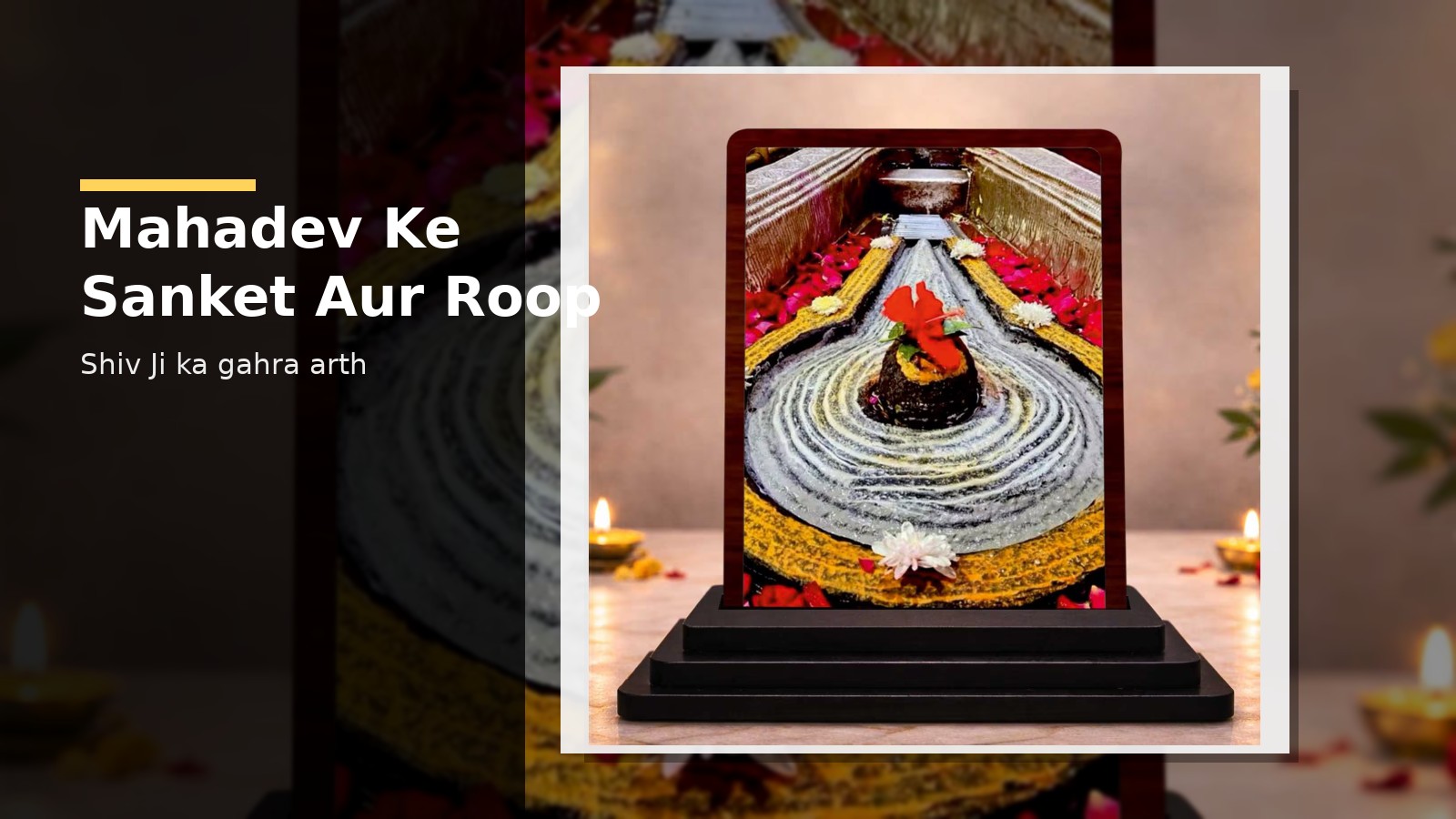
English Version
When devotees whisper mahadev significance, they are often not only remembering a name—they are remembering an entire way of life. Shiv Ji is worshipped as the gentle father of the universe, the fierce destroyer of illusion, the silent yogi, and the compassionate protector who accepts even a leaf, a little water, and a true heart. His forms, weapons, and vehicle are not just beautiful details in sacred art. They are living symbols, each carrying a message for the soul.
In every painting, murti, or temple carving, Shiv Ji appears with a quiet power that feels timeless. A grandmother might say, “Dekho beta, Mahadev ka har chinh kuch keh raha hai.” And that is true. His matted hair, crescent moon, third eye, trishul, damru, snake, and Nandi are all part of one divine language.
Who Is Shiv Ji in Devotional Memory?
Shiv Ji is revered as Mahadev, the Great God, and also as Bholenath, the easily pleased Lord who responds to sincere devotion. He is the Lord of yogis, the master of inner stillness, and the divine presence who stands beyond pride, fear, and ego.
Among the Trimurti, Shiva is associated with transformation. Not destruction in a cruel sense, but the ending of what no longer serves truth. Old habits, false identity, attachment, and arrogance must fall away so a deeper life can begin. This is one of the strongest layers of mahadev significance.
Devotees love Shiv Ji because he feels both vast and near. He can be meditated upon in the Himalayas, and he can also be worshipped simply at home with a pot of water, milk, bilva leaves, and a prayer from the heart.
Shiv Ji Ke Roop Aur Unka Arth
Shiv Ji’s many forms are not random; they reveal different truths about divine life.
- Yogi form: Symbol of deep meditation, discipline, and inner peace.
- Nataraja form: The cosmic dancer who shows that creation, preservation, and dissolution are part of one rhythm.
- Ardhanarishvara form: Half Shiva and half Shakti, showing the union of masculine and feminine divine energies.
- Bhikshatana form: The wandering ascetic, reminding us of humility and detachment.
- Neelkanth form: The one who held poison in his throat for the welfare of the world.
Each roop speaks differently, but the heart of the message remains the same: live with awareness, surrender ego, and walk the path of truth.
The Meaning of Shiv Ji’s Aayudh
Unlike many warrior deities, Shiv Ji’s aayudh are deeply symbolic. They are not only weapons of battle; they are tools of spiritual teaching.
1. Trishul
The trishul is the most recognized symbol of Mahadev. It is often understood as the power beyond three forces, three gunas, or the three stages of existence—creation, preservation, and destruction. It also reminds devotees that divine strength cuts through ignorance.
2. Damru
The small drum in Shiv Ji’s hand is tied to sound, rhythm, and the pulse of the universe. In sacred imagination, the damru is linked with the first vibration from which order and movement arise. It tells us that even silence has a heartbeat.
3. Pashupatastra
In certain traditions, Shiv Ji is connected with the powerful Pashupatastra, a celestial force. But spiritually, its deeper meaning is the power to break bondage. “Pasha” means bond, and the Lord who frees beings from bondage is truly compassionate.
4. The Third Eye
Though not a weapon in the ordinary sense, Shiv Ji’s third eye is a sacred instrument of truth. It sees beyond appearances. It burns illusion, not out of anger alone, but to protect dharma and restore balance.
These symbols make mahadev significance feel very personal. They remind devotees that spiritual power is not only about force—it is about clarity, restraint, and truth.
Shiv Ji Ka Vahan: Nandi Ka Gahra Sandesh
Shiv Ji’s vehicle is Nandi, the sacred bull, and no discussion of Mahadev is complete without him. Nandi is not just a mount. He is the devoted gatekeeper, the ideal disciple, and the image of unwavering faith.
In temples, Nandi often sits facing the Shiva lingam, calm and attentive. This posture teaches something beautiful: true devotion waits patiently, listens deeply, and remains focused on the Lord alone.
Nandi also symbolizes strength with softness. A bull is powerful, yet in devotion he becomes still. That stillness is a lesson for every household: power becomes sacred when it is disciplined by love.
Other Sacred Symbols Associated with Mahadev
Shiv Ji’s iconography is full of signs that devotees have loved for centuries.
- Jata (matted hair): Symbol of renunciation, wild freedom, and spiritual energy.
- Crescent moon: A sign of time, calmness, and the gentle rhythm of change.
- Ganga flowing from the hair: Shows that divine power can hold even the greatest force and channel it for the good of the world.
- Snake around the neck: A reminder that fear itself can be mastered and transformed.
- Bilva leaves: Offered with devotion, they are beloved in Shiva worship and carry a special sacred place in temple tradition.
Together, these symbols create a complete spiritual picture. Mahadev does not stand apart from life; He embraces its fierce, calm, wild, and healing aspects all at once.
Famous Temples and Living Devotion
Across India, Shiv Ji is worshipped in countless sacred places. Somnath, Kashi Vishwanath, Kedarnath, Mahakaleshwar, and Bhimashankar are cherished by devotees for their spiritual power and deep history. Each temple carries its own atmosphere of faith, but the same heart beats in all of them: surrender, reverence, and trust in Mahadev.
Bhimashankar, especially, is dear to many devotees who feel a personal connection to Shiva’s protective presence. The shrine reminds us that sacredness is not only found in grand pilgrimages; it can also be held in a small frame at home, where the name of Mahadev is remembered daily.
Festival Significance and Daily Worship
Mahashivratri is the most celebrated night dedicated to Shiv Ji, when devotees fast, chant, meditate, and stay awake in remembrance. Sawan, too, is a beloved month of Shiva devotion, filled with prayers, abhishek, and temple visits.
But the beauty of Shiva bhakti is that it does not live only in festivals. Many families begin the day with a simple prayer, a diya, a few bilva leaves, or the chanting of “Om Namah Shivaya.” In that small act, mahadev significance becomes part of everyday life.
Why Shiv Ji’s Symbols Matter to the Heart
The deeper one looks, the more one understands that Shiv Ji’s form is a mercy. He does not demand grandeur before listening. He teaches that the inner temple matters more than outer display.
That is why devotees feel comfort in his image. The trishul reminds them to be brave. Nandi reminds them to be steady. The crescent moon reminds them to stay calm. The third eye reminds them to see truth. Every symbol quietly says: “Come as you are, but do not remain as you were.”
Mahadev Significance in Everyday Life
For many devotees, Mahadev is not only a deity of mythology. He is a living presence in difficult days, in marriage prayers, in family hope, in quiet grief, and in the desire to begin again.
That is why his symbols continue to matter. They are not museum pieces. They are reminders for the journey of the soul. Even a small Shiva image on a desk or in a pooja room can turn a corner of the home into a place of peace and remembrance.
If you wish to keep that devotional feeling close, you may Explore the related product on our store. A compact Bhimashankar Jyotirling frame can bring a gentle spiritual presence to your mandir, office, or gifting moments.
Frequently Asked Questions
Why is the trishul important in Shiva worship?
The trishul symbolizes the power of Mahadev to go beyond illusion and balance the forces of life. It is one of the strongest signs of spiritual authority.
Why does Nandi sit facing Shiva?
Nandi represents perfect devotion and discipline. His facing posture shows attentive surrender and the ideal relationship between disciple and Lord.
What does the third eye of Shiv Ji mean?
It represents inner vision, wisdom, and the power to burn ignorance. The third eye is a symbol of truth beyond surface appearance.
Which names of Shiv Ji are most loved by devotees?
Mahadev, Bholenath, Neelkanth, Shankar, and Pashupati are among the beloved names that reflect different aspects of his divine nature.
What is the spiritual lesson behind Mahadev significance?
The deeper lesson is transformation through truth, humility, and surrender. Shiv Ji teaches that peace is born when ego is softened and the heart becomes sincere.
Hindi Version
Jab bhakt mahadev significance kehte hain, to ve sirf ek naam ya ek moorti ko yaad nahi karte. Ve ek poori bhakti-dhara ko yaad karte hain. Shiv Ji ko kabhi yogi roop mein dekha jata hai, kabhi Neelkanth ke roop mein, kabhi Nataraja ke roop mein, aur kabhi Bholenath ke roop mein—jo ek sachche, saral, aur prem se bhare hue hriday se jaldi prasann ho jaate hain.
Unke roop, aayudh aur vahan sirf sajavat ke liye nahi hain. Har chinh ek sandesh deta hai. Jaise dadi-nani pyaar se kah deti hain, “Beta, Mahadev ke har roop mein koi na koi gyaan chhupa hai.”
Shiv Ji Kaun Hain?
Shiv Ji ko Mahadev, Shankar, Bholenath aur Pashupati ke naam se bhi pooja jata hai. Ve keval vinash ke devta nahi, balki parivartan ke devta hain. Jo kuchh satya ke khilaf hai, jo ahankar mein bandha hua hai, jo bhram aur moha mein uljha hai—uska ant karke nayi shuruaat ka marg kholna hi Shiv tattva hai.
Isi wajah se mahadev significance bhakti mein bahut gehra mana jata hai. Shiv Ji door baithe devta nahi lagte; ve to har us bhakt ke paas hain jo sachche mann se unka naam leta hai.
Shiv Ji Ke Roop Aur Unka Sanketik Arth
Shiv Ji ke roop kai hain, lekin har roop ek alag saadhana aur alag sandesh deta hai.
- Yogi roop: Gahan dhyan, vairagya aur antarik shanti ka sanket.
- Nataraja roop: Srishti, palan aur lay ke anant chakr ka prateek.
- Ardhanarishvara roop: Shiv aur Shakti ke purn santulan ka sandesh.
- Neelkanth roop: Jagat ke hit ke liye vish ko kanth mein dharan karne wali karuna.
- Bhikshatana roop: Namrata aur sansarik ahankar se mukti ka path.
In roopon ko dekhkar lagta hai jaise Mahadev har samay ek hi baat samjha rahe hon: andar ki yatra ko jagao, aur satya ko apnao.
Shiv Ji Ke Aayudh Ka Arth
Mahadev ke aayudh yudh ke hathiyar jitne hi lagte hain, utne hi gahre adhyatmik sanket bhi dete hain.
Trishul
Trishul sabse prasiddh chinh hai. Iska sambandh tin gunon, tin kaal ke pehluon, ya srishti-palan-lay ke santulan se mana jata hai. Yeh sanket deta hai ki gyan bhram ko kaat deta hai.
Damru
Damru dhvani, lay aur brahmand ke spandan ka prateek hai. Yeh batata hai ki srishti ke peeche ek divya naad hai, ek aisi dhun jo sab kuchh gati mein le aati hai.
Pashupatastra
Kuchh paramparao mein Mahadev ko Pashupatastra ka bhi adhipati mana gaya hai. Iska gahra arth yeh hai ki jo bandhan ko tod de, wahi asli mukti ka data hai. “Pash” ka arth bandhan hota hai.
Teesra Netra
Shiv Ji ka teesra netra roop se alag ek pavitra drishti ka chinh hai. Yeh sirf dekhne ki shakti nahi, balki satya ko pehchanne ki antarik drishti hai. Jo bhram hai, use yeh bhasm kar deta hai.
Yahi sab milkar mahadev significance ko aur bhi gehra bana dete hain. Shiv Ji humein shakti ke saath sanyam, aur taqat ke saath vivek sikhate hain.
Shiv Ji Ka Vahan: Nandi
Nandi Mahadev ka vahan hi nahi, unka param bhakt aur dwarpal bhi hain. Mandir mein Nandi aksar Shivling ki or mukh karke baithe hote hain. Yeh sthiti bahut kuchh sikhaati hai—bhakti ko dhairya chahiye, ekagrata chahiye, aur poore mann se suni jaane wali prarthana chahiye.
Nandi humein yaad dilate hain ki shakti tab pavitra banti hai jab usme prem aur vinamrata ho.
Shiv Ji Se Jude Anya Pavitra Chinh
Shiv Ji ke roop aur chinh bahut gehre hain:
- Jata: Vairagya aur mukt swabhav ka sanket.
- Chandrama: Shanti aur samay ke pravah ka prateek.
- Ganga: Divya shakti jo lok-kalyan ke liye dharan ki gayi.
- Saanp: Bhay par vijay aur jagrukta ka sanket.
- Bilva patra: Shiv puja mein atyant priya aur pavitra patr.
In sab chinhon se Mahadev ka swaroop poora hota hai—wo ek aise devta hain jo jeevan ke har rang ko apne andar samete hue hain.
Prasiddh Mandir Aur Jeevit Bhakti
Somnath, Kashi Vishwanath, Kedarnath, Mahakaleshwar aur Bhimashankar jaise mandir Shiv bhakti ke anmol kendra hain. Har mandir ki apni kahani, apni hawa aur apni shraddha hai. Lekin sab mein ek hi bhaav dhadakta hai—Mahadev ke prati sampoorna samarpan.
Bhimashankar ka naam lete hi bahut se bhakton ko ek shaant, pavitra aur rakshak Mahadev ki anubhooti hoti hai. Aisi hi bhakti ghar ke ek chhote se mandir tak bhi aa sakti hai.
Mahashivratri, Sawan Aur Rozmarra Ki Bhakti
Mahashivratri Shiv Ji ka sabse pramukh parv hai. Is din vrat, jaagran, jap aur dhyan ka bahut mahatva hota hai. Sawan ka mahina bhi Shiv bhakti ka atyant priya samay mana jata hai.
Lekin Shiv bhakti sirf tyoharon tak simit nahi hai. Roz subah “Om Namah Shivaya” ka jap, thoda jal, ek diya, aur kuchh bilva patra—yeh sab milkar ghar mein Mahadev ki upasthiti ka ehsaas kara dete hain.
Mahadev Significance Dil Ko Kyun Chhoo Jata Hai?
Kyuki Shiv Ji humein batate hain ki asli pavitrata bahari dikhave mein nahi, andar ki sachchai mein hai. Unka trishul himmat deta hai. Nandi sthirata sikhate hain. Chandrama shaanti ka sandesh deta hai. Teesra netra satya dikhata hai.
Shiv Ji ke har chinh mein ek hi baat chhupi hai: ahankar ko halka karo, aur bhakti ko gehra karo.
Ghar Mein Mahadev Ki Yaad
Bahut se log Mahadev ko sirf mandir mein nahi, apne ghar, office aur pooja sthal mein bhi yaad rakhte hain. Ek chhoti si Shiv tasveer bhi din bhar ka man halka kar deti hai aur mann ko sthir karti hai.
Agar aap apne space mein yeh bhakti aur nikat lana chahte hain, to Explore the related product on our store. Yeh Bhimashankar Jyotirling frame ghar ke mandir, desk ya gifting ke liye ek sundar aur bhavpurn vikalp ho sakta hai.
FAQ
Shiv Ji ka trishul kya darshata hai?
Trishul brahmand ke santulan, gyan aur bhram-vinash ka sanket hai. Yeh Mahadev ki adhyatmik shakti ka pramukh chinh hai.
Nandi hamesha Shiv Ji ke saamne kyun hote hain?
Nandi ananya bhakti aur ekagrata ka prateek hain. Unka mukh Shivling ki or hona poori shraddha aur samarpan ka sandesh deta hai.
Teesra netra kya batata hai?
Yeh antarik drishti aur satya ko dekhne ki shakti ka sanket hai. Isse bhram aur ahankar ka ant maana jata hai.
Mahadev ke pramukh naam kaun se hain?
Mahadev, Bholenath, Shankar, Neelkanth aur Pashupati unke bahut priya aur prasiddh naam hain.
Mahadev significance ka sabse bada sandesh kya hai?
Sabse bada sandesh hai—sachchai, vinamrata, samarpan aur antarik parivartan. Shiv Ji humein andar se jagruk banna sikhate hain.