
Shiv Ji History: Janm-Katha, Early Legends, and Spiritual Meaning
May 4, 2026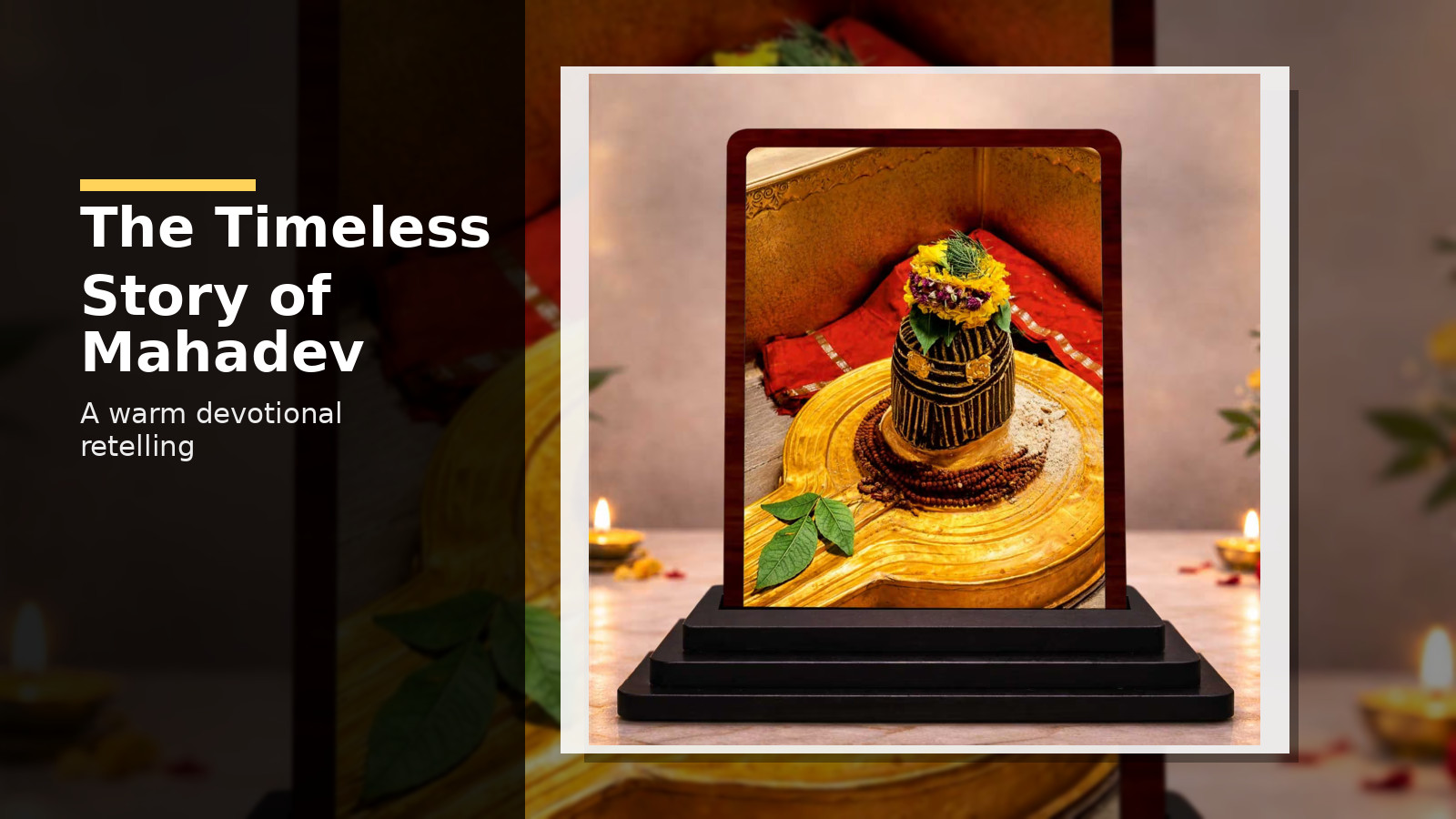
English Version
When children first hear shiv ji history, it often begins like a gentle kahani told by a dadi or nani in the quiet of evening. Someone lights a diya, folds their hands, and says, “Beta, Shiv Ji are not only a god of temples; he is the Lord who listens to silence, to pain, to prayer, and to the soft hope hidden inside every heart.” That is how many devotees first come close to Mahadev—through love, wonder, and a story that feels both ancient and deeply personal.
Unlike stories that begin with a single birth scene, the sacred presence of Shiv Ji is often understood as eternal. In Hindu tradition, Shiva is part of the divine trinity—Brahma the creator, Vishnu the preserver, and Shiva the transformer. Yet in the heart of devotion, Shiv Ji is more than a philosophical idea. He is the one who sits in stillness on Mount Kailash, who wears the moon on his matted hair, who carries the Ganga in his locks, and who accepts even a single bilva leaf offered with love.
Who Is Shiv Ji?
Shiv Ji, also called Mahadev, Bholenath, Rudra, and Neelkanth, is one of the most loved deities in Hindu devotion. He is known as the destroyer of negativity, ego, and illusion, but that does not mean destruction in a cruel sense. In the spiritual sense, Shiva clears the way for renewal. He ends what must end so that truth can bloom again.
That is why devotees feel close to him in times of sorrow, change, or inner struggle. He is often imagined as simple, compassionate, and easy to please—Bholenath, the innocent Lord. At the same time, he is the most powerful yogi, the silent meditator, and the cosmic force behind transformation.
Shiv Ji History: The Origin Story in Devotional Tradition
In the broad stream of Hindu thought, Shiva is not treated like a being who had a worldly beginning in the ordinary sense. He is regarded as timeless. Still, many beloved legends explain his appearance, qualities, and sacred role in ways that ordinary people can hold in their hearts.
One cherished thread in Shiv Ji history is that he appears wherever devotion becomes intense. Ancient stories describe how sages, gods, and devotees turned to him during crisis, and Shiva responded not with showmanship, but with deep stillness and divine power. This is why his form is often associated with meditation, ascetic life, and inner awakening.
Another widely known sacred image is the Shivling. Devotees see it not as a mere symbol, but as a profound representation of the formless divine and the source of creation. The Shivling reminds worshippers that Shiva is beyond human limits, beyond shape, beyond ordinary language—yet lovingly available through prayer.
Early Legends Loved by Devotees
The early legends of Shiv Ji are full of emotion, wonder, and spiritual meaning. They are not just stories for entertainment; they are ways of understanding how the divine moves in the world.
- Marriage with Parvati: The union of Shiv Ji and Parvati Ji is one of the most beloved divine stories. It shows balance—stillness and energy, meditation and devotion, ascetic life and household grace.
- Neelkanth legend: During the churning of the ocean, Shiva is said to have held the poison in his throat to protect the world. His throat turned blue, giving him the name Neelkanth. Devotees remember this as the ultimate act of sacrifice.
- Ganga in his hair: When the sacred river descended from the heavens, Shiva received her in his matted locks. This image shows his strength, patience, and capacity to contain overwhelming force with calmness.
- His compassion for devotees: Many stories show that Shiva responds to sincere prayer, whether from a sage, a king, or a simple soul. His heart is often described as open to anyone who comes with faith.
These legends make Shiv Ji history feel alive. They show not only divine power, but also tenderness, restraint, and a deep willingness to carry the burden of the world.
The Meaning of Shiv Ji’s Symbols
Devotees often connect with Shiva through his symbols, and each one carries a spiritual message.
- Trishul: A reminder of balance beyond the three qualities of nature, and the power to remove ignorance.
- Damaru: The sound of creation, rhythm, and cosmic order.
- Third eye: Inner vision, truth, and the power to see beyond illusion.
- Rudraksha: A sacred bead linked with devotion, discipline, and remembrance.
- Vibhuti or sacred ash: A reminder of impermanence and the truth that all worldly forms eventually return to dust.
These symbols are not decorative alone. They are spiritual teachings in visual form. Through them, the devotee learns to live with less ego, more awareness, and deeper surrender.
Famous Temples Connected to Shiv Ji
Across India, countless temples carry the living presence of Shiva. Some are especially beloved because they hold centuries of faith, pilgrimage, and prayer.
- Kashi Vishwanath, Varanasi: One of the most revered Jyotirlingas, deeply connected with moksha and the sacred city of Kashi.
- Somnath, Gujarat: Known for its powerful history and enduring devotion.
- Kedarnath, Uttarakhand: A high Himalayan shrine that inspires humility, endurance, and deep faith.
- Rameswaram, Tamil Nadu: A sacred place where Shiva worship holds a special place in pilgrimage tradition.
- Mahakaleshwar, Ujjain: A powerful Jyotirlinga associated with time, protection, and divine presence.
Each temple offers a different mood of devotion. Some feel grand and ancient, some feel quiet and mountain-like, and some feel especially intimate. Yet the same faith runs through them all: the feeling that Shiva is close.
Festival Significance and Daily Worship
Shiv Ji history is also remembered through festivals and daily rituals. The most important among them is Mahashivratri, the great night of Shiva. On this night, devotees fast, sing bhajans, offer milk, water, bilva leaves, and pray through the night with devotion and discipline.
Beyond festivals, many families keep a daily rhythm of remembrance. Early morning prayers, evening aarti, and quiet chanting of “Om Namah Shivaya” become a way of bringing Shiva into ordinary life. This is why Shiva worship feels so personal to many people—it is not only for the temple, but for the home, the mind, and the heart.
Why Devotees Feel So Deeply Connected to Shiv Ji
People often say they feel safe with Shiv Ji because he understands both pain and peace. He is associated with renunciation, but also with grace. He is a yogi, but also a loving family deity. He is fierce in protecting dharma, yet deeply compassionate toward all who call him with sincerity.
For many devotees, Shiva represents the strength to let go. Let go of fear. Let go of pride. Let go of what no longer serves the soul. In that sense, Shiv Ji history is not just about ancient stories—it is about an inner journey that continues every day.
Shiv Ji in Family Tradition and Living Faith
In many homes, Shiv Ji is not only remembered on special days. He is part of family rhythm—morning lamps, vrat stories, temple visits, and children learning the name “Mahadev” from elders. Over generations, these small acts create a living thread of devotion.
That is why Shiva’s story never feels old. It keeps returning in new forms: in the sound of a conch, in the touch of cool water on a Shivling, in the silence of a prayer room, and in the tears of a devotee who feels heard at last.
FAQ
Why is Shiv Ji called Bholenath?
Shiv Ji is called Bholenath because he is believed to be simple, innocent in his compassion, and easy to please with sincere devotion.
What is the spiritual meaning of the Shivling?
The Shivling represents Shiva as the formless divine source. It reminds devotees that the ultimate truth is beyond shape, yet can be worshipped with love.
Which festival is most important for Shiv Ji?
Mahashivratri is the most widely celebrated festival dedicated to Shiv Ji. It is observed with fasting, prayer, night जागरण, and worship.
Why do devotees chant Om Namah Shivaya?
This mantra is a sacred salutation to Shiva. Devotees chant it for peace, focus, surrender, and inner strength.
Which places are famous in Shiv Ji history and worship?
Some of the most famous sacred places are Kashi Vishwanath, Somnath, Kedarnath, Rameswaram, and Mahakaleshwar.
A Gentle Devotional Note
If this story has stirred your heart, you may like to keep a small reminder of Mahadev in your prayer corner or workspace. A thoughtful devotional piece can make daily remembrance feel closer and more personal. You can explore the related product on our store for a simple, sacred touch inspired by Kashi Vishwanath.
हिंदी संस्करण
जब बच्चे पहली बार shiv ji history सुनते हैं, तो वह अक्सर किसी दादी-नानी की धीमी, प्यारी कहानी की तरह शुरू होती है। शाम का समय होता है, दीपक जल रहा होता है, और कोई बड़े स्नेह से कहता है, “बेटा, शिव जी सिर्फ मंदिरों के देवता नहीं हैं; वे उस मौन को सुनते हैं जिसमें दुख छिपा होता है, उस प्रार्थना को समझते हैं जो आंखों में बिना बोले रह जाती है।” यही वह पहला भाव है जिससे बहुत-से भक्त महादेव के करीब आते हैं—श्रद्धा, अपनापन और एक ऐसी कथा से, जो पुरानी होते हुए भी आज की लगती है।
अन्य कथाओं की तरह शिव जी की कहानी किसी एक जन्म-क्षण से नहीं जुड़ती। हिंदू परंपरा में शिव को अनादि, शाश्वत और कालातीत माना गया है। वे त्रिदेवों में संहारक माने जाते हैं, लेकिन यह संहार क्रूर नहीं, बल्कि रूपांतरण का संकेत है। जो टूटकर नया बनना चाहिए, उसे शिव अपनी शक्ति से बदलते हैं। इसलिए वे विनाश के नहीं, पुनर्जन्म और जागरण के देवता भी हैं।
शिव जी कौन हैं?
शिव जी, जिन्हें महादेव, भोलेनाथ, रुद्र और नीलकंठ के नाम से भी जाना जाता है, हिंदू भक्ति के सबसे प्रिय देवताओं में से एक हैं। वे उस शक्ति के प्रतीक हैं जो अहंकार, अज्ञान और नकारात्मकता को हटाती है।
भक्त उन्हें भोलेनाथ कहते हैं क्योंकि वे सरल भक्ति से शीघ्र प्रसन्न हो जाते हैं। वहीं योगियों के लिए वे परम ध्यानमग्न योगी हैं। गृहस्थ जीवन से जुड़े लोगों के लिए वे परिवार, करुणा और संतुलन के भी प्रतीक हैं। यही उनकी विशेषता है—वे जितने गहन हैं, उतने ही सहज भी।
Shiv Ji History: जन्म-कथा की जगह शाश्वत स्वरूप
शिव जी की कथा में सबसे सुंदर बात यह है कि उन्हें किसी साधारण मानव-जन्म की तरह नहीं देखा जाता। वे अनादि माने जाते हैं। फिर भी अनेक पौराणिक कथाएँ उनके स्वरूप, कृपा और दिव्य कार्य को समझाने के लिए हमारे सामने आती हैं।
Shiv Ji history का एक प्रमुख भाव यह है कि जब-जब भक्ति गहरी होती है, शिव प्रकट होते हैं। ऋषि, देवता और भक्त संकट के समय उनकी शरण लेते हैं, और शिव किसी दिखावे के बिना, मौन शक्ति के साथ उत्तर देते हैं। इसलिए उनका स्वरूप ध्यान, तप और आत्म-जागरण से जुड़ा है।
शिवलिंग को भी भक्त केवल प्रतीक नहीं मानते। वह निराकार परम सत्ता और सृष्टि के स्रोत का दिव्य संकेत है। यह हमें याद दिलाता है कि शिव किसी एक रूप में सीमित नहीं, फिर भी प्रार्थना के माध्यम से बहुत निकट हैं।
प्रारंभिक और प्रिय कथाएँ
शिव जी से जुड़ी प्रारंभिक कथाएँ भक्तों के हृदय में विशेष स्थान रखती हैं। ये केवल कथा नहीं, बल्कि आध्यात्मिक सीख हैं।
- शिव-पार्वती विवाह: यह कथा संतुलन की सीख देती है—ध्यान और शक्ति, वैराग्य और गृहस्थ जीवन, मौन और करुणा।
- नीलकंठ कथा: समुद्र मंथन के समय जब विष निकला, शिव ने उसे अपने कंठ में धारण कर लोक-रक्षा की। उनका कंठ नीला पड़ गया और वे नीलकंठ कहलाए।
- गंगा को जटाओं में धारण करना: स्वर्ग से उतरती गंगा को शिव ने अपनी जटाओं में समेट लिया। यह उनकी सहनशीलता, शक्ति और करुणा का प्रतीक है।
- भक्तों पर कृपा: अनेक कथाओं में शिव सरल हृदय वाले भक्तों पर शीघ्र प्रसन्न होते दिखते हैं।
इन कथाओं से शिव जी history केवल पुरानी नहीं लगती, बल्कि जीवित और हृदयस्पर्शी प्रतीत होती है।
शिव जी के प्रतीकों का अर्थ
भक्त शिव जी को उनके प्रतीकों के माध्यम से भी समझते हैं। हर प्रतीक एक आध्यात्मिक संदेश देता है।
- त्रिशूल: सृष्टि के तीन गुणों से परे संतुलन और अज्ञान का नाश।
- डमरू: सृष्टि की ध्वनि, लय और ब्रह्मांडीय ताल।
- तीसरा नेत्र: अंतर्दृष्टि, सत्य और भ्रम के पार देखने की शक्ति।
- रुद्राक्ष: भक्ति, संयम और स्मरण का पवित्र चिन्ह।
- विभूति: जीवन की नश्वरता और अहंकार के क्षय की याद।
ये प्रतीक केवल सजावट नहीं हैं। ये जीवन जीने की आध्यात्मिक शिक्षा हैं।
शिव जी के प्रसिद्ध मंदिर
भारत में शिव के असंख्य मंदिर हैं, लेकिन कुछ स्थान भक्तों के लिए विशेष रूप से अत्यंत पवित्र माने जाते हैं।
- काशी विश्वनाथ, वाराणसी: मोक्ष और काशी की दिव्य परंपरा से जुड़ा एक अत्यंत पूज्य ज्योतिर्लिंग।
- सोमनाथ, गुजरात: श्रद्धा और इतिहास से भरा हुआ प्रसिद्ध तीर्थ।
- केदारनाथ, उत्तराखंड: हिमालय की ऊँचाइयों में स्थित, तप और श्रद्धा का प्रतीक।
- रामेश्वरम, तमिलनाडु: शिव उपासना और तीर्थ-परंपरा का महत्वपूर्ण केंद्र।
- महाकालेश्वर, उज्जैन: समय, रक्षा और दिव्य उपस्थिति से जुड़ा ज्योतिर्लिंग।
हर मंदिर का अपना भाव है, लेकिन सभी में एक ही अनुभूति है—शिव निकट हैं।
महाशिवरात्रि और दैनिक भक्ति
शिव जी history केवल कथाओं में नहीं, बल्कि त्योहारों और नित्य पूजा में भी जीती जाती है। सबसे प्रमुख पर्व है महाशिवरात्रि। इस रात भक्त उपवास रखते हैं, भजन गाते हैं, जल, दूध और बिल्वपत्र अर्पित करते हैं, और पूरी रात जागरण करते हैं।
दैनिक जीवन में भी “ॐ नमः शिवाय” का जप, सुबह की आरती और शाम की दीप-आराधना शिव भक्ति को जीवित रखते हैं। यही कारण है कि शिव की उपासना घर, मन और हृदय, तीनों में जगह बना लेती है।
भक्त शिव जी से इतना जुड़ाव क्यों महसूस करते हैं?
बहुत-से लोग कहते हैं कि शिव उन्हें इसलिए प्रिय हैं क्योंकि वे दुख और शांति, दोनों को समझते हैं। वे त्याग के देवता हैं, लेकिन साथ ही गृहस्थ रूप में भी प्रिय हैं। वे कठोर नहीं, बल्कि करुणामय हैं; शक्तिशाली हैं, लेकिन सरल भी हैं।
शिव जी हमें छोड़ना सिखाते हैं—भय छोड़ना, अहंकार छोड़ना, और वह सब छोड़ना जो आत्मा को भारी बनाता है। इसलिए shiv ji history केवल प्राचीन कथा नहीं, बल्कि भीतर चलने वाली यात्रा है।
परिवार, परंपरा और जीवित श्रद्धा
कई घरों में शिव जी सिर्फ खास दिनों पर याद नहीं किए जाते। वे रोज़मर्रा की दिनचर्या का हिस्सा होते हैं—सुबह की पूजा, व्रत की कथाएँ, मंदिर-दर्शन और बच्चों को महादेव नाम सिखाना। पीढ़ियों के साथ यह भक्ति एक जीवित परंपरा बन जाती है।
इसलिए शिव की कथा कभी पुरानी नहीं लगती। वह हर बार नए रूप में लौटती है—घंटी की ध्वनि में, शिवलिंग पर जल की ठंडक में, और उस मौन में जिसमें भक्त को आखिरकार उत्तर मिल जाता है।
अक्सर पूछे जाने वाले प्रश्न
शिव जी को भोलेनाथ क्यों कहा जाता है?
क्योंकि वे सरल हृदय, निष्कपट करुणा और सच्ची भक्ति से जल्दी प्रसन्न हो जाते हैं।
शिवलिंग का आध्यात्मिक अर्थ क्या है?
शिवलिंग निराकार शिव का प्रतीक है। यह बताता है कि परम सत्य रूप से परे है, फिर भी प्रेम से पूज्य है।
शिव जी का सबसे बड़ा त्योहार कौन सा है?
महाशिवरात्रि सबसे प्रमुख पर्व है, जिसे उपवास, रात्रि-जागरण और पूजा के साथ मनाया जाता है।
ॐ नमः शिवाय का जप क्यों किया जाता है?
यह शिव को समर्पित पवित्र मंत्र है, जो शांति, एकाग्रता, भक्ति और आंतरिक बल देता है।
शिव जी की पूजा के प्रमुख तीर्थ कौन से हैं?
काशी विश्वनाथ, सोमनाथ, केदारनाथ, रामेश्वरम और महाकालेश्वर अत्यंत प्रसिद्ध पवित्र स्थान हैं।
एक छोटी-सी भक्ति-स्मृति
यदि यह कथा आपके मन को छू गई हो, तो आप अपने पूजा-स्थान, डेस्क या घर के किसी पवित्र कोने में महादेव की एक छोटी स्मृति रख सकते हैं। एक सुंदर devotional frame रोज़ की याद को और निकट बना सकता है। चाहें तो हमारे स्टोर पर संबंधित प्रोडक्ट देखें—काशी विश्वनाथ से प्रेरित यह फ्रेम श्रद्धा के लिए एक सरल, पवित्र विकल्प है।