
Shiv Ji History: Hidden Katha of Mahadev
April 10, 2026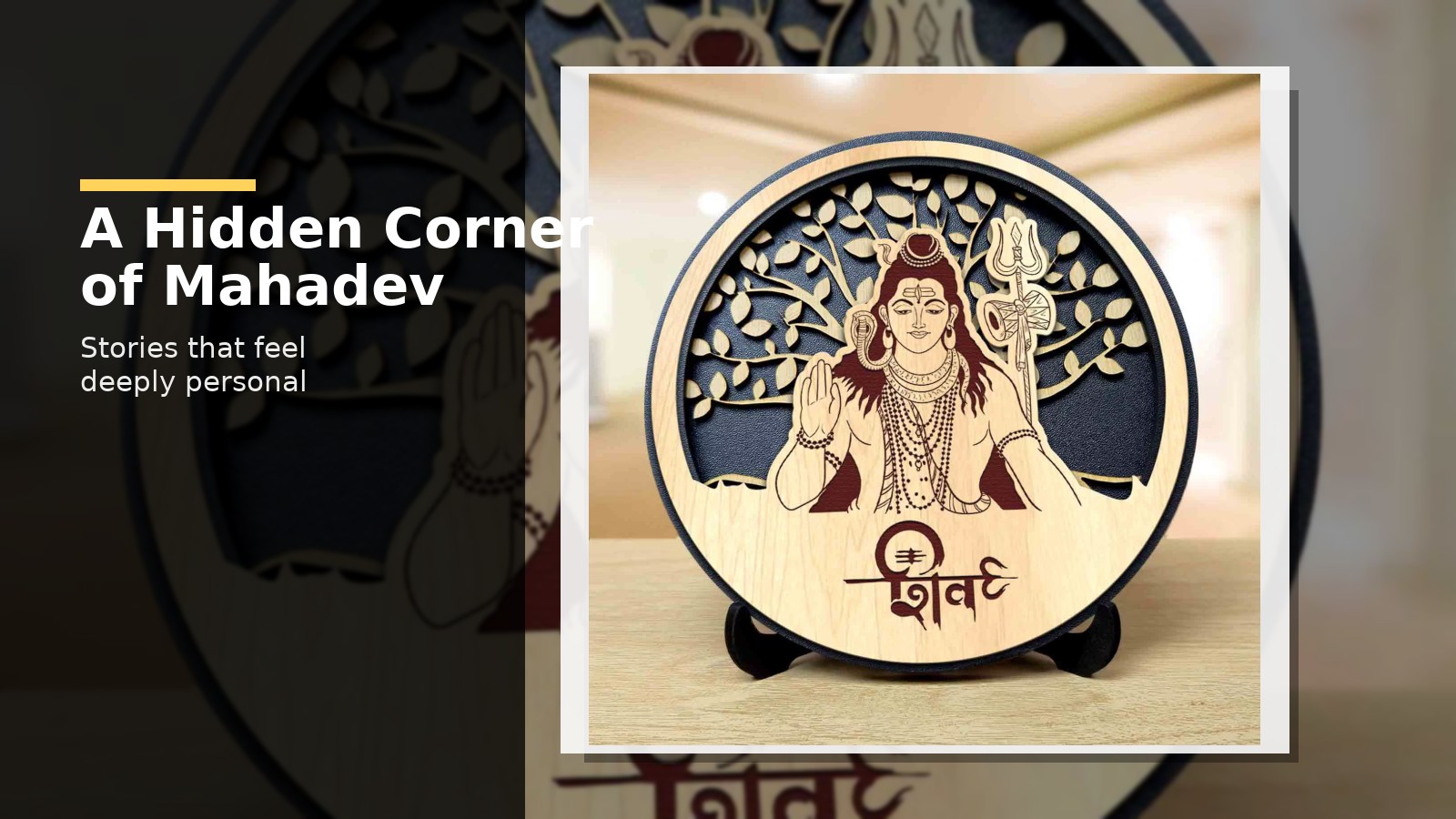
English Version
When people search for shiv ji history, they often expect the familiar stories—Mount Kailash, the third eye, the crescent moon, or the sacred Ganga resting in his matted hair. But devotion has another sweetness too: the quiet katha that sits in the corners, less spoken of, yet deeply loved by those who listen carefully. These lesser-known stories do not try to make Mahadev bigger. They make him closer.
That is the beauty of Shiv Ji. He is the Lord of ash and stillness, yet also the one who bends with compassion when a devotee calls from the heart. His history is not only a list of grand events; it is a living stream of symbols, temple traditions, and emotional memories that flow through generations.
Who is Shiv Ji in the heart of devotion?
Shiv Ji, also called Mahadev, is worshipped as the destroyer of ignorance and the transformer of the soul. In many homes, he is not only seen as a deity, but as a presence that listens quietly. Unlike a story that ends, Shiv Ji feels like a truth that keeps unfolding.
In Shiv Ji history, this is what stands out most: he is both fierce and gentle. He lives in cremation grounds and on snow-covered peaks, in deep meditation and in loving family life with Parvati, Ganesha, and Kartikeya. This balance makes him special to devotees across regions and generations.
The hidden sweetness in lesser-known Shiv Ji stories
Some stories around Mahadev are told often, but others are whispered like a family secret. They are not always dramatic. Sometimes they are tender, symbolic, and full of emotional meaning.
1. The offering that mattered more than its size
Many devotees have heard that Shiva accepts even a simple bilva leaf with love. This idea is not just about ritual; it is about the heart. In devotional life, the smallest offering becomes priceless when it is given with sincerity. That is why a single leaf, a little water, or a quiet prayer can feel so powerful in Shiva worship.
The hidden lesson here is simple: Shiv Ji does not ask for show. He asks for truth.
2. The calm of the blue throat
Neelkanth, the blue-throated form of Shiva, is often remembered as a myth of cosmic sacrifice. But for devotees, it also carries an intimate message. Shiv Ji holds poison without letting it spread further. In human life, that becomes a symbol of patience—of carrying pain without allowing it to poison others.
This is one reason many people turn to Shiva when life feels heavy. His form teaches endurance without bitterness.
3. The dancer who stills the mind
In the image of Nataraja, Shiva dances the universe into motion and dissolution. At first glance, it seems grand and cosmic. Yet on a personal level, it speaks to every restless mind. The dance says that life moves, changes, breaks, and renews—again and again.
For a devotee sitting quietly before a Shiva lingam, this is not abstract philosophy. It is comfort.
Shiv Ji history and the meaning of the Shiva lingam
One of the most important symbols in Shiv Ji history is the Shiva lingam. Many people ask what it truly means, and the answer is both simple and profound. The lingam is not just a form of worship; it represents the unbounded, formless energy of Mahadev.
In homes and temples, the Shiva lingam becomes a focus for concentration, surrender, and reverence. The pouring of water, milk, or bel patra is not only ritual—it is a devotional rhythm. For many families, this is the moment where silence feels complete.
Related phrases that often come up in this context include Mahadev significance, Shiv Parvati story, and Shiv temples, because all these ideas together shape the devotional world around Shiva.
Temples that carry the feeling of Mahadev
Shiv Ji history is also preserved in temple spaces. Every temple has its own atmosphere, and every pilgrim carries home a different memory. Some temples are known for their ancient stones, some for mountain silence, and some for the emotional hope people bring there.
- Kashi Vishwanath, Varanasi: Revered as one of the most sacred Shiva temples, where devotion feels ancient and alive.
- Kedarnath: High in the Himalayas, its setting makes the worship feel like a meeting between earth, snow, and prayer.
- Somnath: A name deeply tied to resilience, remembrance, and the continuity of faith.
- Amarnath: Known for its unique pilgrimage atmosphere and the emotional intensity of seeing the ice lingam.
These are not just places. They are experiences where devotees feel that Mahadev is not far away, but near enough to hear a whisper.
Festival moments that deepen Shiv Ji devotion
In the devotional calendar, Maha Shivratri holds a special place. It is the night when many people fast, pray, sing, and sit in remembrance of Shiva. But beyond the large celebrations, the festival also reveals a softer truth: Shiv Ji is worshipped not only in temples, but in the inner stillness of the heart.
For many families, Shivratri is when stories are retold to children, lamps are lit with care, and the atmosphere becomes quieter, more reflective. That is how devotion passes from one generation to the next—not only through doctrine, but through mood, memory, and love.
Other important devotional moments include Shravan month worship, Monday fasting, and the daily offering of water and bilva leaves. These practices are simple, but their emotional effect is deep.
Why these lesser-known stories feel so close to home
There is a reason people connect emotionally with Shiv Ji history across generations. Shiva is not worshipped only as a distant cosmic force. He is also seen as someone who understands silence, grief, restraint, and devotion without pretense.
In many households, parents and grandparents tell Shiva stories during quiet evenings, while children learn that strength does not always need noise. Sometimes strength is the ability to remain steady, compassionate, and pure in a restless world.
That is why Shiv Ji’s stories feel like a hidden corner of devotion. They do not only inform. They heal.
Symbols that carry his message
Several symbols appear again and again in Shiv Ji history, and each one adds a layer of meaning:
- Trishul: A sign of power, balance, and the removal of inner obstacles.
- Damaru: The rhythm of creation, sound, and cosmic order.
- Crescent moon: Control over time and the gentle calm of the mind.
- Ganga in his hair: Grace held with patience and care.
- Ash and the tiger skin: Detachment, courage, and acceptance of the transient nature of life.
These symbols are not decorations alone. They are reminders. They tell the devotee how to live with dignity, discipline, and surrender.
Devotional meaning for the modern reader
In today’s fast-moving life, Shiv Ji history still speaks with surprising tenderness. His stories remind us that it is okay to pause. It is okay to be still. It is okay to carry pain without becoming hard.
That is why people keep returning to Mahadev—in prayer rooms, in temple lanes, during long journeys, and in quiet personal moments. His presence feels ancient, but his message remains fresh.
If you are building a prayer corner or looking for a spiritual keepsake that quietly reflects this devotion, you may also like the Shiv Round Engraved Idol. It can add a calm, sacred touch to a home temple, desk, or gifting moment.
FAQ
Why is Shiv Ji history considered so emotionally powerful?
Because it combines cosmic meaning with deeply human feelings like patience, sacrifice, love, and inner strength. Devotees often see their own life struggles reflected in Shiva’s stories.
What is the importance of the Shiva lingam in Shiv Ji worship?
The Shiva lingam represents Mahadev’s formless, infinite energy. It is central to Shiva worship in homes and temples and is often offered water, milk, and bilva leaves.
Which festival is most closely linked with Shiv Ji?
Maha Shivratri is the most widely celebrated festival associated with Shiv Ji. Shravan month and Monday worship are also deeply important in many traditions.
What are some famous Shiva temples devotees visit?
Kashi Vishwanath, Kedarnath, Somnath, and Amarnath are among the most well-known Shiva pilgrimage places.
What makes lesser-known Shiv Ji stories special?
They often carry quiet lessons about devotion, simplicity, sacrifice, and emotional closeness. These stories feel personal, like something an elder would lovingly share at home.
Hindi Version
Jab log shiv ji history search karte hain, to aksar unhe wohi mashhoor kisse yaad aate hain—Kailash, trishul, chandra, ya Ganga ka unke jataon mein basna. Lekin bhakti ka ek aur pyaara roop bhi hota hai: woh kahaniyan jo kam sunai jaati hain, par dil ko zyada chhoo jaati hain. Ye wahi kisse hain jo Mahadev ko aur kareeb le aate hain.
Shiv Ji ki pehchan sirf bade-bade prasangon se nahi banti. Unki history mein karuna, tapasya, maun, aur bhakti ki aisi dhara hai jo peedhiyon tak behati rehti hai. Unki kahaniyan jaise kisi dadi ya nani ki naram awaaz mein sunai dene wali katha hon—seedhi, gehri, aur yaad reh jaane wali.
Bhakti ke hriday mein Shiv Ji kaun hain?
Shiv Ji, ya Mahadev, ko avidya ko mitane aur jeevan ko badalne wale Dev ke roop mein pooja jaata hai. Gharon mein unhe aksar ek aisi upasthiti maana jaata hai jo chupchaap sun leti hai. Unki history mein sabse khas baat ye hai ki ve ek saath ugr bhi hain aur komal bhi.
Ve Kailash par dhyaan mein baithe hain, cremation ground ki ash mein bhi, aur Parvati, Ganesha aur Kartikeya ke saath parivarik roop mein bhi. Ye santulan hi unhe itna priya banata hai.
Kam-charchit Shiv Ji kisse jo dil ke kareeb hote hain
Kuch kathaen baar-baar sunai jaati hain, aur kuch dheere se kaan mein kahi jaati hain. Ye chhoti lag sakti hain, par inka arth bahut bada hota hai.
1. Chhoti si bhent, bade prem ka roop
Shiv Ji ke baare mein aksar kaha jaata hai ki ve ek bilva patra bhi prem se sweekar kar lete hain. Is baat ka arth sirf pooja ki vidhi nahi, balki bhav ki shuddhata hai. Jab man sachcha ho, to chhoti si bhent bhi anmol ho jaati hai.
Yahi Shiv bhakti ki khaas baat hai—Mahadev dikhave se nahi, sachchai se prasann hote hain.
2. Neelkanth ka sandesh
Neelkanth roop mein Shiv Ji ne vish ko apne kanth mein rok liya, taaki vish sansaar mein na faile. Bhakt isse sirf pauranik ghatna ki tarah nahi dekhte. Ye sabr, sehansheelta, aur doosron ke liye kasht seh lene ki shakti ka prateek bhi hai.
Isliye jab jeevan bhaari lage, log Mahadev ki or mudte hain. Unka roop batata hai ki dard ko sambhala ja sakta hai, bina kadvahat ke.
3. Nataraja aur man ki shanti
Nataraja roop mein Shiv Ji ka nritya brahmand ki gati aur lay ko darshata hai. Lekin bhakt ke liye iska arth aur bhi niji ho jaata hai. Ye yaad dilata hai ki jeevan badalta rehta hai—kabhi toot-ta hai, kabhi judta hai, kabhi naya roop leta hai.
Shivling ke saamne baithe vyakti ke liye ye keval darshan nahi, ek aswasan hota hai.
Shivling ka arth aur Shiv Ji history
Shiv Ji history ka ek bahut mahatvapurn chinh hai Shivling. Log aksar poochte hain ki iska asli arth kya hai. Saral shabdon mein, Shivling Mahadev ki anant aur nirakar urja ka prateek hai.
Mandir ho ya ghar ka pooja-sthal, Shivling bhakti, dhyaan aur samarpan ka kendra ban jaata hai. Jal, doodh, aur bilva patra arpan karna sirf sanskaar nahi, balki ek bhakti ka rhythm hai jo man ko shaant karta hai.
Is sandarbh mein Mahadev significance, Shiv Parvati story, aur Shiv temples jaise vichar bhi saath-saath aate hain, kyunki ye sab milkar Shiv bhakti ki poori duniya banate hain.
Woh pavitra sthaan jahan Mahadev ka ehsaas hota hai
Shiv Ji history ko mandiron ne bhi sambhala hai. Har mandir ka apna mahol hota hai, aur har yatra ka apna anubhav. Kahin pahadon ki shanti milti hai, kahin pracheen patharon ki gehrayi, aur kahin bhakton ki aankhon mein ummeed.
- Kashi Vishwanath, Varanasi: Atyant pavitra aur jeevant Shiva sthalon mein se ek.
- Kedarnath: Himalaya ki god mein sthit, jahan pooja aur prakriti ek saath mehsoos hoti hai.
- Somnath: Shraddha, punarutthan aur bhakti ki nirantarata ka prateek.
- Amarnath: Ice lingam ke darshan se judi gehri bhavnatmak yatra.
Ye keval jagahen nahi, anubhav hain—jahan bhakt mehsoos karta hai ki Mahadev paas hi hain.
Maha Shivratri aur bhakti ke special pal
Devotional calendar mein Maha Shivratri ka bahut mahatva hai. Is raat bhakt vrat rakhte hain, jaagran karte hain, bhajan gaate hain, aur Shiv smaran mein lin rehte hain. Lekin is bade utsav ke beech ek komal sach bhi chhupa hota hai: Shiv Ji sirf mandir mein nahi, dil ki shanti mein bhi pooje jaate hain.
Shivratri par bachchon ko kahaniyan sunai jaati hain, deep jalaye jaate hain, aur ghar ka mahol dhire-dhire pavitra ho jaata hai. Yahi tarika hai jisse bhakti peedhi dar peedhi aage badhti hai.
Shravan maas, Somvar vrat, aur rozana jal-bilva arpan bhi Shiv upasana ke aham hisse hain. Ye chhoti lagne wali paramparayein dil par gehra asar chhodti hain.
Kyun ye kam-charchit kisse ghar jaise lagte hain?
Log Shiv Ji history se isliye emotionally jud jaate hain kyunki Mahadev sirf kisi door ke brahmandiya devta nahi lagte. Ve maun, dukh, sanyam aur nishkapat bhakti ko samajhne wale Dev lagte hain.
Gharon mein bade log jab Shiv kathayein sunate hain, to bachche ye seekhte hain ki takat hamesha shor nahi karti. Kabhi-kabhi takat ka matlab hota hai sthir rehna, dayalu rehna, aur man ko shuddh rakhna.
Isi liye Shiv Ji ki kahaniyan bhakti ke hidden corner jaisi lagti hain—jo sirf batati nahi, sambhalti bhi hain.
Shiv ke pramukh symbols
Shiv Ji history mein baar-baar kuch chinh samne aate hain:
- Trishul: Shakti, santulan aur antarik badhaon ko mitane ka prateek.
- Damaru: srishti, nad, aur brahmandiya lay ka sanket.
- Chandrakala: samay par niyantran aur man ki shanti.
- Jataon mein Ganga: kripa ko dhairya ke saath sambhalne ka sanket.
- Bhasm aur vyaghr charm: vairagya, sahas aur jeevan ki anityata ki sweekriti.
Ye chinh sirf sajavat nahi hain. Ye jeene ka tarika sikhate hain.
Aaj ke samay mein Shiv Ji ka sandesh
Tez raftaar zindagi mein bhi Shiv Ji history ajab tarah se nayi lagti hai. Unki kahaniyan yaad dilati hain ki rukna bhi zaroori hai, maun bhi shakti hai, aur dard ko bina kathor hue sambhalna bhi ek tapasya hai.
Isi wajah se log Mahadev ki taraf baar-baar mudte hain—mandir mein, pooja-kaksh mein, ya ek akele pal mein. Unka sandesh purana hote hue bhi hamesha naya lagta hai.
Agar aap apne pooja-sthal ya gifting ke liye ek aisi vastu chahte hain jo is bhakti ko komalta se darshaye, to Shiv Round Engraved Idol ek sundar vikalp ho sakta hai. Iska subtle devotional touch home temple, desk, ya thoughtful gift ke liye upyukt hai.
FAQ
Shiv Ji history itni emotional kyun lagti hai?
Kyunki ismein cosmic arth ke saath maanviya bhav bhi jude hote hain—sabr, prem, tyag aur antarik shakti. Bhakt apni zindagi ki kathinaiyan in kahaniyon mein dekh lete hain.
Shivling ka Shiv upasana mein kya mahatva hai?
Shivling Mahadev ki nirakar aur anant urja ka prateek hai. Ghar aur mandir dono mein yeh worship ka kendriya chinh hai.
Shiv Ji se sabse zyada kaunsa festival juda hai?
Maha Shivratri sabse prasiddh festival hai. Shravan maas aur Somvar vrat bhi bahut mahatvapurn hain.
Kaun se prasiddh Shiva mandir bhakt jaate hain?
Kashi Vishwanath, Kedarnath, Somnath aur Amarnath Shiv bhakti ke sabse prasiddh sthalon mein ginte jaate hain.
Kam-charchit Shiv Ji kisse kyun khaas hote hain?
Kyunki unmein nishkapat bhakti, saralta, tyag aur dil ko chhoo lene wali shiksha hoti hai. Ye kahaniyan ghar ke bade pyar se sunate hain, isliye inka asar gehra hota hai.