
Krishna Ji Ke Pratik Aur Naam: Lord Krishna Significance Ka Gehra Arth
April 9, 2026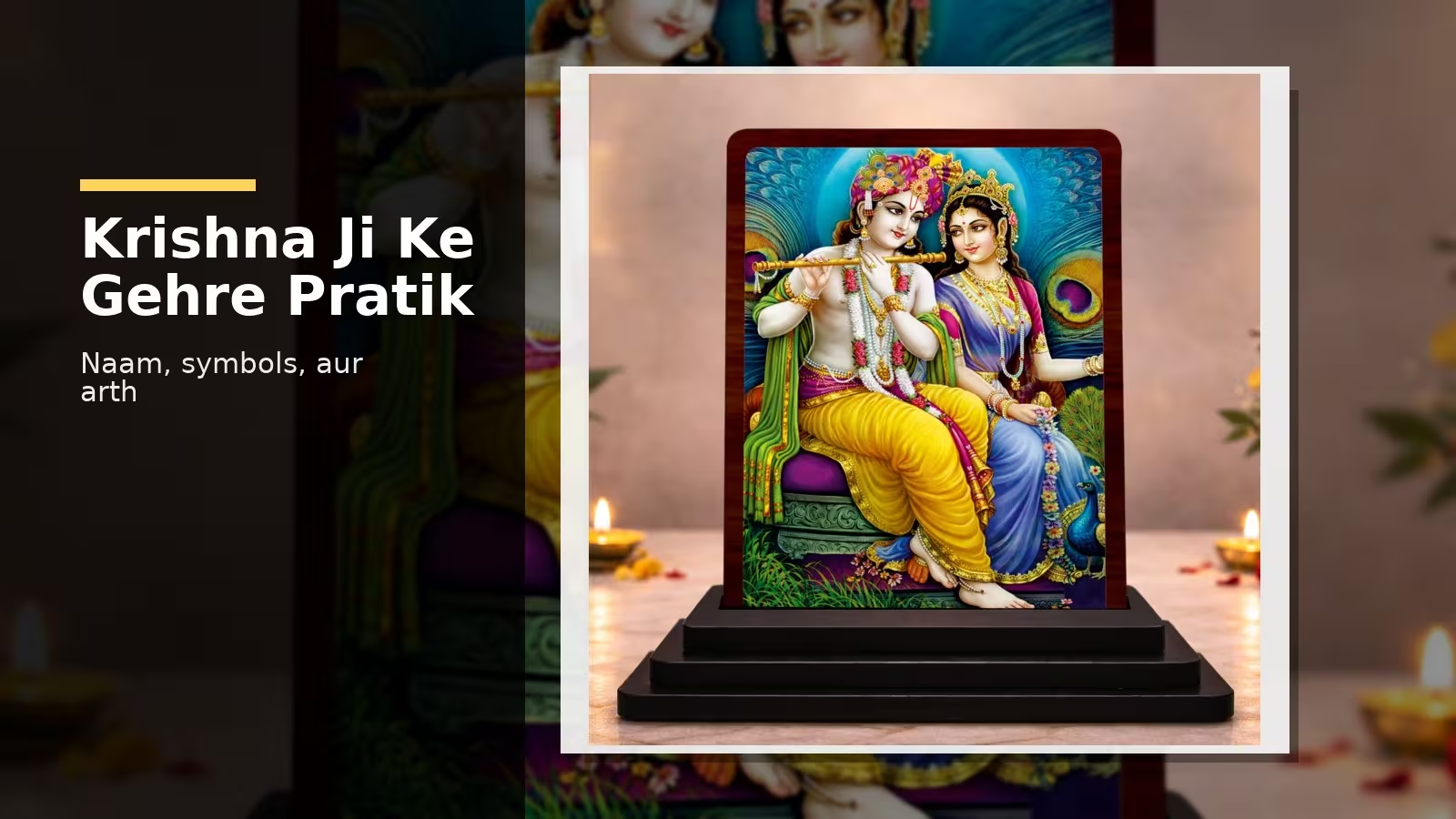
English Version
When we speak of lord krishna significance, we are not only talking about a beloved deity. We are talking about a presence that has lived for centuries in prayer rooms, temple bells, bhajans, childhood stories, and the soft hope of devotees. Krishna Ji is remembered not just for his leelas, but for the way every part of his image seems to whisper a deeper truth.
His smile, his flute, his peacock feather, his blue-dark hue, and even the calm way he stands in many depictions—each one carries meaning. Like a loving nani telling a story by the evening lamp, Krishna’s form teaches gently. Nothing about him is accidental. Everything points toward devotion, love, balance, and the mystery of the divine.
Who Is Krishna Ji?
Krishna Ji is one of the most cherished forms of Lord Vishnu, worshipped across India and beyond. In the great tradition of Hindu devotion, he appears as the divine child, the playful friend, the wise guide, the protector, and the eternal lover of Radha. His life is remembered through the Bhagavad Gita, the stories of Vrindavan, and the timeless bond devotees feel with him.
Many people come to Krishna through childhood stories, but they stay with him because those stories grow up with them. As a child, he is butter-stealing and laughter. As a guide, he is calm wisdom on the battlefield. As a devotee’s beloved, he is tenderness itself. That is the heart of lord krishna significance: he is many things at once, yet always one truth—divine love made near.
Krishna Ji Ke Pratik Aur Unka Gehra Arth
Krishna Ji ki iconography is rich with symbols. Devotees often look at his image and feel peace before they even begin to explain why. That is because every detail speaks.
- The flute represents divine call, harmony, and surrender.
- The peacock feather symbolizes beauty, grace, and the acceptance of nature’s gifts.
- The dark or blue hue points to vastness, like the sky and the ocean—limitless, deep, and beyond ordinary form.
- The crown and ornaments reflect majesty, but also the beauty that comes from devotion and dharma.
- The standing posture in many idols suggests ease, confidence, and a divine poise that is never hurried.
In simple words, Krishna’s image tells us that the divine is not only powerful—it is also beautiful, musical, playful, and close to the human heart. His symbols do not shout; they sing. That is why devotees feel that just seeing Krishna’s form can soften the mind.
The Flute: A Call That Cannot Be Ignored
Among all the symbols of Krishna Ji, the flute is the most unforgettable. It is often seen as a symbol of the soul’s longing for God. A flute makes music only when the breath passes through it. In devotional meaning, this suggests that the human self becomes beautiful when it allows divine will to flow through it.
The flute also reminds devotees that Krishna does not force love. He invites it. His music draws hearts naturally, just as prayer draws a restless mind back into stillness. This is why Krishna is often associated with calm, attraction, and inner harmony.
Peacock Feather, Butter, and the Joy of Vrindavan
The peacock feather on Krishna’s crown is not only decorative. It reflects joy, elegance, and the intimate beauty of Vrindavan life. The feather is tied to nature, monsoon skies, and the living world around Krishna’s childhood.
Then there is butter—so closely connected with the stories of Makhan Chor. Butter symbolizes innocence, affection, and the heart’s simple offering to God. The butter-stealing stories are not meant to reduce Krishna to mischief alone. They show that the divine enters ordinary homes, touches daily life, and turns love into leela.
Blue Hue, Divine Mystery, and the Vastness of Krishna
Krishna is often shown in a deep blue or dark tone. This is one of the most powerful parts of his iconography. The color is linked with infinity—the sky above and the ocean below. It suggests a being who cannot be confined by human limits.
This color also carries emotional depth. It feels cool, calm, and comforting. For many devotees, Krishna’s blue form is like a promise: the divine may be beyond full understanding, but it is never far from the heart. In this sense, lord krishna significance becomes deeply personal. He is vast, yet approachable; mysterious, yet loving.
Krishna Ji Ke Naam Aur Unke Arth
Krishna Ji ke naam bhi unki leela ki tarah layered hain. Different names bring out different qualities of his divine personality.
- Krishna is often associated with the one who attracts all beings with divine charm.
- Govinda reminds devotees of the protector and keeper of cows, a symbol of care and pastoral love.
- Gopal reflects the child-protector and the tender shepherd of hearts.
- Madhava suggests sweetness and belonging to the divine order.
- Murari recalls Krishna as the slayer of evil, the one who restores dharma.
- Keshava is a name that carries both beauty and majesty in devotional tradition.
Each name is like a door. A devotee may enter through one name and find another aspect of Krishna waiting there, equally tender and true.
Bhagavad Gita Aur Krishna Ka Spiritual Message
One cannot speak of Krishna Ji without remembering the Bhagavad Gita. In that sacred conversation, Krishna appears as the divine guide, speaking to Arjuna with clarity, courage, and compassion. Here, his significance becomes even deeper. He is not only the playful child of Vrindavan; he is the steady teacher who helps a confused soul stand up again.
The Gita teaches action without attachment, devotion with understanding, and dharma with inner strength. Krishna’s message is not only for ancient times. It continues to comfort people who feel torn between duty and doubt. That enduring relevance is a major part of lord krishna significance.
Famous Temples and Sacred Places Linked with Krishna
Krishna devotion lives strongly in many sacred places. Vrindavan and Mathura remain among the most beloved names in a devotee’s heart. These places are linked with his birth, childhood, and divine pastimes, and they continue to draw pilgrims year after year.
Temples dedicated to Krishna and Radha-Krishna are found across India, each carrying a different mood of devotion—some filled with joy, some with quiet longing, and some with the sweetness of intimate prayer. Whether it is a grand temple or a small home altar, the feeling is often the same: Krishna is near, and the heart feels lighter.
Festival Significance: Janmashtami and Everyday Devotion
Janmashtami is the most celebrated festival associated with Krishna Ji. Devotees fast, sing, decorate swings for Bal Gopal, read stories, and wait for midnight with devotion and joy. The celebration reflects both reverence and affection. It is not only about history; it is about relationship.
But Krishna is not remembered only on one festival day. For many families, he belongs to everyday life—on a shelf, in a prayer corner, in morning aarti, or in the quiet moment before sleep. That daily remembrance is also part of his spiritual significance.
Why Krishna’s Form Feels So Close to the Heart
There is something deeply human in the way Krishna Ji is worshipped. He is not distant in the way a faraway ruler might be. He is close, playful, beloved, and wise. His form teaches balance: joy without ego, power without cruelty, beauty without pride, and love without possession.
That is why devotees keep returning to his image. Not only to admire it, but to remember how to live. His flute asks us to listen. His smile asks us to soften. His posture asks us to remain steady. His names ask us to know him again and again, in many moods and many moments.
A Gentle Devotional Touch for Your Space
If you like keeping Krishna Ji close in your home temple, study corner, or work desk, a small sacred image can create a calm and prayerful atmosphere. A compact depiction of Radha Krishna can serve as a quiet reminder of devotion, love, and serenity in everyday life. For those who appreciate meaningful spiritual decor, you may also Explore the related product on our store.
FAQ: Lord Krishna Significance
What is the main meaning of Krishna Ji’s flute?
The flute symbolizes divine call, harmony, and the soul’s surrender to God. It also reflects Krishna’s loving way of attracting hearts without force.
Why is Krishna shown with a blue or dark complexion?
The blue or dark hue represents vastness, like the sky and the ocean. It suggests infinity, depth, and the mystery of the divine.
What do Krishna’s names like Govinda and Gopal mean?
Govinda and Gopal reflect his role as protector, caretaker, and loving guardian. Each name highlights a different devotional aspect of his personality.
Why is Janmashtami so important?
Janmashtami celebrates the birth of Krishna Ji and the joy of his divine presence. It is one of the most loved festivals for devotees who cherish his leelas and teachings.
How does the Bhagavad Gita connect to Lord Krishna significance?
The Bhagavad Gita shows Krishna as the divine guide who teaches dharma, courage, and devotion. It adds philosophical depth to his loving and playful image.
Hindi Version
Jab hum lord krishna significance ki baat karte hain, to sirf ek pyare Bhagwan ki baat nahi hoti. Hum us divya upasthiti ki baat karte hain jo sadiyon se mandiron, ghar ke pooja-kono, bhajanon, aur bhakton ke dilon mein basi hui hai. Krishna Ji keval leelaon ke liye yaad nahi kiye jaate; unki murti, unke naam, aur unke pratik hamein ek gehra sandesh dete hain.
Unki muskaan, bansuri, mor pankh, nila-dhoosar rang, aur unka shaant khada hua roop—har ek cheez kuch kehti hai. Jaise dadi ya nani shaam ke diya-jalne par kahani sunati hain, waise hi Krishna ka roop bhi dheere se sikhata hai. Kuch bhi bina arth ke nahi hota. Har pratik prem, bhakti, santulan aur divyata ki ore ishara karta hai.
Krishna Ji Kaun Hain?
Krishna Ji Bhagwan Vishnu ke sabse priya aur lokpriya roopon mein se ek maane jaate hain. Hindu bhakti parampara mein unhe divya balak, natkhat sakha, buddhimaan margdarshak, rakshak, aur Radha ke anant prem ke roop mein pooja jaata hai. Unki kahaniyan Bhagavad Gita, Vrindavan ki leelaon, aur bhakton ke anubhavon mein jeevit rehti hain.
Bahut log Krishna ko bachpan ki kahaniyon se jaante hain, lekin unke saath jude rehte hain kyunki woh kahaniyan bade hone par bhi nayi lagti hain. Bal roop mein woh makhan-chori aur hasi hain. Margdarshak roop mein woh yuddh ke beech bhi shaant gyaan hain. Prem roop mein woh bhakti ka atoot aasra hain. Yahi hai lord krishna significance ka saar—divya prem ko itna kareeb la dena ki woh apna sa lage.
Krishna Ji Ke Pratik Aur Unka Arth
Krishna Ji ki iconography bahut samriddh hai. Bhakt unki murti ko dekhkar hi shanti mehsoos kar lete hain, aur uska kaaran hai ki har detail ek sandesh deti hai.
- Bansuri divya aahvaan, sur-taal, aur samarpan ka pratik hai.
- Mor pankh saundarya, kripa, aur prakriti ke uphaar ko svikar karne ka sanket hai.
- Nila ya gehra rang anantta ko darshata hai—aasman aur samundar ki tarah.
- Mukut aur aabhushan rajsi mahima ke saath dharma aur bhakti ki shobha dikhate hain.
- Khada hua roop sahajta, atmasantulan, aur divya shaanti ka sanket deta hai.
Seedhi bhasha mein kahen to Krishna ka roop batata hai ki divyata sirf shakti nahi, balki saundarya, sangeet, khel, aur prem bhi hai. Unke pratik zor se nahi bolte—ve gaate hain. Isi liye Krishna ko dekhkar man mulayam ho jaata hai.
Bansuri: Ek Aisi Pukar Jo Dil Tak Utar Jati Hai
Krishna Ji ke sabhi pratikon mein bansuri sabse yaadgar hai. Ise aatma ki Bhagwan ke prati pyaas ka pratik bhi maana jaata hai. Bansuri tabhi madhur dhun deti hai jab saans uske andar se guzarti hai. Bhakti bhasha mein iska arth hai ki jab man divya ichha ke saath chalne lagta hai, tabhi jeevan sundar hota hai.
Bansuri yeh bhi yaad dilati hai ki Krishna prem ko zabardasti nahi karte. Woh aamantran dete hain. Unka sangeet dilon ko khinchta hai, jaise prarthana chanchal man ko phir se shaanti mein laati hai.
Mor Pankh, Makhan, Aur Vrindavan Ki Khushi
Krishna ke mukut mein laga mor pankh sirf sajavat nahi hai. Yeh anand, lachak, aur Vrindavan ki prakritik sundarta ka pratik hai. Iska rishta baarish, badal, aur Krishna ke bachpan se juda hua mehsoos hota hai.
Phir aata hai makhan—Makhan Chor ki kahaniyon ka priy vishay. Makhan nirdosh prem, apnapan, aur Bhagwan ko diya gaya seedha-sa nivedan darshata hai. Ye kahaniyan Krishna ko sirf natkhat nahi dikhatiं; ve batati hain ki divyata ghar-ghar mein aa sakti hai aur rozmarra ke jeevan ko leela bana sakti hai.
Nila Rang, Divya Rahasya, Aur Krishna Ki Anantta
Krishna ko aksar gehre neele ya dark hue mein dikhaya jaata hai. Yeh unki iconography ka bahut shaktishaali hissa hai. Yeh rang anantta ka sanket deta hai—aasman aur samundar jaisa. Isse lagta hai ki Krishna aise satya hain jo seemaon mein bandh nahi sakte.
Yeh rang man ko thandak bhi deta hai. Bahut bhakton ke liye Krishna ka neela roop ek vada jaisa hai: divyata poori tarah samajh na aaye, phir bhi dil se door nahi hoti. Isi mein lord krishna significance aur bhi gehra ho jaata hai.
Krishna Ji Ke Naam Aur Unke Arth
Krishna Ji ke naam bhi unki leela ki tarah bahu-layered hain. Har naam unke swabhav ka ek alag pehlu kholta hai.
- Krishna unke akarshan aur divya charm ko darshata hai.
- Govinda unhe gopiyon aur gauon ke rakshak ke roop mein yaad dilata hai.
- Gopal bal-roop ke apnapan aur komalta ko darshata hai.
- Madhava madhurata aur divya santulan ka sanket hai.
- Murari unke adharm-virodhi roop ki yaad dilata hai.
- Keshava saundarya aur rajsi mahima ka bhakti-prad naam hai.
Har naam ek darwaza hai. Bhakt kisi ek naam se pravesh karta hai aur Krishna ka naya roop, nayi komalta, nayi satyata pa leta hai.
Bhagavad Gita Aur Krishna Ka Adhyatmik Sandesh
Krishna Ji ki baat ho aur Bhagavad Gita yaad na aaye, aisa ho hi nahi sakta. Gita mein Krishna Arjun ko dhairya, karm, aur dharma ka gahan sandesh dete hain. Yahan unka mahatva aur bhi badh jaata hai. Woh Vrindavan ke natkhat balak hi nahi, balki woh sthir margdarshak bhi hain jo bhatke hue jeev ko phir se khada hona sikhate hain.
Gita sikhati hai ki karm karo, par phal ki aasakti se pare raho. Bhakti ko samajh ke saath jiyo. Aur dharma ko andar ki shakti ke saath nibhao. Krishna ka yeh sandesh aaj bhi un logon ko sahara deta hai jo kartavya aur sandeh ke beech atke hote hain.
Famous Temples Aur Punya Sthal
Krishna bhakti kai pavitra sthalon mein bahut gehri hai. Mathura aur Vrindavan unmein sabse pyare naam hain. Ye sthaan unke janm, bachpan, aur divya leelaon se jude hue hain, aur har saal hazaron yatrik yahan aate hain.
India ke alag-alag hisso mein Krishna aur Radha-Krishna ko samarpit mandir milte hain. Har mandir bhakti ka alag rang laata hai—kahin anand, kahin virah, aur kahin prem ki madhur shaanti. Chahe bada mandir ho ya ghar ka chhota pooja-ghar, bhaav aksar ek hi hota hai: Krishna paas hain, aur man halka ho gaya hai.
Janmashtami Aur Rozmarra Ki Bhakti
Janmashtami Krishna Ji ka sabse prasiddh parv hai. Bhakt upvaas rakhte hain, bhajan gaate hain, Bal Gopal ke jhule sajate hain, aur madhyaratri ka intezaar prem aur utsah ke saath karte hain. Yeh utsav itihas se zyada sambandh ka utsav hai.
Lekin Krishna sirf ek din yaad nahi kiye jaate. Bahut se gharon mein woh rozmarra ke jeevan ka hissa hain—pooja shelf par, study table par, ya subah ki aarti mein. Yahi nitya smaran bhi unki adhyatmik mahatta ka hissa hai.
Krishna Ka Roop Dil Ke Itne Kareeb Kyun Lagta Hai?
Krishna Ji ki pooja mein ek gahan maanviya sparsh hai. Woh door ke shasak ki tarah nahi lagte. Woh kareeb, natkhat, priya, aur buddhimaan lagte hain. Unka roop santulan sikhata hai: bina ahankar ke anand, bina krurta ke shakti, bina ghamand ke saundarya, aur bina kabze ke prem.
Isiliye bhakt baar-baar unki murti ki ore lautte hain. Sirf dekhne ke liye nahi, balki jeene ka tarika yaad karne ke liye. Unki bansuri sunne ko kehti hai. Unki muskaan man ko naram banati hai. Unka khada hua roop sthir rehne ki shiksha deta hai. Aur unke naam hamein baar-baar unhe naye roop mein pehchanne ka avsar dete hain.
Ghar Ke Liye Ek Shaant Bhakti Sparsh
Agar aap Krishna Ji ko apne home temple, study corner, ya office desk ke paas rakhna pasand karte hain, to ek chhoti si sacred image shanti aur bhakti ka sukoon de sakti hai. Radha Krishna ki compact murti ya art daily life mein prem aur shaanti ka yaadgar sanket ban sakti hai. Is bhakti bhav ko aur kareeb se mehsoos karne ke liye aap Explore the related product on our store.
FAQ: Lord Krishna Significance
Krishna Ji ki bansuri ka kya arth hai?
Bansuri divya aahvaan, sur-taal, aur aatma ke samarpan ka pratik hai. Yeh batati hai ki prem zabardasti nahi, anubhav se aata hai.
Krishna ko neele ya dark rang mein kyun dikhaya jaata hai?
Neela ya gehra rang anantta, gahanai, aur divyata ke rahasya ko darshata hai. Yeh aasman aur samundar jaisi vastuta se juda hai.
Govinda aur Gopal jaise naam ka kya arth hai?
Govinda aur Gopal unke rakshak, paalanhar, aur prem bhare swabhav ko darshate hain. Har naam Krishna ke alag bhakti-roop ko kholta hai.
Janmashtami kyun mahatvapurn hai?
Janmashtami Krishna Ji ke janm aur unki divya upasthiti ka utsav hai. Yeh unki leelaon aur shikshaon ko prem se yaad karne ka din hai.
Bhagavad Gita Krishna Ji ke mahatva se kaise judi hai?
Bhagavad Gita Krishna ko divya margdarshak ke roop mein dikhati hai jo dharma, dhairya, aur bhakti ka sandesh dete hain. Isse unka arth aur bhi gahra ho jaata hai.