
Maa Round Engraved Idol History, Mahatva aur Tyohar
April 3, 2026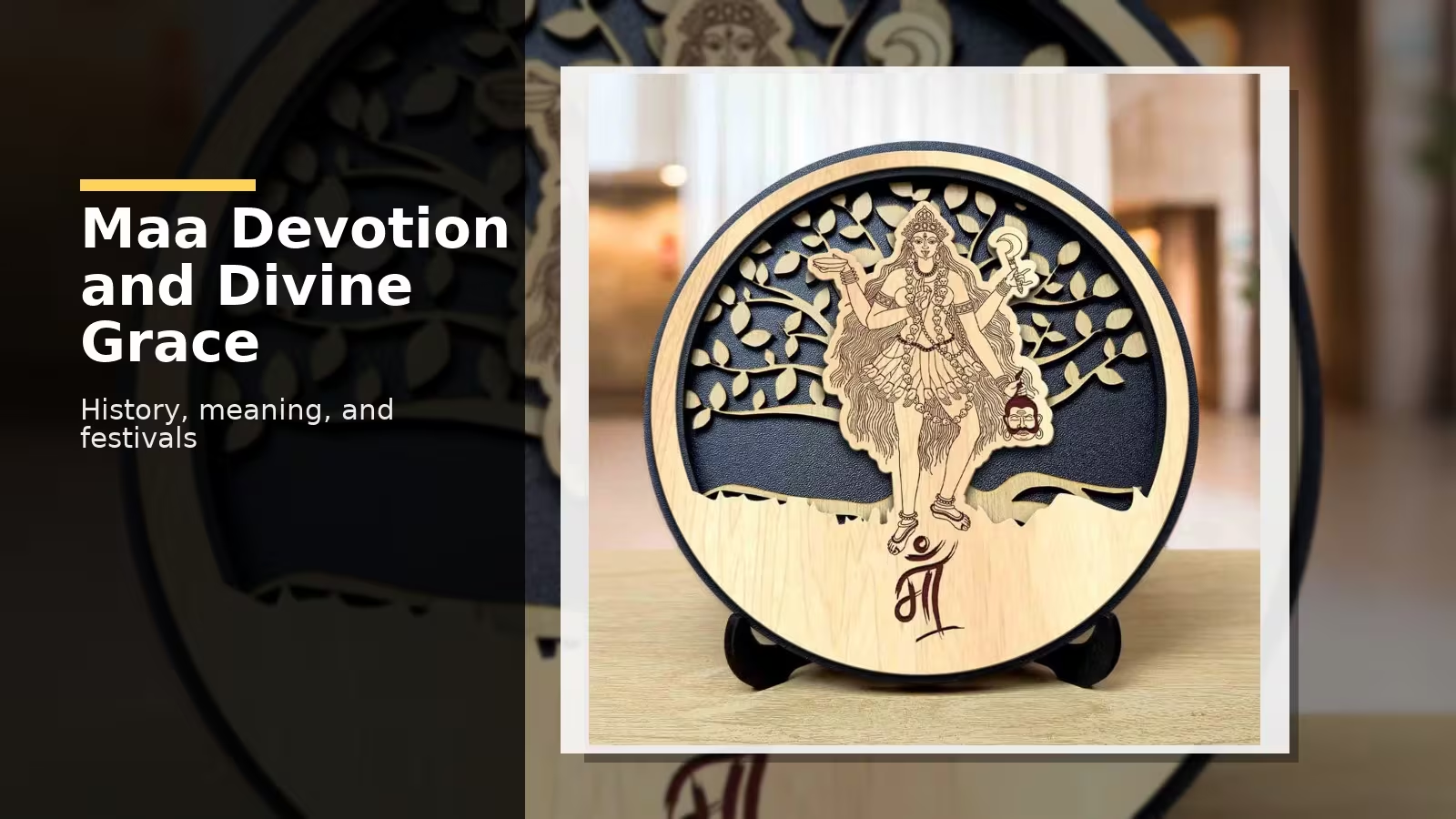
English Version
Maa Round Engraved Idol history is closely connected with the timeless devotion people feel toward the Divine Mother. For many devotees, Maa is not only a form of worship but also the presence of protection, strength, compassion, and motherly love. Whether placed in a home temple, a prayer corner, or remembered during festivals, the image of Maa brings faith and emotional comfort.
In Indian spiritual tradition, the Mother Goddess is revered in many forms—Shakti, Durga, Amba, and Devi. Across regions, devotees call her by different names, but the feeling remains the same: Maa is the one who protects, nurtures, and destroys negativity. This is why the devotional significance of Maa remains deeply rooted in daily prayer, temple rituals, and festival celebrations.
Who Is Maa in Hindu devotion?
Maa represents the divine feminine power, often understood as the source of energy behind creation, protection, and transformation. In the simplest devotional sense, she is the mother who listens to prayers, removes fear, and blesses her children with courage.
In many households, Maa is worshipped through a murti, framed image, or engraved idol. The round engraved form is especially graceful because it creates a complete, balanced visual impression. It reminds devotees of wholeness, harmony, and the protective circle of divine energy.
maa round engraved idol history and devotional meaning
When people search for maa round engraved idol history, they are often looking for more than an object’s background. They want to understand the spiritual feeling behind it. The engraved representation of Maa reflects devotion in a refined and artistic way. It is not only decorative; it becomes a daily reminder of faith.
The round shape has symbolic value in spiritual art. A circle suggests completeness, continuity, and eternal presence. In devotional spaces, such a design can feel calm and centered. The engraved detailing adds depth without overwhelming the sacred image, making it suitable for modern prayer spaces as well as traditional settings.
Key symbols associated with Maa
Different forms of Maa may carry different attributes, but several symbols are commonly associated with her divine identity:
- Lion or tiger – courage, power, and fearlessness
- Weapons – the victory of dharma over negativity
- Lotus – purity and spiritual beauty
- Blessing hand – protection and grace
- Serene face – compassion and motherly assurance
These symbols are not only artistic details; they remind devotees of the qualities they pray for in life—strength in hardship, peace in the heart, and the courage to walk the right path.
Famous temples of Maa
India is home to many famous temples dedicated to Maa, and each one carries a unique devotional atmosphere. Some of the most widely known pilgrimage places include:
- Vaishno Devi in Jammu and Kashmir, one of the most revered Shakti shrines
- Kamakhya Temple in Assam, a major center of Shakti worship
- Kalighat Temple in Kolkata, deeply connected with Maa Kali devotion
- Ambaji Temple in Gujarat, a significant Shakti Peeth
- Jwala Ji in Himachal Pradesh, known for its sacred flame tradition
These temples show how devotion to Maa lives in many forms across India. Even if a devotee cannot visit a pilgrimage site, they often keep a sacred image at home to maintain that connection in daily worship.
Festival importance: Navratri and beyond
Maa is especially honored during Navratri, one of the most important festivals dedicated to the Divine Mother. For nine nights, devotees observe fasting, sing bhajans, perform aarti, and offer flowers, fruits, and prayers. The festival celebrates the victory of divine power over evil and the triumph of truth over darkness.
Other occasions also carry special meaning for Maa devotion:
- Durga Puja – celebrated with grandeur in many parts of India
- Ashtami and Navami – highly auspicious days for worship
- Housewarming ceremonies – where Maa’s blessings are sought for peace and prosperity
- Daily pooja – where devotees begin the day with gratitude and prayer
During these times, a devotional image or engraved idol can become a meaningful focal point for prayer and remembrance.
Why devotees keep Maa in the home temple
A home temple is often the spiritual center of a household. Keeping Maa there is believed to invite blessings, discipline, and emotional stability. Many devotees feel that when Maa is present in the pooja room, the home becomes calmer and more spiritually grounded.
Common reasons devotees place Maa in their prayer space include:
- To begin the day with positive energy
- To remember divine protection during difficult times
- To create a peaceful atmosphere for meditation and prayer
- To teach children the value of devotion and respect
Spiritual importance of an engraved idol
An engraved idol offers a refined way to keep devotion present in everyday life. The texture, lines, and shape create a sense of depth and craftsmanship. For many people, such an idol feels ideal for a prayer table, office desk, shelf, or festive corner because it is compact yet meaningful.
In devotional practice, the value of an idol lies not only in its appearance but also in the feeling it inspires. If it encourages remembrance, gratitude, and prayer, it has already fulfilled an important spiritual role.
Common questions devotees ask
What does Maa symbolize?
Maa symbolizes divine feminine power, protection, compassion, courage, and the victory of good over evil.
Why is Maa worshipped in Navratri?
Navratri honors the nine forms of the Divine Mother and celebrates her power to remove negativity and bless devotees with strength.
What is special about a round engraved idol?
The round shape represents wholeness and balance, while the engraved design gives the idol a graceful and devotional appearance.
Can Maa be kept in a home temple or office?
Yes, many devotees keep Maa in a home temple, prayer corner, or office desk as a reminder of blessings, focus, and positive energy.
A gentle devotional note
For devotees who want a respectful and elegant way to keep Maa close in daily life, a thoughtfully crafted piece can support both prayer and décor. If you are looking for a compact spiritual accent for your sacred space, you may explore the related product on our store.
Hindi Version
Maa Round Engraved Idol history ka sambandh us anant bhakti se hai jo log Divine Mother ya Devi Maa ke prati mehsoos karte hain. Bhakton ke liye Maa sirf pooja ka roop nahi, balki raksha, shakti, karuna aur mamta ka anubhav bhi hain. Ghar ke mandir, pooja corner ya tyoharon ke samay Maa ka smaran man ko sahara aur shanti deta hai.
भारतीय आध्यात्मिक परंपरा में Maa ko Shakti, Durga, Amba aur Devi ke roop mein pooja जाता hai. Alag-alag kshetron mein unke naam alag ho sakte hain, lekin bhavna ek hi rehti hai—Maa raksha karti hain, paalan karti hain aur negative shaktiyon ka nash karti hain. Isi wajah se Maa ka mahatva rozana ki pooja aur bade tyoharon dono mein gehra hai.
Maa kaun hain?
Maa divine feminine power ka pratik hain. Unhe srishti, raksha aur parivartan ki mool urja mana jata hai. Bhakti ki bhasha mein Maa woh maa hain jo prarthana sunti hain, dar ko kam karti hain aur apne bachchon ko sahas deti hain.
Bahut se gharon mein Maa ki murti, tasveer ya engraved idol rakha jata hai. Round engraved form isliye bhi sundar lagta hai kyunki usmein santulan, poornata aur ek protective spiritual circle ka anubhav hota hai.
maa round engraved idol history aur uska bhavarth
Jab log maa round engraved idol history ke baare mein puchte hain, to ve sirf ek vastu ka background nahi, balki uske peeche ki bhakti aur bhav ko samajhna chahte hain. Maa ka engraved roop bhakti ko ek kalatmak aur shant tareeke se prastut karta hai. Yeh sirf sajavat nahi, balki rozana yaad dilane wala ek pavitra sanket bhi ban jata hai.
Round shape ka apna symbolik mahatva hai. Gol aakar poornata, nirantarata aur anant upasthiti ka sanket deta hai. Engraved detailing roop ko saaf aur graceful banati hai, jisse yeh modern pooja spaces aur traditional mandiron dono mein suit karta hai.
Maa se jude mukhya symbols
Maa ke alag roopon mein alag attributes ho sakte hain, lekin kuch symbols aksar unse jude hote hain:
- Singh ya bagh – sahas aur nirbhayta
- Ayudh – adharm par dharm ki vijay
- Kamal – pavitrata aur adhyatmik saundarya
- Ashirwad mudra – raksha aur kripa
- Shant mukh – mamta aur aashvasan
Yeh symbols sirf kala ke hissa nahi hain; yeh bhakton ko yaad dilate hain ki kathin samay mein sahas, man mein shanti aur sahi marg par chalne ki shakti Maa se hi milti hai.
Maa ke prasiddh mandir
Bharat mein Maa ko samarpit anek prasiddh mandir hain. Inmein se kuch bahut lokpriya tirth sthal hain:
- Vaishno Devi – Jammu aur Kashmir ka ek atyant pavitra Shakti sthala
- Kamakhya Temple – Assam ka prasiddh Shakti kendra
- Kalighat Temple – Kolkata mein Maa Kali ki gehri bhakti se juda mandir
- Ambaji Temple – Gujarat ka mahatvapurn Shakti Peeth
- Jwala Ji – Himachal Pradesh mein pavitra agni parampara ke liye prasiddh
Yeh mandir dikhate hain ki Maa ki bhakti Bharat ke har kone mein alag roopon mein jeevit hai. Jo bhakt tirth yatra nahi kar pate, ve ghar ke mandir mein Maa ki sthapna karke usi bhavna ko jodkar rakhte hain.
Tyohar ka mahatva: Navratri aur anya avsar
Maa ki sabse vishesh pooja Navratri mein hoti hai. Nauk raaton tak bhakt vrat rakhte hain, aarti karte hain, bhajan gaate hain aur Maa ko pushp, phal aur prarthana samarpit karte hain. Yeh tyohar burai par achchai ki jeet aur andhkar par prakash ki vijay ka pratik hai.
Dusre avsar bhi Maa bhakti mein mahatvapurn hote hain:
- Durga Puja – anand aur bhavya roop se manaya jane wala utsav
- Ashtami aur Navami – atyant shubh din
- Griha pravesh – naye ghar mein shanti aur samriddhi ke liye
- Rozana pooja – din ki shuruaat aabhar aur bhakti se
In samayon mein ek sundar engraved idol ya Maa ki image bhakti ka kendriya bindu ban sakti hai.
Ghar ke mandir mein Maa kyon rakhi jati hain?
Ghar ka mandir aksar parivar ka adhyatmik kendra hota hai. Maa ko wahan sthapit karne se blessings, discipline aur man ki sthirata ka anubhav hota hai. Bahut se bhakt maante hain ki jab Maa pooja room mein hoti hain, to ghar ka vatavaran aur adhik shant aur pavitra ho jata hai.
Bhakt Maa ko apne prayer space mein isliye rakhte hain:
- Din ki shuruaat positive energy ke saath karne ke liye
- Kathin samay mein divine protection yaad rakhne ke liye
- Meditation aur prayer ke liye shant vatavaran banane ke liye
- Bachchon ko bhakti aur samman ka mahatva sikhane ke liye
Engraved idol ka adhyatmik mahatva
Engraved idol bhakti ko rozmarra ke jeevan mein sthapit karne ka ek refined tareeka hai. Uski lines, texture aur shape usse elegant aur meaningful banati hain. Isliye aisa idol pooja table, office desk, shelf ya festive corner ke liye bhi upyukt lagta hai.
Adhyatmik pariprekshya mein idol ka mahatva uski appearance se zyada us bhavna mein hota hai jo woh jagata hai. Agar woh smaran, aabhar aur prarthana ko prerit karta hai, to usne apna pavitra kaam poora kar diya.
Bhakton ke aam prashn
Maa kya pratik hain?
Maa divine feminine power, raksha, karuna, sahas aur achchai ki burai par vijay ka pratik hain.
Navratri mein Maa ki pooja kyon hoti hai?
Navratri mein Divine Mother ke nau roopon ki aradhana ki jati hai aur unki shakti ka utsav manaya jata hai.
Round engraved idol mein kya vishesh hai?
Gol aakar poornata aur santulan ka sanket deta hai, jabki engraved design idol ko graceful aur devotional look deta hai.
Kya Maa ko ghar ke mandir ya office mein rakha ja sakta hai?
Haan, bahut se bhakt Maa ko home temple, prayer corner ya office desk par rakhte hain taaki unhe blessings aur positive energy ka smaran rahe.
Ek vinamra bhakti-sandesh
Jo bhakt Maa ko apne roz ke jeevan mein sammaan aur sundarta ke saath paas rakhna chahte hain, unke liye ek thoughtfully crafted piece bahut meaningful ho sakta hai. Agar aap apne sacred space ke liye ek compact spiritual accent dekh rahe hain, to related product on our store explore kar sakte hain.