
Kali Puja Significance: Gharon Mein Kali Maa Ki Aaradhana
May 11, 2026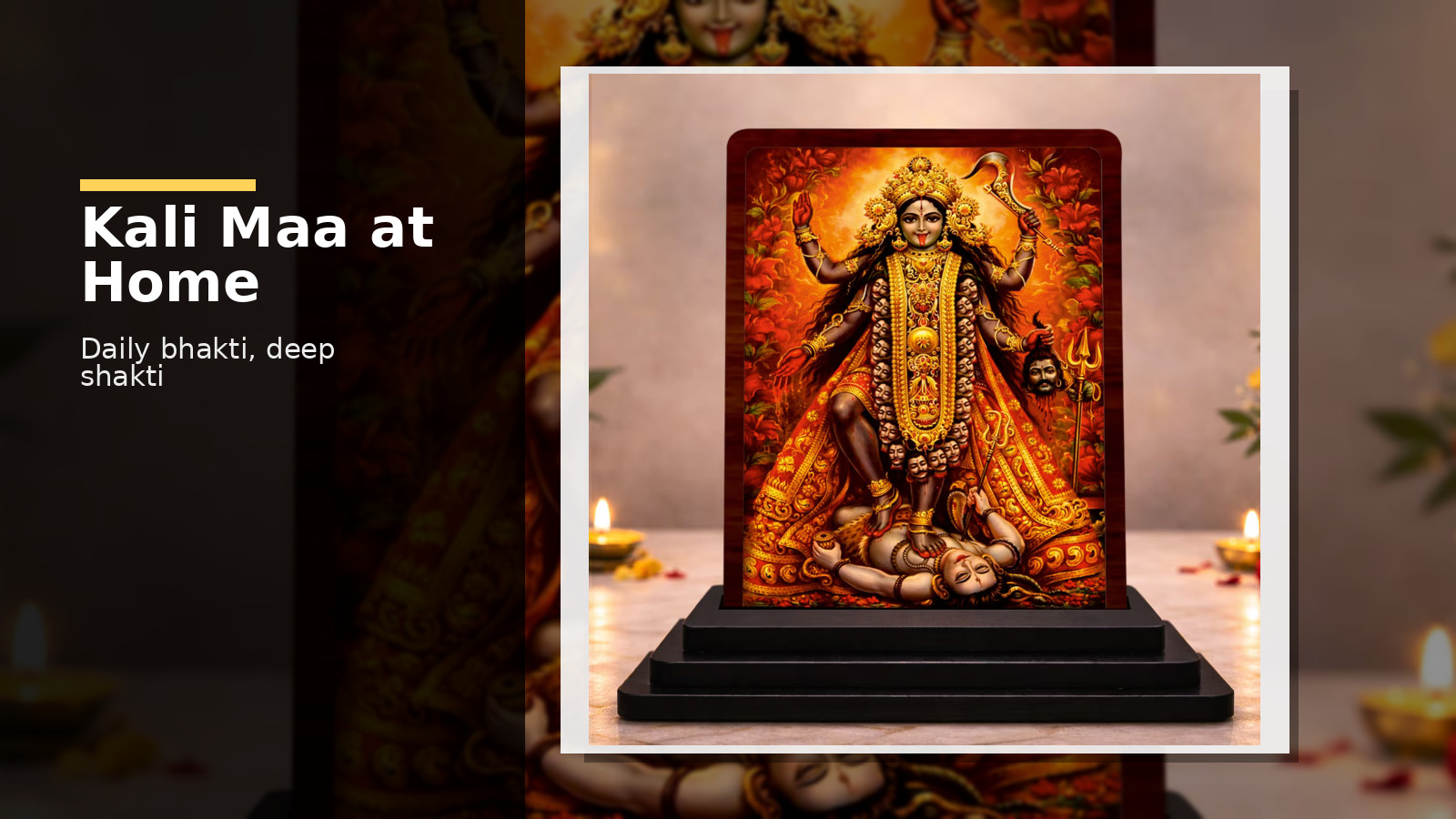
English Version
When people speak of kali puja significance, they often think of lamps, mantras, and the grand glow of festival nights. But in many homes, Kali Maa is not only remembered during one special day. She lives quietly in the rhythm of everyday devotion—in the first prayer of the morning, in the calm of a small pooja corner, and in the faith of children who watch their elders bow with folded hands.
This is the real beauty of Kali Maa’s worship at home. She is fierce, yes, but she is also protective, tender in her own divine way, and deeply present in the emotional life of a family. In a household, her aaradhana is often not loud or elaborate. It is simple, steady, and full of feeling.
The Living Presence of Kali Maa in a Home
Kali Maa is one of the most powerful forms of the Divine Mother in Hindu tradition. She is known as the destroyer of evil, the protector of devotees, and the one who stands fearlessly against darkness. Yet in homes, she is often worshipped with a surprising softness. A diya is lit. A flower is offered. A few lines from a stotra are spoken. The house feels held, as if a protective hand has gently rested over it.
For many families, Kali Maa is not only a goddess of temples and festivals. She becomes part of daily life. Elders may remember her as the one who gave courage in difficult times. Children may know her through stories of her compassion and strength. In this way, devotion becomes shared memory.
Why Kali Puja Significance Feels So Deep in Family Life
The kali puja significance lies in more than ritual. It lies in what Kali Maa represents to the heart: protection, transformation, fearlessness, and the victory of truth over fear. In homes, these meanings become very personal.
- Protection: Families feel that Kali Maa guards the household from negativity.
- Courage: Her form reminds devotees to remain strong in hardship.
- Purification: Her worship symbolizes the burning away of inner darkness.
- Motherly power: She is feared by evil, but lovingly trusted by devotees.
That is why even a small daily prayer can feel powerful. The ritual may be brief, but the meaning is immense.
How Children and Elders Experience Kali Maa Differently
In many homes, devotion is passed from one generation to another not through lectures, but through lived practice. A grandmother may wake early and light the lamp before the idol. A grandfather may softly recite a mantra. A mother may place a fresh flower near the image before leaving for work. A child may stand nearby, learning not by instruction alone, but by watching reverence become habit.
Children often meet Kali Maa first as a story. They hear that she protects the good and removes fear. Elders, meanwhile, may experience her as a lifelong companion through sorrow, prayer, and resilience. Together, these two ways of seeing create a beautiful household tradition—one tender, one steadfast, both sincere.
Legends and Backstory That Shape Kali Maa’s Devotion
Kali Maa’s presence in devotional life is deeply rooted in the sacred traditions of Hinduism. She is closely associated with the energy of Shakti, the divine feminine power. In many stories, she appears when the world needs protection from overwhelming evil. Her dark form is not a sign of fear alone; it also symbolizes the vastness of time, the mystery of the universe, and the truth that ego must dissolve before divine wisdom.
One of the most widely known images of Kali Maa comes from her fierce appearance in battle, where she represents divine force that cannot be defeated by arrogance or injustice. But devotees also remember that this fierceness is not separate from compassion. It is the compassion of a mother who will not allow her child to be harmed.
Symbolism in Kali Maa Worship
Every detail in Kali Maa’s iconography carries meaning. Devotees often reflect on these symbols while praying at home or in temples.
- Dark complexion: Represents the infinite, the unmanifest, and the mystery beyond form.
- Garland of skulls or severed heads: Symbolic of ego, time, and the cycle of creation and dissolution.
- Raised sword: Sign of cutting ignorance and falsehood.
- Hand in blessing gesture: Reminds devotees that protection and grace remain present.
- Standing over Shiva: A profound image of power, awakening, and divine balance.
These symbols are not meant to frighten sincere devotees. Rather, they teach deep truths in visual form. When a family places her image in the home, they are placing these truths near daily life.
Kali Puja and the Energy of the Home Temple
In a home temple, Kali Maa’s presence often becomes the emotional center of the space. The corner may be small, but the feeling is expansive. A clean cloth, a lamp, incense, and a respectful placement are often enough. The point is not grandeur. The point is attention.
Many devotees say that when Kali Maa is remembered regularly, the atmosphere of the house changes. Arguments soften. Fear feels lighter. The family becomes more mindful of speech, thought, and conduct. This is one of the quietest yet most meaningful outcomes of devotional living.
Festival Importance and Sacred Remembrance
During Kali Puja, homes and communities come alive with special devotion. The festival is especially prominent in Bengal and in many other places where Shakti worship is beloved. Lamps are lit, offerings are made, and prayers are offered through the night. The atmosphere is intense but devotional, full of faith and gratitude.
Kali Puja is closely connected with the larger spiritual understanding of Shakti worship. It reminds devotees that divine energy is not passive. It acts, protects, transforms, and liberates. That is why the festival carries such emotional power. It is not simply about celebration; it is about surrender and courage.
Related devotional observances, including the broader Shakti worship tradition and the reverence of the Divine Mother, help devotees understand Kali Maa not only as a fierce form, but as an essential presence in the spiritual journey.
Famous Places of Worship That Inspire Devotees
While home worship is intimate, it often draws inspiration from famous temples and sacred sites dedicated to the Goddess. Places such as Kalighat in Kolkata hold deep significance for devotees of Kali Maa. Such temples remind families that their small home prayer belongs to a very large and living tradition.
When a devotee lights a lamp at home, it may feel like a smaller echo of those great spaces. Yet in bhakti, size does not determine depth. A single sincere prayer can carry the same emotional honesty as a grand temple visit.
How to Keep Kali Maa’s Devotion Alive at Home
Gharon mein Kali Maa ki aaradhana ko jeevant rakhne ke liye, simple habits kaafi hote hain. The practice need not be complicated. What matters is consistency, cleanliness, and devotion.
- Keep the prayer area neat and respectful.
- Light a diya or lamp with awareness.
- Offer flowers or prasad if it is part of your family tradition.
- Recite a short mantra, stotra, or prayer regularly.
- Teach children the meaning of reverence through example.
When devotion becomes part of the family rhythm, Kali Maa is not seen only as a festival goddess. She becomes a daily source of strength.
A Gentle Way to Bring Her Form Closer
For devotees who want a compact reminder of Kali Maa in their prayer area, study table, or side shelf, a small devotional image can feel meaningful. A graceful option like the Kali Mata Wooden Idol 3×4 Inch HD Printed Spiritual Showpiece can support a quiet home temple setup without taking much space. It may serve as a calm visual anchor for daily remembrance.
Still, the true value of Kali Maa’s worship is not in the object itself. It is in the devotion that gathers around it—the folded hands, the soft prayer, and the courage to live with truth.
FAQ
What is the meaning of Kali Puja significance?
The meaning of kali puja significance lies in worshipping Kali Maa as the Divine Mother who removes fear, destroys evil, and protects devotees with fierce compassion.
Why do families worship Kali Maa at home?
Families worship Kali Maa at home for protection, inner strength, peace, and a deeper connection to the Divine Mother in daily life.
Is Kali Maa worship only for festivals?
No. While Kali Puja is highly important, many devotees remember Kali Maa every day through small prayers, lamps, and simple offerings.
What does Kali Maa symbolize?
She symbolizes divine power, time, protection, transformation, and the destruction of ignorance and ego.
Which sacred places are closely linked with Kali Maa devotion?
Kalighat in Kolkata is among the most well-known sacred places connected to Kali Maa, along with many local shrines and home altars across India.
Hindi Version
Jab log kali puja significance ki baat karte hain, to aksar unke mann mein diye, mantra aur festival ki roshni aati hai. Lekin kai gharon mein Kali Maa sirf ek din ya ek raat ki devi nahi hoti. Woh roz ke jeevan ke saath chup-chaap chalti rehti hain—subah ki pehli prarthana mein, pooja ghar ke kone mein, aur un bachchon ki aankhon mein jo apne bade-buzurgon ko shraddha se jhukte dekhte hain.
Ghar mein Kali Maa ki aaradhana ki asli sundarta yahi hai. Woh ugr roop mein hain, par saath hi rakshak bhi. Unki bhakti shor-sharabe wali nahi hoti; woh seedhi, sachi aur bhavna se bhari hoti hai.
Kali Maa Ka Jeevit Astitva Ghar Mein
Kali Maa Hindu parampara mein Devi Shakti ka ek atyant shaktishali roop hain. Unhe burai ka nash karne wali, bhakton ki raksha karne wali, aur andhkar ke viruddh khadi hone wali Maa mana jata hai. Gharon mein unki pooja aksar bahut vinamr hoti hai—ek diya, ek phool, aur kuch shlok. Phir bhi ghar ka maahol jaise sambhal sa jata hai.
Kai parivaron ke liye Kali Maa sirf mandir ya festival ki devi nahi hoti. Woh rozmarra ki zindagi ka hissa ban jati hain. Bade-buzurg unhe sankat ke samay ka sahara maante hain. Bachche unki kahaniyon se himmat aur raksha ka arth samajhte hain. Isi tarah bhakti ek parivarik yaad ban jati hai.
Kali Puja Significance Kyun Itni Gehri Lagti Hai
kali puja significance ka arth sirf ritual tak simit nahi hai. Iska gehra matlab hai—raksha, himmat, parivartan, aur satya ki vijay. Ghar mein yeh sab bahut personal ho jata hai.
- Raksha: Parivar maante hain ki Kali Maa ghar ko negative shaktiyon se bachati hain.
- Himmat: Unka roop mushkil waqt mein himmat deta hai.
- Shuddhikaran: Unki pooja andar ke andhkar ko jalane ka prateek hai.
- Maatritva ki shakti: Woh bhayankar zaroor hain, par bhakton ke liye prem se bhari rakshak Maa bhi hain.
Isi wajah se chhoti si daily pooja bhi bahut shaktishali lagti hai. Ritual chhota ho sakta hai, par uska arth bahut bada hota hai.
Bachche Aur Buzurg Kali Maa Ko Kaise Alag Tarah Se Mehsoos Karte Hain
Kai gharon mein shraddha ki parampara lecture se nahi, jeevan ke roop mein milti hai. Dadi ya nani subah jaldi uthkar lamp jalati hain. Dada ya nana dheere se mantra padhte hain. Maa kaam par nikalne se pehle phool rakh deti hain. Aur baccha paas khade hokar dekhte-dekhte vinamrata seekhta hai.
Bachchon ke liye Kali Maa pehle ek kahani hoti hain—jo burai ko harati hain aur dar ko door karti hain. Buzurgon ke liye woh ek jeevan-bhar ki saathi hoti hain, jo dukh aur sangharsh ke beech bhi sahara deti rehti hain. Ye dono nazariye milkar ghar ki bhakti ko aur bhi pyara bana dete hain.
Legend Aur Backstory Jo Kali Maa Ki Bhakti Ko Gadhte Hain
Kali Maa ka roop Shakti ki parampara se juda hua hai. Unki kahaniyon mein woh tab prakat hoti hain jab duniya ko atyachaar aur adharm se bachane ki zarurat hoti hai. Unka kala roop sirf bhay ka sanket nahi, balki anant kal, brahmand ki gahanata, aur ahankar ke vilay ka prateek bhi hai.
Unka sabse prasiddh roop yuddh ke dauran dekha jata hai, jahan woh aisi divya shakti bankar saamne aati hain jo anyay aur ahankar se nahi harta. Lekin bhakton ke liye unki ugrata alag nahi, karuna ka hi ek roop hai—ek aisi Maa jo apne bachche ko chot nahi lagne deti.
Kali Maa Ke Prateek Aur Unka Arth
Kali Maa ki murti aur chitra mein har ek chihn ka apna arth hota hai. Ghar ya mandir mein unki tasveer ke saamne khade hokar bhakt in prateekon ko yaad karte hain.
- Kala rang: Anant, nirakar aur rahasyamayi satya ka prateek.
- Skulls ya heads ki mala: Ahankar, kal, aur srishti-vilay ke chakra ka sanket.
- Talwar: Agyan aur jhooth ko kaatne ka prateek.
- Var mudra: Raksha aur kripa ki upasthiti dikhati hai.
- Shiva par sthit roop: Shakti, jagriti aur divya santulan ka gahra chitra.
Ye prateek bhay ke liye nahi, gyaan ke liye hain. Jab parivaar unki tasveer ghar mein rakhta hai, to woh in satyon ko apni rozmarra zindagi ke kareeb le aata hai.
Ghar Ke Mandir Mein Kali Puja Ka Mahatva
Ghar ke pooja ghar mein Kali Maa ka roop aksar emotional center ban jata hai. Jagah chhoti ho sakti hai, par bhavna bahut badi hoti hai. Ek saaf kapda, diya, agarbatti aur shraddha ke saath rakhi gayi murti kaafi hoti hai. Yahan grandeur nahi, dhyaan important hota hai.
Kai bhakton ka maanna hai ki jab Kali Maa ko roz yaad kiya jata hai, to ghar ka maahol badal jata hai. Jhagde dheere padte hain, dar halka lagta hai, aur parivar bolne aur rehne mein zyada saavdhan ho jata hai. Yeh bhakti ka bahut sookshm, par gehra asar hai.
Festival Ka Mahatva Aur Sacred Remembrance
Kali Puja ke din ghar aur samuday dono mein alag hi urja hoti hai. Yeh parv khaaskar Bengal aur un jagahon mein bahut shraddha se manaya jata hai jahan Shakti upasana gahri parampara hai. Raat bhar diye jalte hain, bhog aur prasad chadhaya jata hai, aur bhakti ka mahaul ban jata hai.
Kali Puja humein yaad dilati hai ki divya shakti sthir nahi hoti—woh raksha karti hai, badalti hai aur mukt bhi karti hai. Isi liye is parv mein bhavna itni gehri hoti hai. Yeh sirf utsav nahi, surrender aur himmat ka sandesh bhi hai.
Shakti worship ki badi parampara, aur Devi Maa ke prati shraddha, bhakton ko yeh samajhne mein madad karti hai ki Kali Maa sirf ugra roop nahi, balki adhyatmik yatra ka mahatvapurn hissa hain.
Famous Temples Aur Sacred Places
Ghar ki pooja bhale hi niji hoti hai, par uski prerana bade mandiron se bhi aati hai. Kolkata ka Kalighat mandir Kali Maa bhakton ke liye atyant prasiddh sthal hai. Aise pavitra sthal parivaron ko yaad dilate hain ki unki chhoti si ghar wali pooja bhi ek bade, jeevit aur paramparik pravah ka hissa hai.
Bhakti mein size ka mahatva nahi hota. Ek sachchi prarthana bhi utni hi gehri ho sakti hai jitni mandir ki badi aarti.
Ghar Mein Kali Maa Ki Bhakti Kaise Jeevit Rakhein
Gharon mein Kali Maa ki aaradhana ko jeevant rakhne ke liye bahut bade niyam ki zarurat nahi hoti. Lagataar bhakti, saaf-safai aur shraddha ka hona kaafi hai.
- Pooja sthaan ko saaf aur sammanit rakhein.
- Diya ya lamp dhyan se jalayein.
- Parivarik parampara ke anusaar phool ya prasad arpit karein.
- Roz thodi der mantra ya stotra ka paath karein.
- Bachchon ko shraddha ka arth apne vyavahar se sikhayein.
Jab bhakti parivarik dincharya ka hissa ban jati hai, to Kali Maa sirf festival ki devi nahi rehti—woh roz ki shakti ban jati hain.
Unka Roop Paas Lane Ka Ek Saral Tarika
Jo bhakt apne pooja ghar, study table ya side shelf par Kali Maa ki ek chhoti, graceful yaad rakhna chahte hain, unke liye compact devotional image ek meaningful choice ho sakti hai. Jaise Kali Mata Wooden Idol 3×4 Inch HD Printed Spiritual Showpiece, jo kam jagah mein bhi pooja corner ko shant aur devotional touch de sakta hai.
Phir bhi, Kali Maa ki pooja ka asli moolya kisi vastu mein nahi, balki us shraddha mein hai jo uske aas-paas ikatthi hoti hai—jo jhukte haath, dheemi prarthana, aur sach ke saath jeene ki himmat mein dikhti hai.
FAQ
Kali Puja significance ka kya arth hai?
kali puja significance ka arth hai Kali Maa ki pooja, jo bhay ko mitati, burai ko harati, aur bhakton ki raksha karti hain.
Ghar mein Kali Maa ki pooja kyon ki jati hai?
Ghar mein Kali Maa ki pooja raksha, shanti, himmat aur Divine Mother se gehre sambandh ke liye ki jati hai.
Kya Kali Maa ki pooja sirf festival par hoti hai?
Nahi. Kali Puja zaroor special hoti hai, lekin kai bhakt roz chhoti prarthna, diya aur phool ke saath unhe yaad karte hain.
Kali Maa kis baat ka prateek hain?
Woh divya shakti, kal, raksha, parivartan aur ahankar ke nash ka prateek hain.
Kali Maa se jude prasiddh pavitra sthaan kaun se hain?
Kolkata ka Kalighat sabse prasiddh sthalon mein se ek hai, aur Bharat bhar mein kai anya shakti sthaan bhi Kali Maa bhakton ke liye mahatvapurn hain.