
Kali Maa Significance: Names, Symbols, and Spiritual Clues
May 25, 2026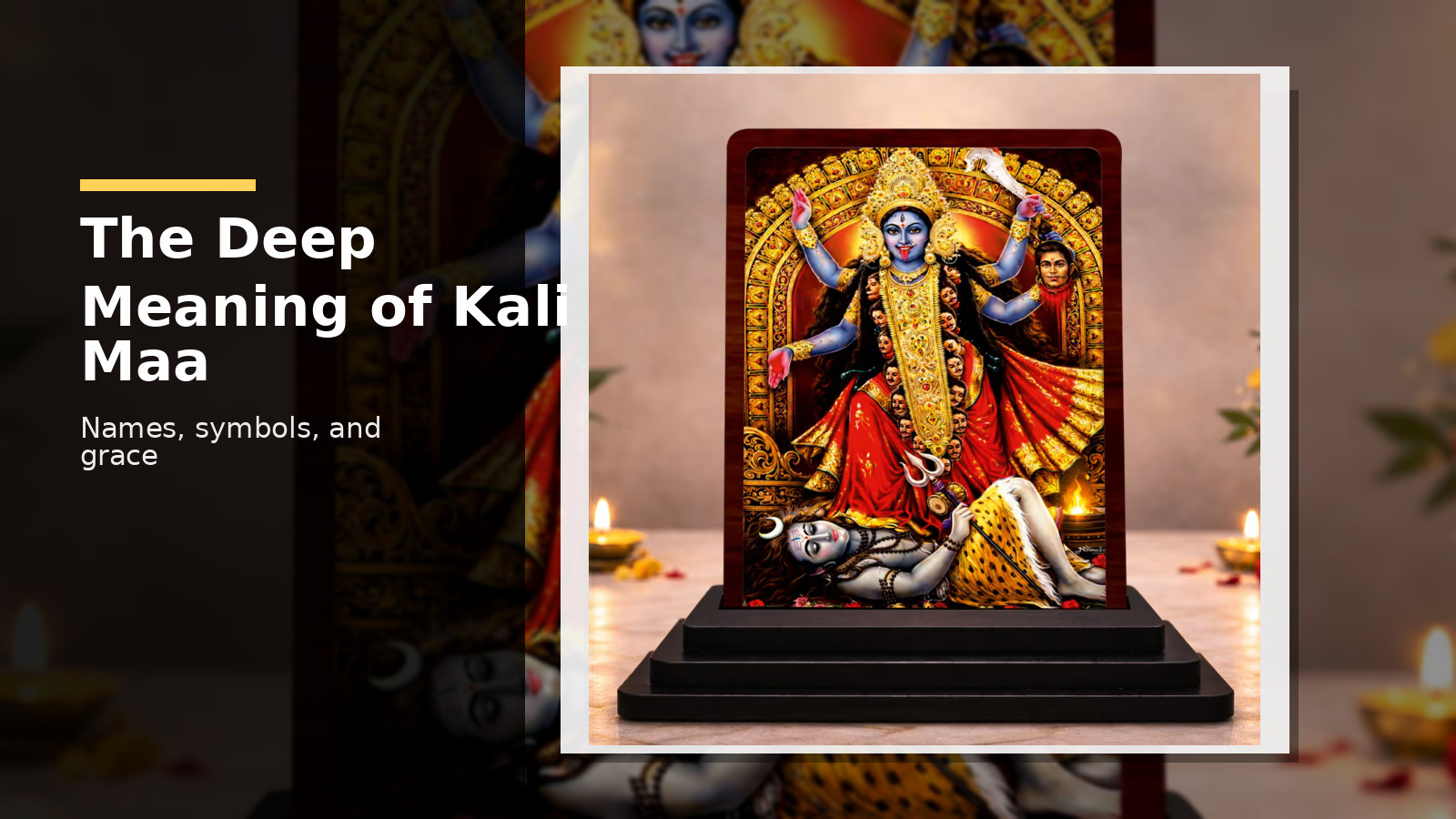
English Version
Kali Maa significance is not only about fearsome imagery; it is also about deep motherly love, protection, truth, and the courage to face life without illusion. For many devotees, Kali Maa appears first as the dark form of Divine शक्ति, yet the more one sits with her stories, names, and symbols, the more one feels her as a compassionate mother who destroys what harms and protects what is pure.
In homes, temples, and hearts across India, Kali Maa is remembered with reverence because she stands for both ending and renewal. She is the force that cuts away ego, false pride, fear, and ignorance, so that wisdom and devotion may grow. That is why her presence feels fierce and tender at the same time.
Who Is Kali Maa?
Kali Maa is one of the most powerful forms of the Divine Mother in Hindu tradition. She is commonly understood as a form of Goddess Parvati or the fierce manifestation of Shakti, the cosmic energy that sustains and transforms the universe. In devotional life, she is not seen as separate from compassion. Instead, her compassion is expressed through action: she protects, awakens, and liberates.
Her worship is especially meaningful for those who seek courage, mental strength, spiritual discipline, and protection from negativity. Many devotees turn to her in difficult times because her form reminds them that darkness is not the final word. It can be faced, transformed, and overcome.
Names of Kali Maa and What They Reveal
One of the most beautiful ways to understand kali maa significance is through her names. Each name carries a devotional clue, almost like a small lamp placed before the mind.
- Kali – Often linked with time, darkness, and transformation. She reminds us that all things change, and truth remains.
- Mahakali – The great cosmic form of Kali, beyond ordinary fear and beyond ordinary limits.
- Shyama – A name that points to her dark, deep, mysterious beauty.
- Bhadrakali – A protective and auspicious form, worshipped as a guardian mother.
- Kalratri – The night that ends fear, ignorance, and inner darkness.
These names are not just titles. They are spiritual clues. They tell devotees that Kali Maa is not only a destroyer of evil, but also a guide through the night of confusion toward the dawn of understanding.
Symbols of Kali Maa and Their Spiritual Clues
Kali Maa is often shown with powerful symbols, and each one has a meaning that devotees have cherished for generations. These symbols help us read her form like a sacred language.
- Dark complexion – Her dark form symbolizes the infinite, the ungraspable, and the truth beyond surface appearances.
- Garland of skulls – A reminder that ego, identity, and human limitations are to be surrendered before the Divine.
- Severed head or sword – Symbolic of cutting ignorance and false attachment.
- Outstretched tongue – Often understood as a sign of shock, compassion, or the swallowing of cosmic forces; devotees interpret it in many loving ways.
- Standing on Shiva – A profound symbol of dynamic energy and still consciousness, showing that action and awareness belong together.
- Raised hand in blessing – Even in fierce form, she offers protection and grace to her children.
When people look at these symbols with faith, they do not see only severity. They see reassurance. Kali Maa teaches that real protection sometimes looks stern, but it comes from love.
The Fierce Mother and the Gentle Heart
Many children first hear Kali Maa stories from a grandmother or elder who speaks softly yet firmly: “She is not angry with you. She is angry at what hurts you.” That feeling captures the heart of her worship. Her fierce form is not cruelty. It is motherly strength.
This is why devotees often pray to Kali Maa when they need inner courage. She is believed to remove fear from the mind, strength from weakness, and clarity from confusion. In that sense, her significance is deeply personal. She does not only belong to grand mythology. She belongs to the quiet struggles of everyday life.
Backstory and Sacred Legends
In widely known devotion, Kali Maa appears as a powerful force during cosmic struggle. One of the best-known images is her emergence in battle against demonic forces, especially in relation to the story of Goddess Durga and the defeat of evil. In these traditions, Kali’s fierce form becomes the visible power that restores balance.
Another cherished devotional thread is the idea that she appears when the world needs truth more than comfort. Her role is not random destruction. It is sacred correction. She removes what blocks spiritual growth, just as a careful gardener prunes a branch so the plant may breathe and bloom again.
Kali Maa Significance in Daily Devotion
For many families, Kali Maa significance is felt not only in festivals but in daily habits of prayer, discipline, and remembrance. A small image in the mandir, a diya lit in the evening, or a quiet mantra before beginning work can become a way of asking for her protection and steadiness.
Devotees often associate her with:
- Protection from negativity
- Courage in hard times
- Freedom from fear
- Spiritual awakening
- Strength to speak and live truthfully
In a household setting, her presence can also remind everyone that faith is not only about softness. Sometimes faith is about standing straight, telling the truth, and trusting the Divine Mother to guide the way.
Temples and Places Devotees Remember
Kali Maa is worshipped in many sacred places across India, and a few names are especially well known to devotees. The Kalighat Temple in Kolkata is among the most famous centers of Kali worship, deeply tied to Shakti devotion. Dakshineswar Kali Temple is another beloved place where countless devotees feel her living presence through prayer and remembrance.
These temples are not just monuments. They are living spaces of faith where people carry sorrow, gratitude, hope, and silent questions. In such places, the meaning of Kali Maa becomes very human: she listens, she holds, and she transforms.
Festival Significance and Worship Traditions
Kali worship is especially prominent during Kali Puja, which is observed with deep devotion in many regions. The night of worship becomes a time to honor the Goddess who removes darkness and fear. Lamps, flowers, incense, and heartfelt prayers create an atmosphere of reverence.
In some homes, devotees also connect her worship with moments of crisis, transition, or spiritual resolve. Whether during a festival or a quiet personal prayer, the experience is often the same: surrender the ego, and let the Mother work within the heart.
Spiritual Clues Hidden in Her Form
If one listens carefully, Kali Maa’s form offers many spiritual clues:
- She is dark – because the Divine cannot be limited by human labels.
- She is fierce – because love can be protective, not only soothing.
- She is adorned with symbols of death – because fear of death loses power before eternal truth.
- She blesses devotees – because liberation is not separate from compassion.
To many seekers, she is the Mother who says, “Do not be afraid of what must end. I am with you in the ending, and I am with you in the beginning too.”
Why Kali Maa Continues to Inspire
In today’s world, people still turn to Kali Maa because her message remains timeless. When life feels fragmented, she represents wholeness. When fear feels heavy, she represents courage. When the mind is clouded, she represents truth that cuts through illusion.
That is the lasting kali maa significance: she is not only a deity of destruction, but a Mother of transformation. She helps devotees release what no longer serves them and make space for wisdom, devotion, and inner peace.
If you would like to bring a quiet devotional presence into a small prayer corner, you may also explore the related product on our store.
Frequently Asked Questions
What is the main kali maa significance?
The main significance of Kali Maa lies in protection, transformation, courage, and the destruction of ignorance and negativity.
Why is Kali Maa shown in a fierce form?
Her fierce form symbolizes her power to destroy evil, remove fear, and protect devotees with strong motherly love.
What do Kali Maa’s symbols mean?
Her symbols, such as the dark form, sword, skull garland, and raised blessing hand, point to truth, surrender, protection, and spiritual awakening.
Where is Kali Maa especially worshipped?
She is widely worshipped in many places, with Kalighat Temple and Dakshineswar Kali Temple being especially well known.
When is Kali Puja celebrated?
Kali Puja is celebrated during the dark night of the new moon in the month associated with the festival, with deep prayer and devotional rituals.
Hindi Version
काली माँ significance केवल उनके भयानक रूप की बात नहीं है; यह प्रेम, रक्षा, सत्य, और उस साहस की बात है जो जीवन के भ्रमों को तोड़कर भीतर की रोशनी तक ले जाता है। बहुत से भक्तों के लिए काली माँ पहले एक उग्र रूप में दिखती हैं, लेकिन जैसे-जैसे उनके नाम, प्रतीक और कथाएँ समझ में आती हैं, वे एक ऐसी करुणामयी माँ लगती हैं जो हानिकारक चीज़ों को हटाकर आत्मा की रक्षा करती हैं।
घर, मंदिर और हृदय—तीनों जगह काली माँ का स्मरण श्रद्धा से किया जाता है। वे अंत और आरंभ दोनों का संदेश देती हैं। वे अहंकार, डर, और अज्ञान को काटकर ज्ञान और भक्ति के लिए स्थान बनाती हैं। इसलिए उनका रूप एक साथ कठोर भी लगता है और बेहद ममता भरा भी।
काली माँ कौन हैं?
हिंदू परंपरा में काली माँ देवी के सबसे शक्तिशाली रूपों में से एक हैं। उन्हें अक्सर देवी पार्वती का उग्र रूप या शक्ति का प्रकट स्वरूप माना जाता है। वे केवल विनाश की देवी नहीं हैं; वे परिवर्तन, जागरण, और मुक्ति की शक्ति हैं।
जो लोग साहस, मानसिक बल, और नकारात्मकता से सुरक्षा चाहते हैं, वे अक्सर काली माँ की शरण लेते हैं। कठिन समय में उनका स्मरण इस बात की याद दिलाता है कि अँधेरा अंतिम सत्य नहीं है। उसे देखा जा सकता है, बदला जा सकता है, और पार किया जा सकता है।
काली माँ के नाम और उनके संकेत
kali maa significance को समझने का सबसे सुंदर तरीका उनके नामों के माध्यम से है। हर नाम एक छोटा-सा आध्यात्मिक संकेत देता है।
- काली – समय, परिवर्तन, और गहराई का संकेत।
- महाकाली – वह विराट रूप जो सीमाओं से परे है।
- श्यामा – उनकी गहरी, रहस्यमयी सुंदरता का नाम।
- भद्रकाली – रक्षक और मंगलकारी माँ का रूप।
- कालरात्रि – वह रात्रि जो भय और अज्ञान को समाप्त करती है।
ये केवल उपाधियाँ नहीं हैं। ये भक्तों के लिए संकेत हैं कि काली माँ केवल दंड देने वाली शक्ति नहीं, बल्कि अँधेरी रात में रास्ता दिखाने वाली दिव्य माँ हैं।
काली माँ के प्रतीक और उनके आध्यात्मिक अर्थ
काली माँ के चित्रण में दिखने वाले प्रतीक बहुत गहरे अर्थ रखते हैं।
- काला रूप – अनंतता और उस सत्य का प्रतीक जो साधारण आँखों से नहीं दिखता।
- मुण्डों की माला – अहंकार और सीमित पहचान का त्याग।
- तलवार या कटा सिर – अज्ञान और आसक्ति को काटने का संकेत।
- लंबी जीभ – विस्मय, करुणा, और ब्रह्मांडीय शक्ति की याद दिलाने वाला रूप।
- शिव पर खड़ा स्वरूप – क्रिया और चेतना के संतुलन का सुंदर संकेत।
- वरद मुद्रा – उनके उग्र रूप में भी आशीर्वाद और रक्षा।
इन प्रतीकों को श्रद्धा से देखने पर भय कम और विश्वास अधिक महसूस होता है।
उग्र माँ, पर हृदय से कोमल
दादी या नानी की कहानी में अक्सर एक बात बहुत सच्ची लगती है: “वो तुमसे नाराज़ नहीं हैं, वो उस चीज़ से नाराज़ हैं जो तुम्हें चोट पहुँचाती है।” यही काली माँ की भावना है। उनका उग्र रूप क्रूरता नहीं, बल्कि मातृत्व की शक्ति है।
भक्त जब डर, संकट, या मानसिक बोझ महसूस करते हैं, तो वे काली माँ से साहस माँगते हैं। वे याद दिलाती हैं कि माँ का प्रेम हमेशा मुलायम नहीं होता; कभी-कभी वह कठोर भी होता है, क्योंकि वह रक्षा करना जानता है।
कथाएँ और पृष्ठभूमि
प्रसिद्ध परंपराओं में काली माँ का प्रकट होना दैवीय संघर्ष के समय बताया जाता है, विशेषकर बुराई के विनाश और धर्म की रक्षा के संदर्भ में। दुर्गा से जुड़ी कथाओं में उनका उग्र रूप शक्ति का वह रूप बन जाता है जो संतुलन लौटाता है।
उनकी भूमिका केवल विनाश नहीं है। वे उस सर्जनात्मक सुधार की तरह हैं जो जीवन की टेढ़ी शाखा को छाँटकर नए विकास के लिए जगह बनाता है।
घर में काली माँ significance
कई परिवारों में काली माँ का महत्व केवल त्योहारों तक सीमित नहीं रहता। सुबह-शाम की प्रार्थना, दीपक जलाना, या एक छोटा-सा चित्र मंडिर में रखना—ये सब उनके संरक्षण और स्थिरता की प्रार्थना बन जाते हैं।
उनका स्मरण इन बातों से जुड़ता है:
- नकारात्मकता से रक्षा
- कठिन समय में साहस
- डर से मुक्ति
- आध्यात्मिक जागरण
- सत्य के साथ जीने की शक्ति
घर में उनका स्थान यह याद दिलाता है कि भक्ति केवल कोमलता नहीं, बल्कि सच्चाई के साथ खड़े रहने का नाम भी है।
प्रसिद्ध मंदिर और तीर्थ
काली माँ की पूजा भारत के अनेक स्थानों पर होती है। कोलकाता का कालीघाट मंदिर और दक्षिणेश्वर काली मंदिर विशेष रूप से प्रसिद्ध हैं। इन मंदिरों में भक्त अपनी पीड़ा, कृतज्ञता, और मौन प्रार्थनाएँ लेकर आते हैं।
ऐसे स्थानों पर काली माँ की महिमा बहुत मानवीय रूप ले लेती है—वे सुनती हैं, संभालती हैं, और भीतर बदलाव लाती हैं।
काली पूजा का महत्व
काली पूजा के समय काली माँ की आराधना विशेष श्रद्धा से की जाती है। दीप, पुष्प, धूप, और प्रार्थनाएँ वातावरण को पवित्र बना देती हैं। यह रात्रि उस देवी को समर्पित होती है जो अंधकार और भय का नाश करती हैं।
कई लोग व्यक्तिगत संकट या परिवर्तन के समय भी उनकी पूजा करते हैं। संदेश वही रहता है—अहंकार को समर्पित कर दीजिए, और माँ पर भरोसा रखिए।
उनके रूप में छिपे आध्यात्मिक संकेत
- वे काली हैं – क्योंकि दिव्यता को किसी एक रूप में बाँधा नहीं जा सकता।
- वे उग्र हैं – क्योंकि प्रेम केवल सुकून नहीं, रक्षा भी है।
- वे मृत्यु-चिह्नों से जुड़ी हैं – क्योंकि शाश्वत सत्य मृत्यु के भय से ऊपर है।
- वे आशीर्वाद देती हैं – क्योंकि मुक्ति में करुणा भी शामिल है।
वे मानो कहती हैं, “जो समाप्त होना है, उससे डरो मत। मैं अंत में भी हूँ, और नए आरंभ में भी।”
क्यों आज भी काली माँ प्रेरणा देती हैं
आज भी लोग काली माँ की ओर इसलिए मुड़ते हैं क्योंकि उनका संदेश समय से परे है। जब जीवन बिखरा लगे, वे संपूर्णता का प्रतीक बनती हैं। जब डर भारी लगे, वे साहस देती हैं। जब मन भ्रमित हो, वे सत्य की ओर ले जाती हैं।
यही kali maa significance की सबसे गहरी बात है: वे केवल विनाश की देवी नहीं, बल्कि परिवर्तन की माँ हैं। वे हमें वह छोड़ने में मदद करती हैं जो अब आवश्यक नहीं, ताकि भीतर शांति, भक्ति और ज्ञान के लिए स्थान बने।
यदि आप अपने पूजा स्थान में एक शांत और भक्तिमय स्पर्श जोड़ना चाहते हैं, तो हमारे स्टोर पर संबंधित उत्पाद देखें।
अक्सर पूछे जाने वाले प्रश्न
काली माँ significance क्या है?
काली माँ का महत्व रक्षा, परिवर्तन, साहस, और अज्ञान तथा नकारात्मकता के नाश में है।
काली माँ का रूप उग्र क्यों है?
उनका उग्र रूप बुराई को नष्ट करने, भय दूर करने, और भक्तों की रक्षा करने की शक्ति का प्रतीक है।
काली माँ के प्रतीक क्या दर्शाते हैं?
उनका काला रूप, तलवार, मुण्डमाला, और वरद मुद्रा सत्य, त्याग, रक्षा, और आध्यात्मिक जागरण के संकेत हैं।
काली माँ की पूजा कहाँ प्रसिद्ध है?
कालीघाट और दक्षिणेश्वर जैसे मंदिर काली उपासना के अत्यंत प्रसिद्ध केंद्र हैं।
काली पूजा कब मनाई जाती है?
काली पूजा अमावस्या की रात्रि में श्रद्धा और विधि-विधान के साथ मनाई जाती है।