
Ganesh Ji History and the Gentle Lessons He Leaves at Home
May 24, 2026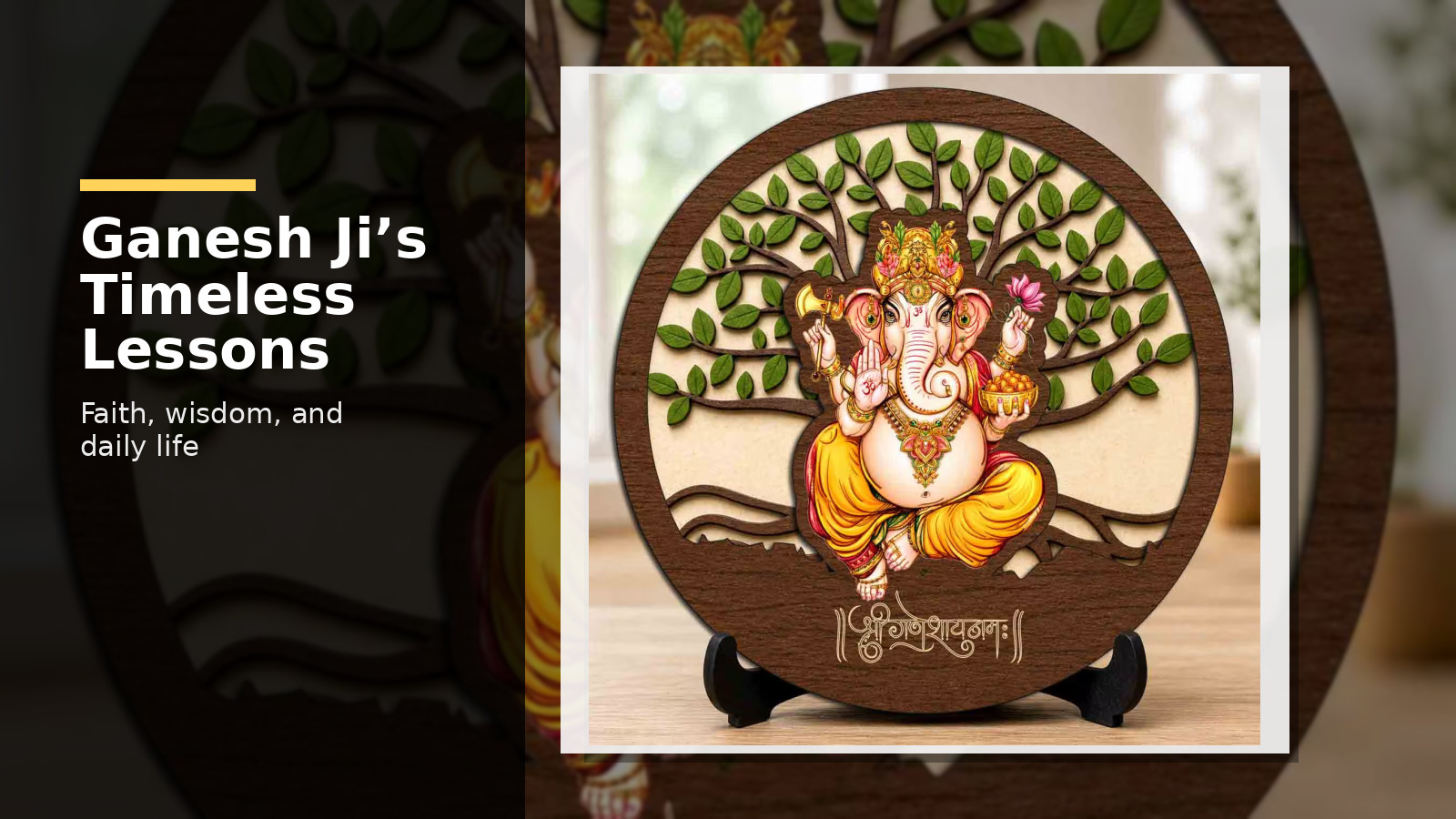
English Version
When people speak of ganesh ji history, they are not only talking about an old divine story. They are remembering a presence that has lived quietly in homes for generations. Ganesh Ji is the one children see before exams, the one elders invoke before a new beginning, and the one families call upon with folded hands when life feels uncertain. His story feels intimate because it is not only about temples and festivals; it is also about the values grandparents pass down at the dining table, in the prayer corner, and in the gentle words spoken to children.
That is why Ganesh Ji is loved so deeply. He is the remover of obstacles, yes, but he is also the teacher of patience, humility, listening, and wise action. In many homes, his image is placed near the mandir, on a shelf, or on a work desk as a reminder that every beginning needs blessings and every effort needs steadiness.
Who is Ganesh Ji?
Ganesh Ji, also known as Ganesha, Vinayaka, and Ganapati, is one of the most widely worshipped deities in Hindu tradition. He is usually shown with an elephant head, a calm face, a round belly, and a loving, dignified presence. Each part of his form carries meaning. The elephant head suggests wisdom and memory. The big ears remind us to listen more and speak less. The small eyes invite focus. The trunk shows adaptability, and the large belly reflects acceptance of life’s joys and burdens with equanimity.
In ordinary family life, these symbols become lessons. A grandmother may tell a child, “Listen carefully like Ganesh Ji.” A father may say, “Start with Ganesh Ji before anything important.” A mother may softly remind everyone to remain calm and complete the task patiently. That is the beauty of his place in home devotion: the divine becomes practical, and the practical becomes sacred.
Ganesh Ji history through the heart of the home
In ganesh ji history, one of the most beloved ideas is that he is deeply connected with beginnings. That is why people seek his blessings before weddings, housewarming ceremonies, business openings, studies, travels, and even small daily tasks. This is not only ritual; it is a way of saying that effort should begin with humility and trust.
Many families grow up with this feeling. A child learns that before a new notebook is opened, before a new job is started, or before a festival lamp is lit, Ganesh Ji is remembered first. Over time, this becomes more than habit. It becomes a house’s emotional grammar. The family learns that life does not move well in a rush of ego. It moves well when the heart is steady, the mind is clear, and the hands are sincere.
What the legends teach us
Different stories about Ganesh Ji are told across India, but the central message remains gentle and strong. He is the son of Lord Shiva and Goddess Parvati. In the most well-known story, his form came from Parvati’s devotion and care, and through a sequence of divine events he became one of the most important deities in the Hindu pantheon. His rise is not just a tale of power; it is a tale of belonging, love, and recognition.
Some legends tell of his wisdom in circling his parents instead of the world when asked to compete, showing that true intelligence understands essence, not just distance. Others show his devotion, humility, and readiness to serve. Taken together, these stories teach that wisdom is not loud. It is thoughtful. It does not need to win attention. It wins trust.
Values hidden in Ganesh Ji’s form
Families often explain Ganesh Ji’s form to children in simple words, and those words stay for life. His symbolism feels like a loving lesson book:
- Elephant head: wisdom, memory, and thoughtful understanding.
- Big ears: listening carefully before reacting.
- Small eyes: concentration and inner focus.
- Trunk: flexibility and the ability to adapt.
- Large belly: acceptance, calmness, and emotional balance.
- Mouse as vehicle: mastery over desire and the mind.
These are not just symbols for scholars. They are values for daily living. A student preparing for exams, a shopkeeper balancing many worries, a parent managing a home, and a young professional facing uncertainty can all find comfort in these teachings. Ganesh Ji history becomes meaningful because it enters ordinary life so naturally.
Why Ganesh Ji feels especially close to children
In many Indian homes, children first meet divine stories through Ganesh Ji. He is often the deity they draw in school, the one they decorate during Ganesh Chaturthi, and the one they hear about in bedtime stories. He feels approachable because his form is memorable and kind, and because the adults around them present him as a wise friend rather than a distant figure.
Parents and grandparents use Ganesh Ji to teach good habits: respect elders, begin work with prayer, avoid anger, speak honestly, and stay humble when praised. These are household values, but they become easier to remember when attached to a beloved form. This is one reason Ganesh Ji remains so alive in family culture.
Ganesh Chaturthi and the joy of welcome
Ganesh Chaturthi is one of the most cherished festivals connected with Ganesh Ji. Homes and communities welcome him with devotion, songs, offerings, and prayer. For many people, this festival is not just a religious event; it is a season of renewal. The house feels brighter, the family gathers more closely, and the mood becomes one of gratitude and hope.
The festival also reflects a beautiful spiritual idea: God comes close to the people who remember Him with love. In that closeness, people feel encouraged to start again, forgive easily, and move forward with faith. That is why Ganesh Chaturthi remains emotionally powerful year after year.
Famous temples and sacred places
Ganesh Ji is worshipped across India, and several temples are especially famous among devotees. The Ashtavinayak temples in Maharashtra are deeply revered, each with its own history and devotional feeling. Siddhivinayak Temple in Mumbai is also widely visited by those seeking blessings for new beginnings and important life goals. These places matter because they show how devotion becomes shared memory. Pilgrims go with hopes, worries, and prayers, and many return with a lighter heart.
Yet Ganesh Ji’s presence is not limited to famous temples. He is just as present in a small home altar, on a shop counter, or on a study table before an exam. That everyday closeness is part of his enduring power.
What Ganesh Ji teaches us for daily life
Across generations, his teachings remain practical and tender. If one had to put them into everyday words, they would sound like a wise elder speaking softly:
- Begin with prayer, not pride.
- Listen first, then respond.
- Move with patience when life feels blocked.
- Keep your mind focused on what matters.
- Stay humble even when others praise you.
- Accept both success and struggle with balance.
These lessons are not dramatic, but they are lasting. They shape character in small moments, which is often how the deepest values are built.
Why his image stays in modern homes and offices
Even today, many people keep Ganesh Ji near their work area, puja room, or study desk. The reason is simple: his presence feels calming and auspicious. A small devotional image can change the feeling of a room. It can make a desk feel less lonely, a corner feel more sacred, and a routine task feel more meaningful.
Some devotees prefer compact wooden idols because they fit neatly into modern spaces while still carrying a traditional feeling. A thoughtfully made idol, such as a Ganesh Ji Wooden Idol / Murti with Stand for Office Desk, Mandir Shelf & Spiritual Gift, can serve as a gentle reminder of devotion in a home, office, or study corner. It is not the object alone that matters, but the remembrance it supports.
FAQ: Common questions about Ganesh Ji history
Why is Ganesh Ji worshipped first?
He is traditionally worshipped first because he is associated with beginnings, wisdom, and the removal of obstacles. Devotees ask for his blessings so that their efforts may start with clarity and grace.
What do Ganesh Ji’s symbols mean?
His elephant head, big ears, small eyes, trunk, and mouse each carry teachings about wisdom, listening, focus, adaptability, and control over desire.
Is Ganesh Chaturthi only about celebration?
No. It is also about devotion, gratitude, renewal, and family togetherness. The festival invites people to welcome Ganesh Ji into their homes and hearts.
How can children understand Ganesh Ji history?
Children can understand him through simple values: listen well, stay calm, respect parents, and begin work with prayer. These lessons make the stories easy to remember and meaningful in daily life.
Why is Ganesh Ji loved in both homes and temples?
Because his presence feels both grand and personal. He belongs in temples, but he also feels at home in small prayer corners, where family life unfolds every day.
Closing thought
When we speak of ganesh ji history, we are really speaking about a faith that teaches the household how to live. Ganesh Ji reminds us to begin with humility, listen with care, work with patience, and keep the mind steady. That is why his story never feels old. It sits quietly in the home, in the heart, and in the simple values parents and grandparents continue to pass on with love.
If you are looking to bring that calm devotional feeling into your own space, explore the related product on our store.
Hindi Version
जब हम ganesh ji history की बात करते हैं, तो हम सिर्फ एक प्राचीन कथा नहीं सुनते। हम उस दिव्य उपस्थिति को याद करते हैं जो पीढ़ियों से घरों में चुपचाप बनी हुई है। गणेश जी वह हैं जिनका नाम बच्चे परीक्षा से पहले लेते हैं, जिनकी याद बड़े लोग किसी नए काम की शुरुआत से पहले करते हैं, और जिनके आगे परिवार कठिन समय में हाथ जोड़कर खड़ा होता है। उनकी कहानी इसलिए इतनी अपनेपन से भरी लगती है क्योंकि वह केवल मंदिरों और उत्सवों की कहानी नहीं है; वह घर के आँगन, पूजा की चौकी, और दादी-नानी की प्यारी सीखों से भी जुड़ी है।
यही कारण है कि गणेश जी इतने प्रिय हैं। वे विघ्नहर्ता हैं, लेकिन साथ ही धैर्य, विनम्रता, ध्यान और समझदारी के शिक्षक भी हैं। कई घरों में उनकी मूर्ति या छवि मंदिर के पास, शेल्फ पर, या ऑफिस डेस्क पर रखी जाती है—ताकि हर शुरुआत में आशीर्वाद और हर काम में स्थिरता बनी रहे।
गणेश जी कौन हैं?
गणेश जी, जिन्हें गणेश, विनायक और गणपति भी कहा जाता है, हिंदू परंपरा के सबसे व्यापक रूप से पूजे जाने वाले देवताओं में से एक हैं। उन्हें आमतौर पर हाथी के सिर, शांत चेहरे, गोल पेट और प्रेमपूर्ण, गरिमामय स्वरूप के साथ दिखाया जाता है। उनके हर अंग में एक संदेश छिपा है। हाथी का सिर बुद्धि और स्मरणशक्ति का प्रतीक है। बड़े कान हमें अधिक सुनने की सीख देते हैं। छोटी आँखें एकाग्रता का संकेत देती हैं। सूँड लचीलापन दिखाती है, और बड़ा पेट जीवन के सुख-दुख को संतुलन से स्वीकार करने की प्रेरणा देता है।
घर की रोज़मर्रा की ज़िंदगी में ये प्रतीक सीख बन जाते हैं। दादी बच्चे से कहती हैं, “गणेश जी की तरह ध्यान से सुनो।” पिता कहते हैं, “किसी भी शुभ काम की शुरुआत गणेश जी से करो।” माँ धीरे से याद दिलाती हैं कि शांति से काम पूरा करो। यही उनकी खासियत है—दिव्यता जीवन में उपयोगी बन जाती है, और जीवन की बातें पवित्र लगने लगती हैं।
घर के भाव से जुड़ी गणेश जी history
ganesh ji history में एक सबसे प्यारा विचार यह है कि वे हर नई शुरुआत से जुड़े हैं। इसलिए लोग शादी, गृह प्रवेश, व्यवसाय की शुरुआत, पढ़ाई, यात्रा और यहाँ तक कि छोटे रोज़मर्रा के कामों से पहले भी उनका स्मरण करते हैं। यह केवल रस्म नहीं, बल्कि यह कहने का तरीका है कि काम विनम्रता और विश्वास के साथ शुरू होना चाहिए।
बहुत-से परिवारों में यह भावना बचपन से बस जाती है। बच्चा सीखता है कि नई कॉपी खोलने से पहले, नया काम शुरू करने से पहले, या त्योहार का दीप जलाने से पहले गणेश जी को याद किया जाता है। धीरे-धीरे यह आदत नहीं रहती; यह घर की भावनात्मक भाषा बन जाती है। परिवार समझने लगता है कि जीवन अहंकार की जल्दी में नहीं चलता। वह तब अच्छा चलता है जब मन स्थिर हो, ध्यान साफ़ हो, और हाथ सच्चे हों।
कथाएँ हमें क्या सिखाती हैं
गणेश जी से जुड़ी अलग-अलग कथाएँ भारत में सुनाई जाती हैं, लेकिन उनका मूल संदेश एक ही है—नरम, गहरा और स्थायी। वे भगवान शिव और माता पार्वती के पुत्र हैं। सबसे प्रसिद्ध कथा में, पार्वती की भक्ति और स्नेह से उनका स्वरूप बना, और फिर दिव्य घटनाओं की एक श्रृंखला के बाद वे हिंदू परंपरा के सबसे महत्वपूर्ण देवताओं में स्थान पाए। यह केवल शक्ति की कहानी नहीं, बल्कि अपनापन, प्रेम और पहचान की कहानी है।
कुछ कथाओं में वे अपने माता-पिता की परिक्रमा करके बुद्धि का परिचय देते हैं, जब उनसे संसार की परिक्रमा करने की प्रतियोगिता के बारे में पूछा जाता है। इससे सिख मिलती है कि सच्ची समझ केवल दूरी नहीं नापती; वह सार को पहचानती है। दूसरी कथाएँ उनकी विनम्रता, सेवा-भाव और समर्पण को दिखाती हैं। इन सब कहानियों का निष्कर्ष यही है कि बुद्धि शोर नहीं करती। वह सोचती है, समझती है, और विश्वास जीतती है।
गणेश जी के स्वरूप में छिपे जीवन मूल्य
घर के बड़े अक्सर बच्चों को गणेश जी के स्वरूप का अर्थ बहुत सरल शब्दों में समझाते हैं, और वही शब्द जीवन भर साथ रहते हैं:
- हाथी का सिर: बुद्धि, स्मरण और गहरी समझ।
- बड़े कान: बोलने से पहले ध्यान से सुनना।
- छोटी आँखें: एकाग्रता और भीतर की दृष्टि।
- सूँड: लचीलापन और परिस्थितियों के अनुसार ढलने की क्षमता।
- बड़ा पेट: स्वीकार, शांति और भावनात्मक संतुलन।
- मूषक वाहन: इच्छाओं और मन पर नियंत्रण।
ये प्रतीक केवल विद्वानों के लिए नहीं हैं। ये रोज़मर्रा की ज़िंदगी के लिए मूल्य हैं। पढ़ाई करने वाला छात्र, दुकान संभालने वाला व्यक्ति, घर चलाने वाले माता-पिता, और अनिश्चितता से जूझता युवा—सब इनमें सहारा पा सकते हैं। यही वजह है कि गणेश जी history साधारण जीवन में इतनी सहजता से उतर आती है।
बच्चों के दिल के इतने करीब क्यों हैं गणेश जी?
भारत के कई घरों में बच्चों की पहली धार्मिक कहानियों में गणेश जी शामिल होते हैं। स्कूल में बनने वाली उनकी तस्वीर, गणेश चतुर्थी पर सजने वाली उनकी मूर्ति, और रात को सुनाई जाने वाली कहानियाँ—सब बच्चों को उनसे परिचित कराती हैं। वे इसलिए भी अपने लगते हैं क्योंकि उनका स्वरूप याद रह जाने वाला है और उनके बारे में बड़े लोग उन्हें दूर के देवता की तरह नहीं, बल्कि एक समझदार मित्र की तरह बताते हैं।
माता-पिता और दादा-दादी गणेश जी के माध्यम से अच्छी आदतें सिखाते हैं: बड़ों का सम्मान करो, काम की शुरुआत प्रार्थना से करो, क्रोध से बचो, सच बोलो, और प्रशंसा मिलने पर भी विनम्र रहो। ये घर के संस्कार हैं, लेकिन जब उन्हें किसी प्रिय रूप से जोड़ा जाता है, तो वे और गहरे याद रहते हैं।
गणेश चतुर्थी और स्वागत की खुशी
गणेश चतुर्थी गणेश जी से जुड़ा सबसे प्रिय पर्वों में से एक है। घर और समुदाय उन्हें भक्ति, गीत, प्रसाद और प्रार्थना के साथ स्वागत करते हैं। बहुतों के लिए यह केवल धार्मिक आयोजन नहीं, बल्कि नवता का समय होता है। घर उजला लगता है, परिवार पास आता है, और मन में कृतज्ञता और आशा भर जाती है।
यह पर्व एक सुंदर आध्यात्मिक भाव भी सिखाता है—भगवान उन लोगों के पास आते हैं जो प्रेम से उन्हें याद करते हैं। उस निकटता में लोग फिर से शुरुआत करने, आसानी से क्षमा करने, और विश्वास के साथ आगे बढ़ने की प्रेरणा पाते हैं। इसलिए गणेश चतुर्थी हर साल मन को छू जाती है।
प्रसिद्ध मंदिर और पवित्र स्थान
गणेश जी की पूजा पूरे भारत में होती है, और कई मंदिर विशेष रूप से प्रसिद्ध हैं। महाराष्ट्र के अष्टविनायक मंदिर भक्तों के बीच अत्यंत सम्मानित हैं, और प्रत्येक का अपना इतिहास और भक्ति-रस है। मुंबई का सिद्धिविनायक मंदिर भी उन लोगों के लिए बहुत प्रिय है जो नई शुरुआत और जीवन के महत्वपूर्ण लक्ष्यों के लिए आशीर्वाद माँगते हैं। ये स्थान इसलिए खास हैं क्योंकि वे भक्ति को साझा स्मृति में बदल देते हैं।
लेकिन गणेश जी की उपस्थिति केवल प्रसिद्ध मंदिरों तक सीमित नहीं है। वह छोटे घर के मंदिर, दुकान की चौकी, या पढ़ाई की मेज़ पर भी उतने ही उपस्थित रहते हैं। यही रोज़मर्रा की निकटता उनकी स्थायी शक्ति का हिस्सा है।
रोज़मर्रा की ज़िंदगी के लिए गणेश जी की सीख
पीढ़ियों से उनकी सीखें व्यावहारिक और स्नेहपूर्ण बनी हुई हैं। अगर उन्हें घर की भाषा में कहा जाए, तो वे कुछ यूँ सुनाई देंगी:
- अहंकार से नहीं, प्रार्थना से शुरू करो।
- पहले सुनो, फिर जवाब दो।
- रुकावट आए तो धैर्य से आगे बढ़ो।
- मन को ज़रूरी बातों पर टिकाओ।
- प्रशंसा मिले तो भी विनम्र रहो।
- सफलता और कठिनाई—दोनों को संतुलन से स्वीकार करो।
ये सीखें भले ही नाटकीय न लगें, लेकिन बहुत गहरी हैं। ये छोटे-छोटे क्षणों में चरित्र बनाती हैं, और अक्सर सबसे स्थायी मूल्य ऐसे ही बनते हैं।
आधुनिक घरों और दफ्तरों में उनकी छवि क्यों रहती है
आज भी बहुत लोग गणेश जी को अपने काम की जगह, पूजा कक्ष, या पढ़ने की मेज़ के पास रखते हैं। कारण सरल है—उनकी उपस्थिति शांति और शुभता का एहसास देती है। एक छोटी-सी आध्यात्मिक छवि कमरे का माहौल बदल सकती है। वह डेस्क को कम अकेला, कोने को अधिक पवित्र, और सामान्य काम को अधिक अर्थपूर्ण बना सकती है।
कुछ भक्तों को कॉम्पैक्ट लकड़ी की मूर्तियाँ पसंद आती हैं क्योंकि वे आधुनिक जगहों में सहजता से फिट हो जाती हैं और फिर भी पारंपरिक भाव बनाए रखती हैं। सोच-समझकर बनी एक मूर्ति, जैसे Ganesh Ji Wooden Idol / Murti with Stand for Office Desk, Mandir Shelf & Spiritual Gift, घर, दफ़्तर या पढ़ाई के कोने में भक्ति की शांत याद बन सकती है। वस्तु से अधिक महत्वपूर्ण है वह स्मरण, जिसे वह सहारा देती है।
FAQ: गणेश जी history से जुड़े आम प्रश्न
गणेश जी की पूजा सबसे पहले क्यों की जाती है?
परंपरा के अनुसार उन्हें शुरुआत, बुद्धि और विघ्नों को दूर करने से जोड़ा जाता है। इसलिए भक्त काम की शुरुआत में उनका आशीर्वाद लेते हैं।
गणेश जी के प्रतीकों का क्या अर्थ है?
उनका हाथी सिर, बड़े कान, छोटी आँखें, सूँड और मूषक—ये सब बुद्धि, सुनने, एकाग्रता, लचीलापन और इच्छा-नियंत्रण की सीख देते हैं।
क्या गणेश चतुर्थी केवल उत्सव है?
नहीं, यह भक्ति, कृतज्ञता, पुनः शुरुआत और परिवार के साथ मिलकर ईश्वर को घर में आमंत्रित करने का अवसर भी है।
बच्चों को गणेश जी history कैसे समझाई जा सकती है?
उन्हें सरल मूल्यों के माध्यम से: ध्यान से सुनना, शांत रहना, माता-पिता का सम्मान करना, और प्रार्थना के साथ काम शुरू करना।
गणेश जी मंदिरों और घरों—दोनों में इतने प्रिय क्यों हैं?
क्योंकि उनका स्वरूप भव्य भी है और अपना-सा भी। वे मंदिर में भी पूजे जाते हैं, और छोटे पूजा-कोने में भी उतने ही सहज लगते हैं।
अंतिम विचार
ganesh ji history पर सोचते हुए असल में हम उस आस्था के बारे में सोचते हैं जो घर को जीने की कला सिखाती है। गणेश जी हमें याद दिलाते हैं कि शुरुआत विनम्रता से हो, सुनना ध्यान से हो, काम धैर्य से हो, और मन स्थिर रहे। इसलिए उनकी कहानी पुरानी नहीं लगती। वह घर में, दिल में, और उन सरल मूल्यों में आज भी ज़िंदा है जिन्हें माता-पिता और दादा-दादी प्रेम से आगे बढ़ाते रहते हैं।
अगर आप अपने स्थान में यही शांत devotional feeling लाना चाहते हैं, तो हमारे store पर related product explore करें।