
Durga Maa Significance: Morning Prayer, Evening Aarti, and Daily Faith
April 22, 2026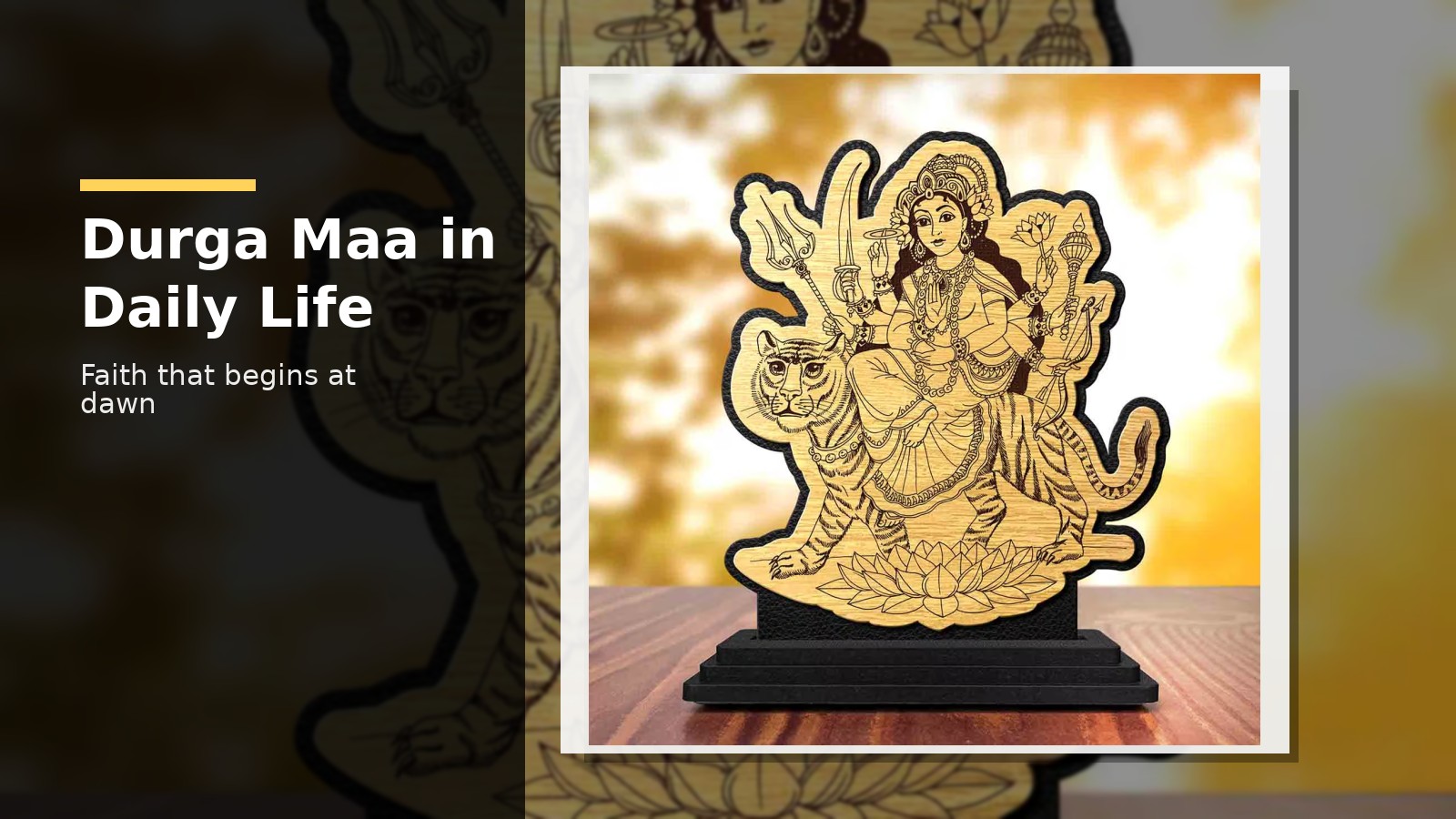
English Version
In many homes, durga maa significance is not felt only during Navratri or on a festival day. It lives quietly in the little moments of the day: when someone folds their hands before sunrise, when a diya is lit at dusk, when a tired heart whispers her name for courage. That is the beauty of Durga Maa bhakti. It is grand, yet deeply personal. It is ancient, yet it walks with us into everyday life.
For many devotees, Durga Maa is not just the fierce warrior goddess from stories. She is the Mother who protects, the शक्ति who steadies the mind, and the loving presence that makes a house feel like a home. Her worship often becomes part of a family rhythm—simple, sincere, and full of feeling.
Who is Durga Maa?
Durga Maa is one of the most revered forms of the Divine Mother in Hindu tradition. She is known as the goddess of strength, protection, and compassion. In sacred stories, she appears when adharma rises too high and the world needs balance restored. Her form reminds devotees that divine power is never only about destruction; it is also about protection, courage, and the victory of truth.
Her many arms symbolize her limitless ability to support, guard, and act. Her lion mount represents bravery and control over fear. Her calm face, even in powerful form, tells devotees that strength can also be graceful and compassionate.
Durga Maa significance in morning prayer
Many households begin the day with a small prayer to Durga Maa. It may be as simple as lighting incense, offering water, chanting a mantra, or just sitting in silence for a few moments. The morning prayer is not always long. Often, it is the sincerity that matters most.
When a devotee says her name at dawn, the day seems to begin with protection. The mind becomes a little lighter. The heart remembers that whatever the day brings, one is not alone. This is one reason durga maa significance feels so intimate in daily life—it enters the home through ordinary routines.
- A small diya at the altar can become a symbol of hope.
- A simple chant can settle a restless mind.
- A bowed head can turn a busy morning into a sacred one.
Evening aarti and the quiet return to devotion
If morning prayer feels like a gentle beginning, evening aarti feels like a soft homecoming. After work, study, family duties, and the noise of the day, the evening lamp brings a feeling of pause. The flame, the bell, the fragrance of incense, and the familiar devotional song create a sacred rhythm that many families cherish.
In this moment, Durga Maa is remembered not only as a fierce protector but as the Mother who receives all worries with compassion. The evening aarti is often where gratitude lives. Devotees thank her for help received, for strength carried through the day, and for unseen blessings that kept the family steady.
Household devotion: when bhakti becomes everyday life
Durga Maa worship in the home is often wonderfully simple. A clean corner, a photo or idol, fresh flowers, a lamp, and a few sincere words are enough to create a sacred space. In many families, children grow up seeing this devotion and learning that faith is not separate from daily living. It is woven into it.
That is why household worship matters so much. It teaches remembrance. It teaches discipline. It teaches gratitude. And above all, it teaches that the Divine Mother is close—closer than fear, closer than doubt, closer than the many worries that visit the mind.
Legends that shape Durga Maa worship
The most celebrated form of Durga Maa is connected with the victory over Mahishasura, the buffalo demon. This story is remembered as the triumph of divine power over arrogance, chaos, and darkness. But devotees do not see it only as a mythic battle. They see their own inner struggles reflected in it too.
Every time a person chooses patience over anger, courage over fear, truth over confusion, the spirit of Durga Maa feels close. Her story becomes a living guide for moral and spiritual strength.
Durga Maa and the meaning of feminine power
One of the deepest aspects of durga maa significance is the way she honors shakti—the sacred power of the feminine. Durga Maa reminds the world that divine strength can be nurturing, protective, and radiant all at once. She is not distant from everyday struggle. She stands with those who are carrying heavy responsibilities, silent pain, or the desire to begin again.
For many women and families, her image becomes a source of inner courage. For children, she is the Mother who watches over the home. For elders, she is the familiar presence who has been remembered across generations.
Festival significance: Navratri and beyond
Navratri is the most widely known celebration dedicated to Durga Maa. For nine nights, devotees fast, sing, pray, and honor her in her various forms. The festival is rich with color, discipline, and joy. Yet the devotion does not end when the festival ends.
In many homes, the spirit of Navratri continues throughout the year through small acts of remembrance. Aarti in the evening, a mantra before work, or a prayer before a difficult conversation—these become ways of carrying the festival’s energy into ordinary life.
Other important devotional observances include:
- Maha Ashtami and Maha Navami, deeply cherished days in the Navratri cycle
- Durga Puja, especially in eastern India, with grand pandals and community worship
- Vijayadashami, marking the celebration of victory and auspicious new beginnings
Famous places of worship associated with Durga Maa
Across India, many sacred places are closely associated with Durga Maa worship. These sites draw pilgrims, families, and devotional visitors who come for blessing, peace, and darshan.
- Vaishno Devi in Jammu is among the most revered Shakti shrines.
- Kamakhya Temple in Assam is a powerful center of Devi worship.
- Kalighat in Kolkata is deeply important to Shakti devotion.
- Chamundeshwari Temple in Mysuru reflects the fierce protective form of the Goddess.
These places are not only pilgrimage destinations. They are living reminders that devotion takes many forms—some loud and festive, some quiet and deeply personal.
Symbols devotees often remember
When people think of Durga Maa, certain symbols naturally come to mind. Each one carries meaning and devotion:
- Lion or tiger: courage and mastery over fear
- Trident (trishul): divine power, protection, and balance
- Lotus: purity and spiritual unfolding
- Many arms: her ability to protect in countless ways
- Calm expression: compassion within strength
How daily remembrance changes the heart
Devotion does not always change life in dramatic ways. Often, it changes the heart quietly. A person who remembers Durga Maa regularly may feel more anchored. The mind may become steadier. The household may feel calmer. Even hardship can be faced with a little more dignity.
This is why so many families keep a small image or idol of Durga Maa in the prayer area, study corner, or living space. It is not just decoration. It is a reminder that blessings can dwell in the simplest corners of life.
If you are creating a sacred corner at home, a compact and graceful piece like the Durga Mata Wooden Idol 4×5 Inch for Home Decor Maa Murti can bring a gentle devotional presence to your space while keeping the atmosphere serene and meaningful.
FAQ
Why is Durga Maa significant in daily worship?
Durga Maa significance in daily worship lies in her role as protector, guide, and Mother. Devotees remember her to begin and end the day with strength, gratitude, and peace.
What is the best time to pray to Durga Maa?
Many devotees pray in the morning after waking up and in the evening during aarti. But sincere remembrance at any time is considered meaningful.
Which festival is most important for Durga Maa?
Navratri is the most widely celebrated festival dedicated to Durga Maa. Durga Puja and Vijayadashami are also deeply important in many regions.
What symbols are associated with Durga Maa?
Her lion, trishul, lotus, many arms, and calm yet powerful expression are among the most recognized symbols of her divine energy.
Can Durga Maa worship be simple at home?
Yes. A small clean space, a lamp, flowers, and heartfelt prayer are enough for home devotion. What matters most is sincerity and regular remembrance.
Conclusion
Durga Maa is remembered not only in temples and festivals, but also in the soft, steady rhythm of everyday devotion. In the morning prayer that begins the day, in the evening aarti that gathers the family, and in the quiet faith that helps one face life, durga maa significance remains alive and tender.
She is strength with compassion, protection with grace, and motherhood with divine power. And perhaps that is why her presence never feels far away. She stays in the home, in the heart, and in the small acts of remembrance that make ordinary life feel sacred.
Hindi Version
Bahut se gharon mein durga maa significance sirf Navratri ya kisi bade festival tak simit nahi hota. Yeh rozmarra ki chhoti-chhoti baaton mein zinda rehta hai: jab koi subah aankh kholte hi haath jod leta hai, jab shaam ko diya jalta hai, jab thaka hua mann bas unka naam lekar himmat maangta hai. Durga Maa bhakti ki asli khoobsurti yahi hai. Yeh bhakti bhavya bhi hai aur bahut apni si bhi. Yeh purani bhi hai aur roz ke jeevan mein saath chalti hai.
Kaafi bhakton ke liye Durga Maa sirf kathaaon ki veerangana devi nahi hain. Woh Mata hain jo raksha karti hain, woh shakti hain jo mann ko sambhaalti hain, aur woh pyaar bhari upasthiti hain jo ghar ko ghar banati hain. Unki pooja aksar parivaar ki ek narm si dincharya ban jaati hai—seedhi, sachchi aur bhav se bhari hui.
Durga Maa kaun hain?
Durga Maa Hindu parampara ki sabse poojniya Devi roopon mein se ek hain. Unhe shakti, suraksha aur karuna ki devi mana jata hai. Pauranik kathaaon mein jab adharma badh jata hai aur santulan ki zarurat hoti hai, tab woh prakat hoti hain. Unka roop bhakton ko yaad dilata hai ki divya shakti sirf vinash ke liye nahi hoti; woh raksha, sahas aur satya ki vijay ke liye bhi hoti hai.
Unki anek bhujaen unki asim samarthya ka sanket hain—woh kayi tarah se sahara deti hain, bachati hain aur karm karti hain. Unka sher par savar hona veerta aur bhay par vijay ka pratik hai. Aur unka shaant chehra, bhale hi roop prachand ho, yeh sikhata hai ki shakti mein komalta aur karuna bhi ho sakti hai.
Subah ki pooja mein Durga Maa significance
Bahut se gharon mein din ki shuruaat Durga Maa ko yaad karke hoti hai. Kabhi yeh bas diya jalana hota hai, kabhi dhup aur thoda sa mantra, aur kabhi bas aankhen band karke kuch pal ka maun. Subah ki pooja lambi hona zaroori nahi hoti. Asli baat nishtha ki hoti hai.
Jab bhakt subah unka naam leta hai, to lagta hai jaise din raksha ke saath shuru ho raha ho. Mann halka ho jata hai. Dil ko yaad aata hai ki jo bhi aaj aaye, woh akela nahi hai. Isi wajah se durga maa significance roz ke jeevan mein itna apna sa lagta hai—kyunki woh ghar ke aam routine mein bhi bas jaati hain.
- Altar par jalta chhota diya umeed ka pratik ban jata hai.
- Ek seedha sa mantra bhatke hue mann ko shaant kar deta hai.
- Jhuka hua sir ek vyast subah ko pavitra bana deta hai.
Shaam ki aarti aur bhakti ka shaant pal
Agar subah ki pooja ek nayi shuruaat hai, to shaam ki aarti ghar laut aane jaisi lagti hai. Kaam, padhai, parivaar ki zimmedariyon aur din ke shor ke baad jab diya jalta hai, tab ek thehraav ka ehsaas hota hai. Jhaanjh ki dhun, ghanti ki awaaz, agarbatti ki khushboo aur bhajan ki pehchaani lay—sab milkar ek pavitra mahol bana dete hain.
Is pal mein Durga Maa ko sirf prachand rakshak ke roop mein nahi, balki un Mata ke roop mein yaad kiya jata hai jo har chinta ko karuna ke saath sweekar karti hain. Shaam ki aarti mein aksar krtajnata basi hoti hai. Bhakt unhe us madad ke liye dhanyavaad dete hain jo mili, us shakti ke liye jo din bhar saath rahi, aur un anjaani kripaaon ke liye jo ghar ko sambhaale rakhti hain.
Ghar ki bhakti: jab pooja rozmarra ka hissa ban jaati hai
Ghar mein Durga Maa ki pooja aam taur par bahut saral hoti hai. Ek saaf kona, ek photo ya murti, taaze phool, ek diya aur kuch sachche shabd—bas itna hi kaafi hota hai pavitra vatavaran banane ke liye. Bahut se gharon mein bachche isi pooja ko dekhkar bade hote hain aur seekhte hain ki dharm alag nahi, jeevan ka hi hissa hai.
Isi liye ghar ki bhakti itni mahatvapurn hoti hai. Yeh yaad rakhna sikhati hai. Yeh anushasan sikhati hai. Yeh krtajnata sikhati hai. Aur sabse badi baat, yeh yaad dilati hai ki Divya Mata paas hain—dar se bhi paas, sandeh se bhi paas, aur mann ki chintaaon se bhi paas.
Kathaaen jo Durga Maa ki pooja ko roop deti hain
Durga Maa ka sabse prasiddh roop Mahishasura par vijay se juda hua hai. Yeh katha ahem hai kyunki yeh dikhati hai ki divya shakti ka aagman tab hota hai jab ahankar, andhkaar aur asantulan hadd se badh jayein. Bhakt isse sirf ek pauranik yuddh ki tarah nahi dekhte; woh ismein apni andar ki ladai bhi dekhte hain.
Jab koi vyakti gusse ke badle dhairya, bhay ke badle sahas, aur bhram ke badle satya chunta hai, tab Durga Maa ki shakti ka bhav mehsoos hota hai. Unki katha ek jeevit margdarshak ban jaati hai.
Nari shakti ka divya arth
durga maa significance ka sabse gehra pehlu shakti—yaani stri ki pavitra divya urja—se juda hai. Durga Maa duniya ko yaad dilati hain ki divya bal ek saath rakshak, poshak aur tejasvi ho sakta hai. Woh roz ke sangharsh se door nahi hain. Woh un logon ke saath khadi hoti hain jo bhaari zimmedariyan utha rahe hain, jo andar hi andar dard chhupa rahe hain, ya jo phir se shuru karna chahte hain.
Bahut si mahilaaon aur parivaaron ke liye unki tasveer andar se himmat deti hai. Bachchon ke liye woh ghar ko dekhne wali Mata hain. Buzurgon ke liye woh wah parichit upasthiti hain jise peedhiyon se yaad kiya ja raha hai.
Festival ka mahatva: Navratri aur uske aage
Navratri Durga Maa ko samarpit sabse prasiddh utsav hai. Nau raaton tak bhakt vrat rakhte hain, gaate hain, pooja karte hain aur unke vibhinna roopon ka samman karte hain. Yeh utsav rangon, anushasan aur anand se bhara hota hai. Lekin bhakti yahin khatam nahi hoti.
Bahut se gharon mein Navratri ki bhavna saal bhar chhoti-chhoti shraddha-bhari kriyाओं mein chalti rehti hai. Shaam ki aarti, kaam se pehle mantra, ya kisi kathin baat se pehle prarthana—yeh sab festival ki urja ko rozmarra mein utarne ke tareeke ban jaate hain.
Doosre mahatvapurn avsar hain:
- Maha Ashtami aur Maha Navami, jo Navratri chakra ke bahut priya din hain
- Durga Puja, khaaskar Purv Bharat mein, jahan bade pandal aur samudaayik pooja hoti hai
- Vijayadashami, jo vijay aur naye aarambh ka sanket hai
Durga Maa se jude prasiddh sthaan
Bharat bhar mein kai pavitra sthaan Durga Maa ki bhakti se gahra sambandh rakhte hain. Yahan shraddhalu aashirvad, shanti aur darshan ke liye aate hain.
- Vaishno Devi (Jammu) sabse poojniya Shakti peethon mein se ek hai.
- Kamakhya Mandir (Assam) Devi upasana ka ek shaktishali kendra hai.
- Kalighat (Kolkata) Shakti bhakti mein bahut mahatvapurn hai.
- Chamundeshwari Mandir (Mysuru) Devi ke prachand rakshak roop ko darshata hai.
Yeh sthaan sirf tirth nahi hain. Yeh yeh yaad dilate hain ki bhakti ke roop anek hote hain—kuch shor-sharabe wale, kuch bahut shaant aur gehre.
Bhakton ko yaad rehne wale pratik
Durga Maa ka naam aate hi kuch pratik svatah yaad aate hain. Har pratik ka apna arth hai:
- Sher ya bagh: sahas aur bhay par niyantran
- Trishul: divya shakti, raksha aur santulan
- Kamal: pavitrata aur aadhyatmik vikash
- Anek bhujaen: anek tarah se raksha karne ki kshamata
- Shaant mukh: shakti ke andar karuna
Roz yaad karne se dil kaise badalta hai
Bhakti hamesha bade badlav laakar nahi aati. Aksar yeh mann ko chupchaap badalti hai. Jo vyakti niyamit roop se Durga Maa ko yaad karta hai, usse andar se zyada sthirata mehsoos ho sakti hai. Mann zyada shaant ho sakta hai. Ghar ka vatavaran bhi halka aur dhairyashil lag sakta hai. Kathin samay bhi thodi zyada garima ke saath jhela ja sakta hai.
Isi liye bahut se parivaar apne pooja-sthal, study corner ya living space mein Durga Maa ki chhoti tasveer ya murti rakhte hain. Yeh bas sajavat nahi hoti. Yeh yaad dilati hai ki aashirvad ghar ke sabse saadha kone mein bhi bas sakte hain.
Agar aap ghar mein ek pavitra kona bana rahe hain, to Durga Mata Wooden Idol 4×5 Inch for Home Decor Maa Murti jaisi chhoti aur sundar murti aapke sthaan mein bhakti bhara, shaant aur arthpurn mahol la sakti hai.
FAQ
Roz ki pooja mein Durga Maa significance kyu mahatvapurn hai?
Roz ki pooja mein Durga Maa significance isliye mahatvapurn hai kyunki woh raksha, margdarshan aur Mata ke roop mein yaad ki jaati hain. Bhakt unhe din ki shuruaat aur samapan shakti, krtajnata aur shanti ke saath karne ke liye yaad karte hain.
Durga Maa ko poojne ka sahi samay kya hai?
Bahut se bhakt subah uthkar aur shaam ki aarti ke samay pooja karte hain. Lekin sachche bhav se kisi bhi samay ki yaad meaningful maani jaati hai.
Durga Maa ka sabse mahatvapurn festival kaun sa hai?
Navratri Durga Maa ka sabse prasiddh festival hai. Durga Puja aur Vijayadashami bhi kai kshetron mein bahut mahatvapurn maane jaate hain.
Durga Maa se kaun se pratik jude hain?
Unka sher, trishul, kamal, anek bhujaen aur shaant par prabhavshali mukh unki divya urja ke sabse pehchane hue pratik hain.
Kya ghar par Durga Maa ki pooja saral ho sakti hai?
Haan. Ek saaf sthaan, diya, phool aur bhavpurn prarthana ghar ki pooja ke liye kaafi hai. Sabse mahatvapurn hai sachchai aur niyamit yaad.
Conclusion
Durga Maa sirf mandiron aur festivals mein yaad nahi ki jaati, balki roz ki bhakti ki narm aur sthir lay mein bhi zinda rehti hain. Subah ki pooja mein, shaam ki aarti mein, aur us chup bhav mein jo jeevan ka saamna karne ki himmat deta hai, durga maa significance hamesha mehsoos hota rehta hai.
Woh karuna ke saath shakti hain, garima ke saath raksha hain, aur divya mata ke roop mein pyaar hain. Shayad isi liye unki upasthiti kabhi door nahi lagti. Woh ghar mein, dil mein, aur un chhoti-chhoti yaadon mein rehti hain jo aam jeevan ko pavitra bana deti hain.