
Somnath Jyotirling History | Complete Temple History in (English, Hindi and Hinglish )
March 25, 2026Somnath Jyotirling History | सोमनाथ ज्योतिर्लिंग का सम्पूर्ण इतिहास | Somnath Jyotirling ki Complete History
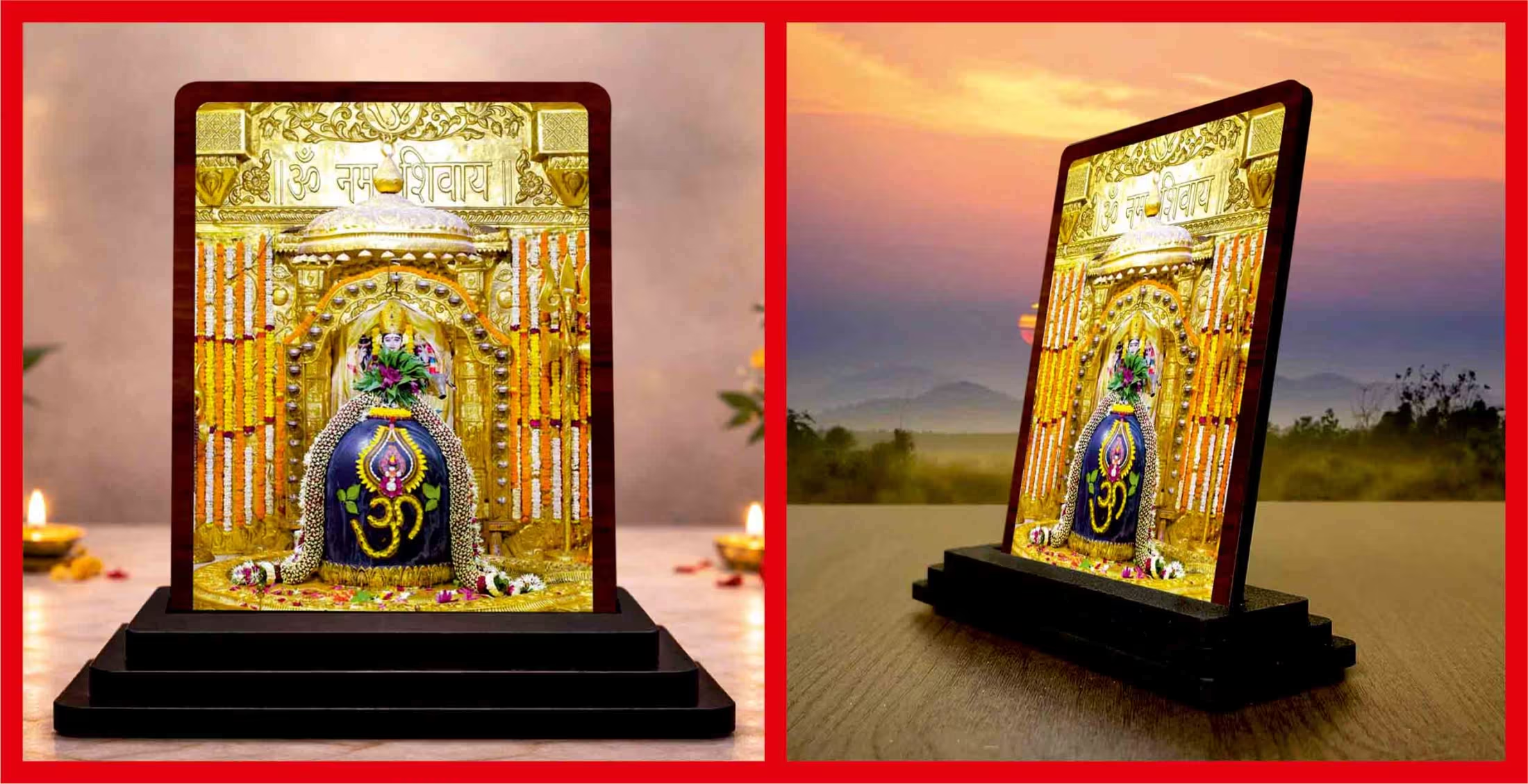
Somnath Jyotirling is one of the most revered Shiva shrines in India and is traditionally regarded as the first among the twelve Jyotirlingas. More than a temple, Somnath represents sacred memory, faith under trial, civilizational continuity, and spiritual resilience. Standing on the shore of the Arabian Sea at Prabhas Patan in Gujarat, the temple holds a unique place where mythology, pilgrimage, archaeology, and national history meet.
English
1) Sacred origin of Somnath
According to sacred tradition, the name “Somnath” comes from “Soma,” the Moon God. The most widely told legend says that Soma was cursed by Daksha Prajapati and began losing his radiance. To regain his strength, he performed deep penance to Lord Shiva at Prabhas Tirtha. Shiva, pleased by his devotion, blessed him and restored his brilliance. From this belief, the shrine came to be known as Somnath, meaning “Lord of the Moon.” This is one of the main reasons the temple is honored as the first Aadi Jyotirling.
2) Sacred geography and spiritual importance
Somnath is located at Prabhas Patan on the western coast of Gujarat. The site is associated with the Triveni Sangam of the Kapila, Hiran, and Saraswati rivers, and it stands beside the Arabian Sea. This geography gives the temple both sacred and symbolic importance. The wider Somnath-Prabhas region is also linked in traditional belief with the final earthly journey of Lord Krishna, which adds to the area’s deep spiritual status in Hindu memory.
3) Antiquity of the site
The exact date of the earliest Somnath temple remains uncertain, but the site itself is unquestionably ancient. Britannica notes that excavations in the area have revealed settlement remains dating back to around 1500 BCE. The district history of Gir Somnath also points to the region’s long-standing status as a pilgrimage center. This distinction is important: the sacredness of the place is ancient, while the temple structure itself passed through many phases of destruction and rebuilding over the centuries.
4) Early historical references
Historical references indicate that Somnath was already a major tirtha in the early medieval period. The Gir Somnath district history notes that Gurjara-Pratihara king Nagabhata II recorded visits to sacred places in Saurashtra, including Someshvara, a name associated with Somnath. This suggests that Somnath had already achieved prominence as a center of Shiva worship well before the most famous medieval invasions.
5) Somnath in the medieval period
By the early second millennium, Somnath had become one of the most celebrated shrines of western India. Its location near an important coastal trading region helped spread its fame. Pilgrimage, wealth, and sacred reputation together made the temple deeply influential, but also vulnerable during periods of political conflict and military expansion.
6) Raid of Mahmud of Ghazni
One of the best-known episodes in Somnath’s history occurred in the mid-1020s, during the reign of Bhima I of Gujarat, when Mahmud of Ghazni attacked and plundered the temple. This event became one of the most discussed moments in medieval Indian history. It was remembered not only because of the destruction of a major shrine, but because Somnath later rose again, becoming an enduring symbol of survival after devastation.
7) Reconstruction under Kumarapala
Somnath did not disappear after the Ghazni raid. According to the Gir Somnath district history and Britannica, the temple was rebuilt in the 12th century, and a 1169 inscription connects a major reconstruction with the Solanki ruler Kumarapala. This rebuilding is significant because it shows that the sacred status of Somnath remained alive and powerful even after major destruction.
8) Later invasions and rebuilding
The temple was again damaged in the late 13th century during the Gujarat campaign of Alauddin Khalji’s forces led by Ulugh Khan. The district history records that the shrine was rebuilt by Mahipala I of the Chudasama line in 1308, and that the lingam was installed by his son Khengara sometime between 1331 and 1351. In 1395, the temple was destroyed again by Zafar Khan. Later traditions and regional histories also remember further destruction associated with Aurangzeb in 1706. Across all these centuries, the defining pattern of Somnath remained the same: desecration followed by renewal.
9) Survival of worship and memory
Even when the grand structure was ruined, the sacred memory of Somnath did not end. The site remained alive in pilgrimage, tradition, and regional devotion. This continuity is one of the most important parts of Somnath’s history. It was never merely a building; it was, and remains, a living tirtha whose power survived political change, violence, and loss.
10) Reconstruction in independent India
The modern rebirth of Somnath took shape after Indian independence. In November 1947, Sardar Vallabhbhai Patel visited Junagadh and moved decisively toward the reconstruction of the temple. The Somnath Trust was formed to oversee the effort. The present temple was built in traditional style, and the pran-pratishtha of the existing shrine was performed on 11 May 1951 by Dr. Rajendra Prasad, the first President of India. This turned Somnath into a symbol not only of faith, but also of cultural recovery and national self-respect in post-independence India.
11) Somnath today
Today’s Somnath Temple stands majestically on the coast, representing devotion, endurance, and sacred continuity. It is revered both as a Jyotirlinga shrine and as a monument to the repeated revival of faith. For many devotees, Somnath is not simply a place to visit. It is a reminder that spiritual light can survive even the harshest historical storms.
12) Bring Somnath devotion home
If you wish to keep the sacred memory of Somnath close to your home, mandir, office desk, or gifting collection, you can explore our Somnath Jyotirling Wooden Shiv Photo Frame. It is also available on Amazon.
हिंदी
1) सोमनाथ नाम की उत्पत्ति
सोमनाथ ज्योतिर्लिंग को 12 ज्योतिर्लिंगों में पहला और आदि ज्योतिर्लिंग माना जाता है। “सोमनाथ” शब्द का अर्थ है “सोम के नाथ” यानी चंद्रदेव के स्वामी। पौराणिक कथा के अनुसार चंद्रदेव को दक्ष प्रजापति ने शाप दिया था, जिससे उनका तेज क्षीण होने लगा। तब उन्होंने प्रभास तीर्थ में भगवान शिव की कठोर तपस्या की। भगवान शिव ने प्रसन्न होकर उन्हें पुनः तेज प्रदान किया और इसी कारण यह पवित्र स्थान सोमनाथ कहलाया।
2) प्रभास क्षेत्र का आध्यात्मिक महत्व
सोमनाथ मंदिर गुजरात के प्रभास पाटन में अरब सागर के किनारे स्थित है। यह स्थल कपिला, हिरण और सरस्वती नदियों के त्रिवेणी संगम से जुड़ा माना जाता है, इसलिए इसकी धार्मिक महिमा और भी बढ़ जाती है। यही क्षेत्र भगवान श्रीकृष्ण की अंतिम लीला और उनके निजधाम गमन की परंपरा से भी जुड़ा हुआ माना जाता है। इस प्रकार सोमनाथ केवल शिवधाम ही नहीं, बल्कि व्यापक भारतीय आस्था का एक अत्यंत पवित्र केंद्र है।
3) यह स्थान कितना प्राचीन है?
वर्तमान मंदिर का आरंभिक निर्माण कब हुआ, इसका सटीक वर्ष निश्चित नहीं है, लेकिन यह स्थल अत्यंत प्राचीन है। पुरातात्विक जानकारी के अनुसार इस क्षेत्र में लगभग 1500 ईसा पूर्व तक की बसाहट के प्रमाण मिले हैं। इसका अर्थ यह है कि प्रभास क्षेत्र की पवित्रता और प्राचीनता बहुत पुरानी है, भले ही मंदिर की इमारत समय-समय पर बदलती रही हो।
4) प्रारम्भिक ऐतिहासिक साक्ष्य
गिर सोमनाथ जिले के इतिहास विवरण में उल्लेख है कि गुर्जर-प्रतिहार शासक नागभट्ट द्वितीय ने सौराष्ट्र के तीर्थों, जिनमें सोमेश्वर भी शामिल था, की यात्रा का उल्लेख किया है। इससे यह स्पष्ट होता है कि मध्यकाल के प्रसिद्ध आक्रमणों से पहले भी सोमनाथ एक प्रतिष्ठित और पूजनीय शिव तीर्थ था।
5) मध्यकाल में सोमनाथ की ख्याति
समय के साथ सोमनाथ पश्चिम भारत के सबसे प्रसिद्ध तीर्थों में गिना जाने लगा। समुद्री तट के निकट स्थित होने के कारण यह क्षेत्र व्यापारिक दृष्टि से भी महत्त्वपूर्ण था। तीर्थ, प्रतिष्ठा और समृद्धि—इन तीनों कारणों ने मिलकर सोमनाथ को अत्यंत विख्यात बनाया। लेकिन यही ख्याति आगे चलकर इसे आक्रमणों का लक्ष्य भी बनाती रही।
6) महमूद गजनवी का आक्रमण
सोमनाथ के इतिहास की सबसे प्रसिद्ध घटनाओं में से एक 11वीं शताब्दी का आक्रमण है। गुजरात के भीम प्रथम के समय महमूद गजनवी ने 1020 के दशक के मध्य में सोमनाथ पर आक्रमण किया और मंदिर को लूटा। इस घटना का स्मरण भारतीय इतिहास में लंबे समय तक होता रहा। किंतु सोमनाथ की सबसे बड़ी शक्ति यह रही कि यह विनाश के बाद भी समाप्त नहीं हुआ।
7) कुमारपाल के काल में पुनर्निर्माण
गजनवी के आक्रमण के बाद सोमनाथ का महत्व कम नहीं हुआ। 12वीं शताब्दी में इसका पुनर्निर्माण हुआ और 1169 के एक अभिलेख के आधार पर यह पुनर्निर्माण सोलंकी शासक कुमारपाल से जोड़ा जाता है। यह इस बात का प्रमाण है कि मंदिर की धार्मिक प्रतिष्ठा इतनी मजबूत थी कि विनाश के बाद भी लोग उसे पुनः उसी सम्मान के साथ स्थापित करते रहे।
8) बाद के आक्रमण और पुनःस्थापन
13वीं शताब्दी के अंत में अलाउद्दीन खिलजी की सेना, जिसका नेतृत्व उलुघ खान कर रहा था, ने गुजरात पर आक्रमण किया और सोमनाथ को फिर क्षति पहुँची। इसके बाद चूड़ासमा वंश के महीपाल प्रथम ने 1308 में मंदिर का पुनर्निर्माण कराया। जिला इतिहास के अनुसार उनके पुत्र खेंगारा ने 1331 से 1351 के बीच शिवलिंग की पुनः प्रतिष्ठा कराई। 1395 में जफर खान द्वारा मंदिर को फिर नष्ट किया गया। बाद की परंपराओं और इतिहास विवरणों में 1706 में औरंगज़ेब से जुड़ा विनाश भी वर्णित मिलता है। इस पूरी यात्रा में एक ही बात स्थिर रही—सोमनाथ बार-बार टूटा, लेकिन बार-बार फिर खड़ा हुआ।
9) पूजा परंपरा का निरंतर प्रवाह
सोमनाथ का महत्व केवल इसकी इमारत में नहीं था, बल्कि इसकी जीवित पूजा-परंपरा में था। भले ही मुख्य संरचना कई बार नष्ट हुई, लेकिन श्रद्धा, स्मृति और तीर्थ-परंपरा बनी रही। यही कारण है कि सोमनाथ को केवल एक मंदिर नहीं, बल्कि शाश्वत आस्था का केंद्र माना जाता है।
10) स्वतंत्र भारत में पुनर्जागरण
आधुनिक सोमनाथ का पुनर्जागरण स्वतंत्रता के बाद हुआ। नवंबर 1947 में सरदार वल्लभभाई पटेल ने इस मंदिर के पुनर्निर्माण का संकल्प लिया। इसके लिए सोमनाथ ट्रस्ट की स्थापना की गई। वर्तमान मंदिर पारंपरिक शैली में निर्मित हुआ और 11 मई 1951 को भारत के प्रथम राष्ट्रपति डॉ. राजेंद्र प्रसाद ने इसकी प्राण-प्रतिष्ठा की। इस घटना ने सोमनाथ को केवल एक प्राचीन तीर्थ ही नहीं, बल्कि स्वतंत्र भारत के सांस्कृतिक स्वाभिमान के प्रतीक के रूप में भी स्थापित कर दिया।
11) आज का सोमनाथ
आज सोमनाथ मंदिर समुद्र तट पर अत्यंत भव्य स्वरूप में खड़ा है। यह करोड़ों शिवभक्तों के लिए केवल दर्शन स्थल नहीं, बल्कि श्रद्धा, धैर्य, पुनर्जन्म और शिव की अनंत उपस्थिति का प्रतीक है। सोमनाथ का इतिहास यह सिखाता है कि मंदिर की दीवारें टूट सकती हैं, परन्तु आस्था नहीं।
12) अपने घर में सोमनाथ की भावना लाएँ
यदि आप सोमनाथ की दिव्य भावना को अपने घर, मंदिर, ऑफिस डेस्क या उपहार के रूप में सजाना चाहते हैं, तो हमारा Somnath Jyotirling Wooden Shiv Photo Frame एक सुंदर और भक्तिमय विकल्प है। यह Amazon पर भी उपलब्ध है।
Hinglish
1) Somnath naam ka matlab kya hai?
Somnath Jyotirling ko 12 Jyotirlingon me pehla, yani Aadi Jyotirling mana jata hai. “Somnath” ka matlab hota hai “Som ke Nath,” yaani Chandra Dev ke Swami. Pauranik katha ke mutabik Daksha Prajapati ke shraap se Chandra Dev ka tej kam ho gaya tha. Fir unhone Prabhas Tirth me Bhagwan Shiv ki tapasya ki. Shiv ji unki bhakti se prasann hue aur unhe phir se tej pradan kiya. Isi divine katha ki wajah se is sthaan ka naam Somnath pada.
2) Prabhas Patan ka spiritual importance
Somnath Mandir Gujarat ke Prabhas Patan me Arabian Sea ke kinare sthit hai. Ye sthaan Kapila, Hiran aur Saraswati nadiyon ke Triveni Sangam se juda maana jata hai. Isi wajah se yeh jagah sirf ek temple site nahi, balki ek mahaan tirth bhi hai. Is poore region ko Lord Krishna ki antim yatra aur unke neejdham gaman se bhi joda jata hai, jisse Somnath ki pavitrata aur bhi badh jati hai.
3) Kitna purana hai Somnath?
Sabse pehle temple ka exact year clearly known nahi hai, lekin site bahut prachin hai. Archaeological references ke mutabik is region me lagbhag 1500 BCE tak ki settlement ke evidence mile hain. Iska matlab ye hai ki Somnath ka sacred importance bahut purana hai, chahe temple structure alag-alag yugon me badalta raha ho.
4) Early historical references
Gir Somnath district history ke hisaab se Gurjara-Pratihara ruler Nagabhata II ne Saurashtra ke tirthon, jisme Someshvara bhi shamil tha, ki yatra ka record chhoda tha. Ye batata hai ki famous medieval invasions se pehle bhi Somnath ek established aur respected Shiv tirth tha.
5) Medieval period me Somnath ki fame
Dheere-dheere Somnath western India ke sabse bade aur prasiddh Shiv dhamon me se ek ban gaya. Sea coast ke paas hone ki wajah se is area ki trade importance bhi thi. Tirth ki mahima, bhakton ki aastha aur sthaan ki samriddhi ne milkar Somnath ko bahut famous bana diya. Lekin isi fame ki wajah se ye kai baar aakramanon ka target bhi bana.
6) Mahmud Ghazni ka aakraman
Somnath history ka sabse famous chapter 11th century ka hai, jab Gujarat ke Bhima I ke samay Mahmud of Ghazni ne 1020s ke beech is temple par hamla kiya aur ise loot liya. Ye ghatna Indian history me bahut bada reference point ban gayi. Lekin Somnath ki asli pehchaan sirf is vinash me nahi, balki is baat me hai ki mandir iske baad bhi phir se jee utha.
7) Kumarapala ke samay reconstruction
Ghazni ke hamle ke baad bhi Somnath khatam nahi hua. 12th century me iska punarnirman hua aur 1169 ke inscription ke basis par ise Solanki ruler Kumarapala se joda jata hai. Ye dikhata hai ki Somnath ki sacred identity itni strong thi ki logon ne ise phir se usi shraddha ke saath sthapit kiya.
8) Baad ke hamle aur baar-baar punarnirman
1299 me Alauddin Khalji ki sena, jiska netritva Ulugh Khan kar raha tha, ne Gujarat campaign ke dauran Somnath ko fir se nuksan pahunchaya. Iske baad Chudasama ruler Mahipala I ne 1308 me mandir ka reconstruction karaya. District history ke mutabik unke bete Khengara ne 1331 aur 1351 ke beech lingam ki sthapana karayi. 1395 me Zafar Khan dwara fir vinash hua. Baad ki historical traditions 1706 me Aurangzeb ke dauran bhi destruction ka zikr karti hain. Somnath ki sabse badi pehchaan ye hi hai: har baar todne ke baad bhi ye phir se khada hua.
9) Faith kabhi nahi tooti
Somnath ka real strength uski building nahi, uski living faith thi. Jab bada temple toot gaya tab bhi tirth ki pavitrata, bhakton ki shraddha aur pooja ki parampara bani rahi. Isi liye Somnath ko sirf ek structure nahi, balki eternal faith ka symbol maana jata hai.
10) Independent India me Somnath ka naya janm
Azaadi ke baad Somnath ka naya yug shuru hua. November 1947 me Sardar Vallabhbhai Patel ne is mandir ke punarnirman ka sankalp liya. Iske liye Somnath Trust banaya gaya. Present temple traditional style me banaya gaya aur 11 May 1951 ko Bharat ke pehle Rashtrapati Dr. Rajendra Prasad ne iski pran-pratishtha ki. Is event ne Somnath ko ek ancient Shiv temple se bhi aage badhkar national cultural revival ka symbol bana diya.
11) Aaj ka Somnath kya represent karta hai?
Aaj ka Somnath Mandir samundar ke kinare shaan se khada hai. Ye devotion, resilience, sacred memory aur Shiv ki eternal presence ka prateek hai. Crores of devotees ke liye Somnath sirf ek destination nahi, balki ek divine emotion hai. Ye hume sikhata hai ki aastha ko giraya nahi ja sakta.
12) Somnath ki pavitrata ko ghar laayein
Agar aap Somnath ki is sacred feeling ko apne ghar, mandir, office desk ya gifting collection me lana chahte ho, to hamara Somnath Jyotirling Wooden Shiv Photo Frame ek bahut accha option hai. Ye Amazon par bhi available hai.