
Shiv Ji History, Mandir, Mahatva Aur Tyohar
March 29, 2026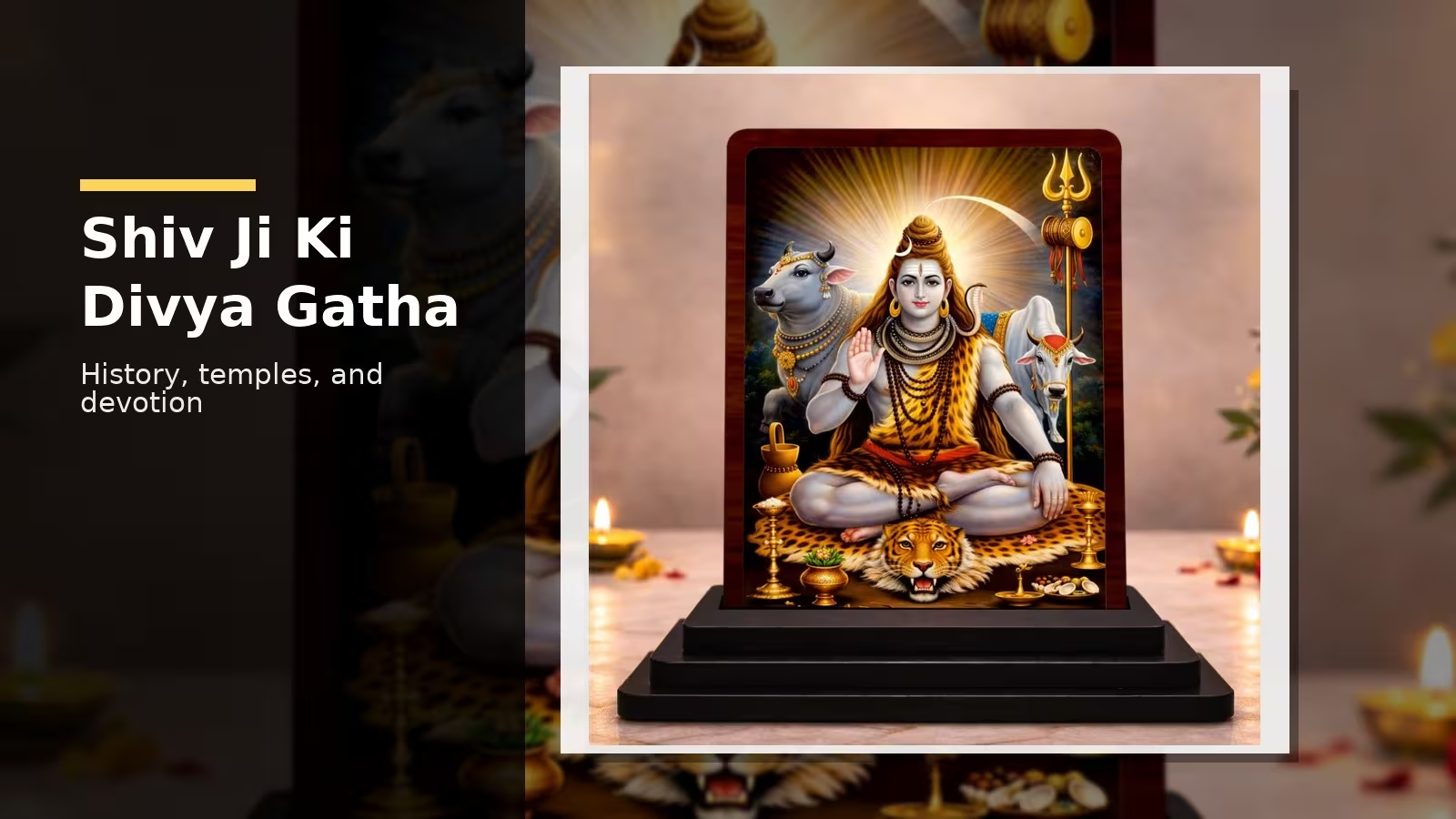
English Version
Shiv Ji history is not just a tale from ancient scriptures; it is a living spiritual tradition that continues to guide millions of devotees in India and across the world. Lord Shiva, also known as Mahadev, Bholenath, Rudra, and Neelkanth, is worshipped as the destroyer of negativity and the source of transformation, peace, and inner strength. His story is deeply connected with faith, renunciation, meditation, cosmic balance, and compassion.
For many devotees, Shiv Ji is not only a deity to pray to, but also a symbol of simplicity, truth, and timeless wisdom. From sacred temples in the Himalayas to grand pilgrimage sites across the country, his presence shapes festivals, rituals, and daily worship in countless homes.
Who Is Shiv Ji?
In Hindu tradition, Lord Shiva is one of the principal deities of the Trimurti, along with Brahma and Vishnu. While Brahma is associated with creation and Vishnu with preservation, Shiva is associated with dissolution and renewal. This does not mean destruction in a negative sense. Rather, Shiva represents the ending of what no longer serves life, so new beginnings can emerge.
He is often described as the supreme yogi, seated in meditation on Mount Kailash, with the crescent moon on his head, the sacred river Ganga flowing from his locks, and the third eye symbolizing higher awareness. He is both fierce and gentle, detached yet deeply compassionate, meditative yet full of divine energy.
Shiv Ji History and Key Legends
When people search for shiv ji history, they are often looking for the deeper meaning behind his divine form and stories. Shiva appears in many Puranic narratives and sacred traditions, each highlighting a different aspect of his nature.
- The Samudra Manthan: During the churning of the ocean, a deadly poison emerged. Shiva drank it to save the world, earning the name Neelkanth.
- Marriage to Parvati: The union of Shiva and Parvati represents the harmony of stillness and energy, consciousness and power.
- Ganga’s descent: Shiva controlled the force of the Ganga as it descended from the heavens, protecting the earth from its impact.
- His role as the great ascetic: Shiva’s meditation teaches detachment, self-discipline, and inner stillness.
These stories are not only devotional narratives; they also carry spiritual lessons about sacrifice, balance, and the power of transformation.
Symbolism of Lord Shiva
Every element associated with Shiv Ji holds meaning. Devotees often connect these symbols with spiritual practice and daily life.
- Trishul: Represents the balance of creation, preservation, and destruction, or the transcendence of the three gunas.
- Damaru: Symbol of the cosmic rhythm and the sound from which creation arises.
- Third eye: Signifies wisdom, insight, and the destruction of illusion.
- Shivling: A sacred form used in worship, representing the infinite, formless aspect of Shiva.
- Vibhuti: Ash reminds devotees of the temporary nature of worldly life and the value of spiritual awareness.
Because of this symbolism, Shiva worship is often experienced as both deeply personal and profoundly philosophical.
Famous Temples of Shiv Ji
Across India, many temples dedicated to Lord Shiva are considered highly sacred. These places are not only architectural landmarks but also centers of devotion, pilgrimage, and cultural memory.
- Kashi Vishwanath, Varanasi: One of the most revered Shiva temples, associated with liberation and spiritual continuity.
- Kedarnath Temple, Uttarakhand: A powerful Himalayan shrine and one of the Char Dham pilgrimage sites.
- Somnath Temple, Gujarat: Known for its ancient significance and enduring faith through history.
- Mahakaleshwar, Ujjain: Famous for its unique place in Shaivite devotion and the sacred Bhasma Aarti.
- Amarnath Cave Temple, Jammu and Kashmir: Revered for the naturally formed ice Shivling and the spiritual journey it inspires.
Visiting these temples is often seen as an act of surrender, gratitude, and inner awakening.
Festival Importance: Maha Shivratri and Other Devotional Days
Among all festivals connected to Lord Shiva, Maha Shivratri holds special importance. Devotees observe fasting, night जागरण, chanting of mantras, and abhishekam of the Shivling with milk, water, honey, curd, and bilva leaves. It is believed to be a night of deep spiritual energy, meditation, and divine grace.
Other important occasions include:
- Shravan month: A highly auspicious period for Shiva worship, especially on Mondays.
- Pradosh Vrat: Observed with devotion to seek blessings of peace and prosperity.
- Sawan Somvar: Particularly popular among devotees who fast and pray for spiritual and personal well-being.
These observances help devotees create a regular rhythm of faith, discipline, and reflection.
Devotional Importance in Daily Life
Shiv Ji is loved as Bholenath, the easy-to-please Lord who accepts sincere devotion over elaborate display. This is one reason his worship is so widespread in homes, temples, and small prayer corners. For many people, a simple Shivling, a framed image, or a sacred idol becomes a focal point for morning prayers and peaceful reflection.
Devotees often turn to Shiva in moments of change, difficulty, or emotional heaviness because his energy is associated with stability, courage, and release from fear. His worship encourages a life that is calmer, more aware, and more rooted in truth.
Common Questions Devotees Ask
Why is Lord Shiva called Bholenath?
He is called Bholenath because he is believed to be innocent, compassionate, and easily pleased by sincere devotion.
What does the Shivling represent?
The Shivling represents the formless and infinite nature of Shiva, beyond human limitations and visible shape.
Why is Monday important for Shiva worship?
Monday is traditionally considered auspicious for praying to Lord Shiva, especially during the month of Shravan.
Which festival is most associated with Shiv Ji?
Maha Shivratri is the most widely celebrated and spiritually significant festival dedicated to Lord Shiva.
A Gentle Way to Keep Shiv Ji Close at Home
For devotees who wish to keep a calm and devotional presence in their pooja space, a compact Shiva idol can be a meaningful addition. A thoughtfully designed piece like the Lord Shiva Wooden Idol 3×4 Inch HD Printed Table Decor for Home Temple Temple Gift can serve as a simple spiritual accent for a home temple, desk, or prayer corner, while keeping the focus on devotion and remembrance.
Ultimately, the essence of Shiva worship lies not in size or form, but in sincerity, discipline, and inner surrender.
Conclusion
Shiv Ji history is a journey through divine symbolism, sacred stories, powerful temples, and timeless spiritual lessons. Whether one prays at a grand pilgrimage site or in a small home temple, the feeling remains the same: faith, peace, and transformation. Lord Shiva continues to inspire devotees to live with courage, humility, and awareness.
If you are building a peaceful devotional corner or looking for a meaningful spiritual decor piece, Explore the related product on our store.
Hindi Version
Shiv Ji history sirf pracheen granthon ki kahani nahi hai, balki ek jeevit aadhyatmik parampara hai jo aaj bhi lakhon bhakton ko margdarshan deti hai. Bhagwan Shiv, jise Mahadev, Bholenath, Rudra aur Neelkanth ke naam se bhi jana jata hai, andhkaar ko door karne, parivartan laane, aur antarik shakti dene wale Devta maane jate hain. Unki gatha shraddha, vairagya, dhyan, cosmic balance aur karuna se judi hui hai.
Bahut se bhakton ke liye Shiv Ji sirf pooja ke Devta nahi, balki saralta, satya aur shashwat gyaan ke prateek hain. Himalaya ke pavitra mandiron se lekar desh bhar ke mahapithon tak, unki upasna tyoharon, anushthanon aur nitya pooja ka adhar hai.
Shiv Ji Kaun Hain?
Hindu dharm mein Bhagwan Shiv Trimurti ke pramukh Devtaon mein se ek hain, Brahma aur Vishnu ke saath. Brahma srishti ke, Vishnu palan ke, aur Shiv vinash tatha punarnirman ke Devta maane jate hain. Yahan vinash ka arth nash nahi, balki us cheez ka ant hai jo ab jeevan ke liye upyukt nahi rahi, taaki nayi shuruat ho sake.
Unhe Kailash par dhyan mein lin, ardhchandra dharan kiye, jataon se Ganga ko sambhalte hue, aur teesri aankh ke saath darshaya jata hai. Yeh sab unki jagrukta, shakti aur adhyatmik gahanata ko prakat karte hain.
Shiv Ji History Aur Pramukh Kathaen
Jab log shiv ji history khojte hain, to ve unki divyata aur kathaon ke peeche chhipe gehre arth ko samajhna chahte hain. Shiva ka ullekh kai Puranik kathaon mein milta hai, jo unke alag-alag swaroop ko darshati hain.
- Samudra Manthan: Ksheer sagar manthan ke samay nikla halahal vish Shiv ne grahan kiya aur sansar ki raksha ki. Isliye unhe Neelkanth kaha gaya.
- Parvati se vivah: Shiv aur Parvati ka milan shanti aur shakti, chetna aur urja ke santulan ka prateek hai.
- Ganga avataran: Ganga ke prithvi par aane par Shiv ne uski prachand gati ko apni jataon mein sambhala.
- Param yogi roop: Unka dhyan aur vairagya humein self-discipline aur antarik shanti ka paath padhata hai.
Yeh kathaen keval dharmik kahaniyan nahi, balki tyag, santulan aur parivartan ke adhyatmik sandesh bhi deti hain.
Lord Shiva Ke Prateek Aur Arth
Shiv Ji se jude pratyek chinh ka apna arth hai. Bhakt inhe apni daily life aur spiritual practice se jodte hain.
- Trishul: Srishti, palan aur vinash ke santulan ka prateek.
- Damaru: Cosmic rhythm aur srishti ke naad ka sanket.
- Teesri aankh: gyaan, drishti aur bhram ke vinash ka prateek.
- Shivling: Shiv ke anant aur nirakar swaroop ka pavitra chinh.
- Vibhuti: Sansarik jeevan ki anityata aur aadhyatmik jagrukta ki yaad dilati hai.
Isi wajah se Shiv upasna ko log bahut personal aur philosophical dono roopon mein mehsoos karte hain.
Shiv Ji Ke Prasiddh Mandir
Bharat mein Bhagwan Shiv ke kai mandir atyant pavitra maane jate hain. Yeh sirf architecture ke udaharan nahi, balki shraddha, yatra aur sanskritik smriti ke kendr bhi hain.
- Kashi Vishwanath, Varanasi: mukti aur adhyatmik satatata se juda ek atyant revered mandir.
- Kedarnath Mandir, Uttarakhand: Himalaya ki god mein sthit ek shaktishali tirth sthal aur Char Dham ka hissa.
- Somnath Mandir, Gujarat: apni pracheen mahatta aur anokhi shraddha ke liye prasiddh.
- Mahakaleshwar, Ujjain: Bhasma Aarti aur Shaiva bhakti mein apne khas sthan ke liye mashhoor.
- Amarnath Gufa Mandir, Jammu aur Kashmir: prakritik ice Shivling aur adhyatmik yatra ke liye prasiddh.
In mandiron ki yatra ko bhakt surrender, gratitude aur antarik jagran ke roop mein dekhte hain.
Tyohar Ka Mahatva: Maha Shivratri Aur Anya Vrat
Bhagwan Shiv se jude sabhi tyoharon mein Maha Shivratri ka vishesh mahatva hai. Is din bhakt vrat rakhte hain, raat bhar jagran karte hain, mantra jap karte hain aur Shivling par milk, water, honey, curd aur bilva patra se abhishekam karte hain. Ise adhyatmik urja, dhyan aur divya kripa ki raat maana jata hai.
Anya mahatvapurn avsar hain:
- Shravan mahina: Shiv pooja ke liye atyant shubh, visheshkar somvar ko.
- Pradosh Vrat: shanti aur samriddhi ki prarthana ke liye palan kiya jata hai.
- Sawan Somvar: bhakton ke beech bahut lokpriya, jahan vrat aur pooja ka vishesh mahatva hota hai.
Yeh anushthan shraddha, discipline aur chintan ka niyamit rhythm banate hain.
Rozmarra Ki Zindagi Mein Devotional Mahatva
Shiv Ji ko Bholenath kaha jata hai, kyunki ve saral, karunamayi aur sachchi bhakti se turant prasann hone wale Devta maane jate hain. Isi wajah se unki pooja gharon, mandiron aur chhote prayer corners mein bahut prachlit hai. Ek simple Shivling, framed image, ya chhoti murti bhi pooja aur shanti ka kendr ban sakti hai.
Bhakt mushkil samay, badlav ya emotional heaviness ke dauran Shiv Ji ki or isliye mudte hain, kyunki unki urja sthirata, sahas aur bhay se mukti se judi hai. Unki upasna humein ek shaant, jagruk aur satya-par aadhaarit jeevan ki or le jati hai.
Bhakton Ke Aam Sawal
Lord Shiva ko Bholenath kyon kaha jata hai?
Kyunki unhe saral, karunamayi aur sachchi shraddha se jaldi prasann hone wala mana jata hai.
Shivling ka kya arth hai?
Shivling Shiv ke nirakar aur anant swaroop ka prateek hai.
Somvar Shiv pooja ke liye kyon mahatvapurn hai?
Somvar ko, visheshkar Shravan mahine mein, Shiv pooja ke liye shubh mana jata hai.
Shiv Ji se sabse adhik kaunsa tyohar juda hai?
Maha Shivratri Bhagwan Shiv ka sabse prasiddh aur adhyatmik roop se mahatvapurn tyohar hai.
Ghar Mein Shiv Ji Ki Upasthiti Ka Ek Saral Tareeka
Jo bhakt apne pooja sthal mein shaant aur devotional presence rakhna chahte hain, unke liye ek compact Shiva idol ek meaningful addition ho sakta hai. Jaise Lord Shiva Wooden Idol 3×4 Inch HD Printed Table Decor for Home Temple Temple Gift ek simple spiritual accent ke roop mein desk, shelf ya prayer corner par rakha ja sakta hai.
Ant mein, Shiv upasna ka saar size ya form mein nahi, balki shraddha, discipline aur antarik samarpan mein hai.
Nishkarsh
Shiv Ji history divya prateekon, pavitra kathaon, shaktishali mandiron aur amar aadhyatmik paathon ki yatra hai. Chahe bhakt kisi mahapavitra tirth par pooja karein ya ghar ke chhote mandir mein, bhavna ek hi rehti hai: shraddha, shanti aur parivartan. Bhagwan Shiv humein sahas, vinamrata aur jagrukta ke saath jeene ki prerana dete hain.
Agar aap apne devotional corner ko aur meaningful banana chahte hain, to Explore the related product on our store.
FAQ
Shiv Ji ka sabse pavitra roop kaunsa mana jata hai?
Bahut se bhakt Shivling ko unke sabse pavitra aur nirakar roop ke taur par poojte hain.
Kya Shiv Ji ki pooja ke liye special samagri chahiye?
Bhav sabse mahatvapurn hai. Jal, bilva patra, dhup aur deep se bhi bhakti ki ja sakti hai.
Kya ghar mein Shiv Ji ki murti rakhna shubh hai?
Haan, agar use shraddha aur saaf-safai ke saath pooja sthal mein rakha jaye to yeh shubh mana jata hai.