
Sai Baba History: Shirdi Ki Shraddha Aur Saburi Ki Kahani
April 8, 2026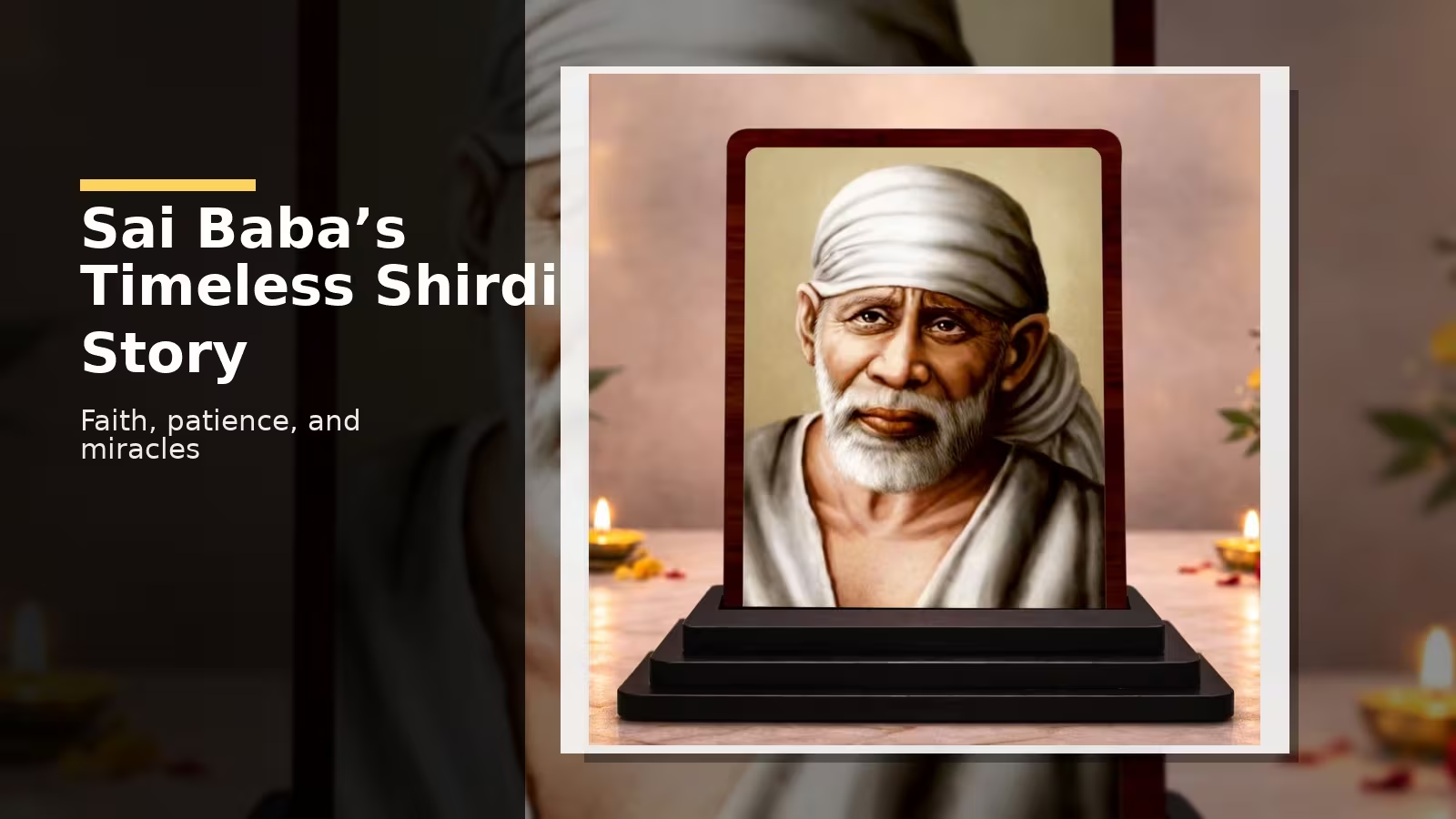
English Version
Sai Baba history is not just the story of one saint in one town. It is the story of thousands of hearts learning how to trust, wait, pray, and keep walking with devotion. In Shirdi, people did not only remember Sai Baba as a holy man; they remembered him as someone who lived simply, spoke gently, and turned ordinary moments into lessons of faith.
When devotees speak of Sai Baba, they often speak of shraddha and saburi—faith and patience. These two words are at the center of his message, and perhaps that is why his presence still feels so close to modern life. In moments of worry, loss, hope, or gratitude, many devotees feel that Sai Baba is not far away at all.
Who was Sai Baba of Shirdi?
Sai Baba of Shirdi is widely remembered as a saint who lived in Shirdi, Maharashtra, and became beloved by people from many backgrounds. His life is usually described through devotion rather than through a strict royal or historical biography. He lived in a humble way, spent time near the village mosque called Dwarkamai, and welcomed people with compassion, whether they came with pain, questions, or silence.
Many devotees believe that his greatness was in his simplicity. He did not ask for showy rituals or grand displays. Instead, he emphasized inner purity, trust in God, and steady devotion. That is why Sai Baba history continues to matter not only as a past story, but as a living spiritual path.
Sai Baba history and the heart of Shirdi
Shirdi was once a small village, but because of Sai Baba, it became one of the most important pilgrimage places in India. The village is remembered through his footsteps, his teachings, and the countless stories devotees share even today. For many families, a visit to Shirdi is not just a trip—it is an emotional homecoming.
The Shirdi atmosphere carries a special softness. Devotees line up in early morning hours, sing bhajans, and wait for darshan with folded hands. The temple complex, the Samadhi Mandir, and Dwarkamai together form the soul of the Shirdi experience. Each place reminds visitors that divinity can live in humble spaces too.
The teaching of shraddha and saburi
If one line captures Sai Baba history, it is this: have faith and be patient. These words are simple, but anyone who has lived through difficult days knows how deep they are.
- Shraddha means devotion, trust, and steady belief.
- Saburi means patience, endurance, and calm waiting.
- Together, they became the emotional spine of Sai Baba’s message.
This teaching is especially meaningful because it speaks to everyday life. A devotee waiting for healing, a student waiting for results, a parent worried about a child, or someone carrying grief can all understand this message. Sai Baba’s path does not promise a life without struggle. It teaches how to stand inside struggle with grace.
Devotee stories and miracles that live in memory
Over time, many devotee stories and miracle accounts became part of Sai Baba devotion. People speak of unexpected relief, answered prayers, and moments when hope returned just when everything seemed dark. These stories are cherished not because they are dramatic, but because they feel personal and comforting.
One reason Sai Baba remains so loved is that his miracles are often remembered alongside his kindness. He was not seen only as someone who performed wonders; he was seen as someone who listened, blessed, healed, and guided. For devotees, the miracle is sometimes not a visible event at all. Sometimes it is the strength to continue, the peace to forgive, or the courage to begin again.
Legends, lessons, and living faith
In Sai Baba stories, the line between history and lived faith often blends gently. That is natural in devotional traditions. A saint becomes unforgettable not only through records, but through the way people keep experiencing his presence across generations.
Some of the most enduring lessons associated with Sai Baba include:
- See God in all beings.
- Keep your heart clean and humble.
- Serve others without pride.
- Trust the timing of life.
- Remember that patience is also a form of strength.
These are not abstract ideas. They are practical spiritual values that shape how devotees live, work, and care for one another.
Famous places of worship connected to Sai Baba
Shirdi remains the most important place associated with Sai Baba, but devotion to him has spread far beyond one town. Across India and in many parts of the world, Sai Baba temples and prayer rooms have become spaces where people gather for a quiet moment of surrender.
In many homes, a small Sai Baba murti or framed image becomes the center of the prayer corner. The devotion is intimate and personal. A lamp is lit, incense is offered, and the day begins with a whispered prayer. In this simple routine, Sai Baba history continues to live on—not in books alone, but in homes, offices, and hearts.
Festival significance and devotional practices
Sai Baba’s devotion is especially visible on Thursdays, which many followers observe as a sacred day for prayer, aarti, and remembrance. In Shirdi, as well as in Sai Baba temples elsewhere, devotees gather for bhajans, aarti, and offerings. These gatherings strengthen community and remind people that faith grows when shared.
On important devotional days, many families clean their prayer spaces, decorate the mandir, and spend extra time reading Sai Baba stories or chanting his name. For some, the ritual is traditional. For others, it is simply a way to feel close to a beloved guide.
Why Sai Baba history still feels so personal
The enduring power of Sai Baba history lies in its human warmth. He belongs to no single class, age, or temperament. Children, elders, working professionals, and lifelong devotees all find something different in his teachings, yet the core remains the same: trust, patience, humility, and compassion.
In a fast-moving world, Sai Baba’s message feels almost like a gentle hand on the shoulder. He reminds people that not every answer comes immediately, that not every prayer is answered in the way we expect, and that quiet faith can carry a person through long seasons of waiting.
That is why his story keeps being told in homes, in temples, and in small family conversations. It is not just history. It is a living devotion.
How devotees keep his presence near
Many devotees keep Sai Baba close through daily prayer, reading stories, lighting a diya, or placing his image in a peaceful corner of the home. Some choose a compact idol for a small mandir, desk, or gifting purpose because the visual reminder itself becomes part of daily devotion.
If you are looking for a graceful devotional piece, you can explore the related product on our store as a simple way to bring Sai Baba’s peaceful presence into your space.
FAQ
What is the main message of Sai Baba history?
The main message is faith and patience—shraddha and saburi. His life and teachings encourage humility, compassion, and trust in God.
Why is Shirdi so important in Sai Baba devotion?
Shirdi is the place most closely associated with Sai Baba’s life, teachings, and samadhi. It remains the center of pilgrimage for millions of devotees.
What are the most remembered teachings of Sai Baba?
His most remembered teachings include having faith, being patient, helping others, and staying humble in daily life.
Do devotees still visit Sai Baba temples today?
Yes, Sai Baba temples are visited regularly across India and abroad. Thursdays, aarti times, and special devotional days often draw many devotees.
Across time, Sai Baba history has remained less about distance and more about closeness. That is why his story still comforts the heart: it asks for nothing grand, only a sincere soul, a little patience, and steady faith.
Hindi Version
Sai Baba history sirf ek sant ki kahani nahi hai. Yeh Shirdi ki mitti mein basi us shraddha ki kahani hai, jahan logon ne dhire-dhire seekha ki vishwas ka matlab kya hota hai, aur saburi kis tarah insaan ko sambhalti hai. Sai Baba ko yaad karte hi bhakton ke man mein ek hi baat aati hai—woh theek wahi sant the jo sadharan jeevan mein bhi divyata ka ehsaas karwa dete the.
Bhakton ke liye Sai Baba ka naam sirf pooja ka vishay nahi, balki sukoon, aas, aur himmat ka ek saathi hai. Jab zindagi uljhanon se bhari ho, tab unki shanti bhari vaani aur unki dayalu upasthiti bahut apnapan deti hai.
Sai Baba of Shirdi kaun the?
Sai Baba of Shirdi ko Maharashtra ke Shirdi gaon se judey ek mahan sant ke roop mein yaad kiya jata hai. Unka jeevan kisi rajsi varnan se zyada, bhakti aur vinamrata ki kahani lagta hai. Woh Dwarkamai naam ki masjid ke paas rahe, aur har varg ke log unke paas apni prarthana, dard aur ummeed lekar aate the.
Unki sabse badi visheshta unki saral jeevan-shaili thi. Woh dikhave se door, lekin prem aur karuna se bhare hue the. Isi wajah se Sai Baba history aaj bhi kitabon se zyada, jeevit anubhav ki tarah mehsoos hoti hai.
Shirdi aur Sai Baba ka rishta
Shirdi ek chhota sa gaon tha, lekin Sai Baba ke karan yeh teerth sthalon mein bahut mahatvapurn ban gaya. Aaj bhi Shirdi ka naam aate hi bhakton ke man mein unke charan, unki shikshayein, aur unki anant kripa ka smaran ho jata hai.
Shirdi ki yatra bhakton ke liye sirf safar nahi hoti, woh man ka safar hota hai. Samadhi Mandir, Dwarkamai aur aarti ke samay ka vishesh vatavaran—sab milkar ek aisi shanti banate hain jo der tak saath rehti hai.
Shraddha aur saburi ki shiksha
अगर Sai Baba history ko ek hi sandesh mein samjha jaye, toh woh hai: shraddha rakho aur saburi rakho.
- Shraddha ka matlab hai vishwas aur bhakti.
- Saburi ka matlab hai dhairya aur sthirata.
- In dono ka sangam Sai Baba ki shiksha ka mool hai.
Yeh sandesh har us insaan ke liye hai jo kisi intzaar se guzarta hai—beemari ka, parinaam ka, dua ka, ya phir kisi apne ke theek hone ka. Sai Baba humein yeh sikhate hain ki samay chahe jitna bhi lamba lage, vishwas ko kamzor nahi hona chahiye.
Bhakton ki kahaniyan aur chamatkar
Sai Baba se judi bhakton ki kahaniyan bahut prachlit hain. Log aise anubhav sunate hain jahan unki prarthana ka jawab mila, unki uljhan kam hui, ya unke jeevan mein aisi rahat aayi jo unhone ummeed bhi nahi ki thi. In kahaniyon ki khaas baat yeh hai ki yeh bade naatak ki tarah nahi, balki dil ko chhoo lene wali sachchai ki tarah lagti hain.
Bhakton ke liye chamatkar hamesha sirf koi aashcharya nahi hota. Kabhi woh himmat hoti hai, kabhi man ki shanti, kabhi kisi kasht se ubharne ki shakti. Sai Baba ki kripa isi roop mein sabse zyada mehsoos hoti hai.
Lok-kathayein aur jeevit bhakti
Sai Baba ki lok-kathayein aur lok-smritiyan samay ke saath aur bhi gehri hoti gayi hain. Bhakti parampara mein yeh swabhavik hai ki sant ka jeevan sirf itihaas nahi, anubhav ban jata hai. Log unhein isliye yaad nahi karte ki woh door ki koi mahan shakhsiyat the; log unhein isliye yaad karte hain kyunki unki upasthiti aaj bhi mehsoos hoti hai.
Unse judi kuch mukhya baatein jo bhakton ke dil mein bas gayi hain:
- Sabhi mein Bhagwan ko dekho.
- Vinamr bano aur ahankar se bacho.
- Dusron ki seva karo.
- Samay par bharosa rakho.
- Saburi ko bal ka roop samjho.
Shirdi se jude pramukh sthaan
Shirdi Sai Baba bhakti ka sabse pramukh kendra hai. Yahin woh sthaan hain jahan bhakton ko darshan, aarti, aur samarpan ka anubhav hota hai. Iske alawa bhi bharat aur duniya ke kai hisson mein Sai Baba mandir hain, jahan log shaanti ke pal dhoondhte hain.
Gharon mein bhi chhota sa Sai Baba ka chitra ya murti pooja sthal ka kendr ban jati hai. Deepak jalana, agarbatti karna, aur subah unka smaran karna—yeh sab chhoti lagne wali baatein bhakti ko jeevit rakhti hain.
Thursdays aur bhakti ka vishesh mahatva
Sai Baba ke bhakton ke liye Thursday ka din bahut mahatvapurn mana jata hai. Is din aarti, bhajan aur prarthana ka vishesh anand hota hai. Shirdi mein aur anya Sai mandiron mein, yeh din ek saath milkar bhakti ka ek warm aur emotional anubhav ban jata hai.
Kai parivar mandir saaf karte hain, Sai Baba ki kahaniyan padhte hain, aur thodi der ke liye hi sahi, unki shanti ko apne ghar mein mehsoos karte hain.
Kyun Sai Baba history aaj bhi itni apni lagti hai?
Isliye kyunki yeh kahani hamari apni zindagi se judi hai. Har insaan kabhi na kabhi intezaar karta hai, prarthana karta hai, aur asha se uthta hai. Sai Baba ka sandesh inhi palon mein saath deta hai.
Woh humein yaad dilate hain ki har jawab turant nahi milta, har raah seedhi nahi hoti, aur kabhi-kabhi sabse badi shakti chupchap ka intezaar hoti hai. Isi wajah se unki bhakti aaj bhi gharon, mandiron aur dilon mein basi hui hai.
Bhakt unki upasthiti kaise mehsoos karte hain?
Kai bhakt rozana prarthana, diya jalane, ya unki tasveer ko ghar ke kisi shaant kone mein rakhkar unhein paas mehsoos karte hain. Agar aap bhi ek sundar devotional piece ki talash mein hain, toh aap related product ko hamare store par explore kar sakte hain, jo pooja room ya chhote mandir ke liye ek graceful option hai.
FAQ
Sai Baba history ka mukhya sandesh kya hai?
Iska mukhya sandesh shraddha aur saburi hai—yaani vishwas aur dhairya. Unki shiksha vinamrata, karuna aur bhakti ko mahatva deti hai.
Shirdi itna mahatvapurn kyon hai?
Kyunki Shirdi Sai Baba ke jeevan, unki shikshon aur unki samadhi se juda sabse pramukh teerth sthaan hai.
Sai Baba ki sabse yaadgar shikshayein kaun si hain?
Vishwas rakho, saburi rakho, dusron ki madad karo, aur ahankar se door raho—yeh unki sabse yaadgar shikshayein hain.
Kya aaj bhi bhakt Sai Baba mandiron mein jate hain?
Haan, Bharat aur videsh dono jagah Sai Baba mandiron mein bhakt aaj bhi niyamit roop se jate hain, khas kar Thursday aur aarti ke samay.
Sai Baba history humein sirf ek sant ki yaad nahi dilati, balki ek aise jeevan ka sandesh deti hai jahan shraddha, saburi aur karuna sabse bada ashirvad hain.