
Lakshmi Ji Significance Through Family Bonds and Blessings
May 18, 2026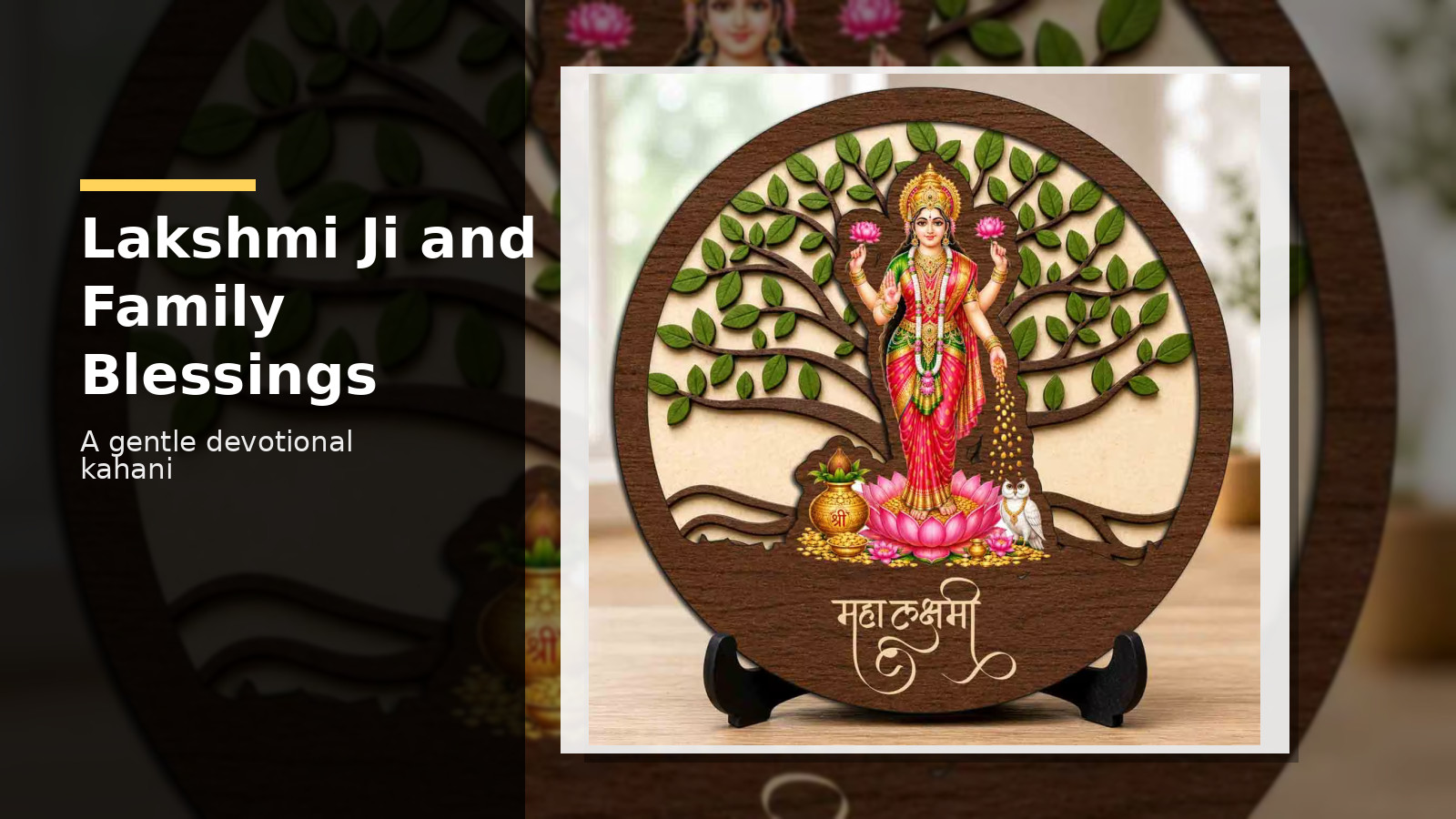
English Version
When elders begin a story about lakshmi ji significance, it often sounds less like a lecture and more like a loving household memory. A nani may say, “Beta, Lakshmi Maa does not come only with coins; she comes where there is harmony, gratitude, and care for one another.” In that simple line lives a deep truth. Lakshmi Ji is not remembered only as the goddess of wealth, but as the divine presence that blesses a family when its members live with respect, patience, and shared responsibility.
This is why her stories feel so close to home. They speak of relationships: with Vishnu Ji, with prosperity, with devotees, with the lamp that is lit at dusk, and with the clean threshold of a home that welcomes good energy. The meaning of Lakshmi Ji grows richer when we see her not as a distant figure, but as a divine mother whose blessings are felt in family life, daily worship, and festivals like Diwali.
The family story behind Lakshmi Ji significance
In many devotional traditions, Lakshmi Ji is worshipped alongside Vishnu Ji as his divine consort. This relationship is not only symbolic of sacred union; it also reminds devotees that prosperity and dharma must walk together. A home may earn wealth, but without kindness and balance, that wealth does not feel complete. That is one reason lakshmi ji significance is often explained through the idea of a household: every member has a role, every duty matters, and peace becomes the true ornament of the family.
People also remember Lakshmi Ji as a motherly force who supports the whole family, not just one person. In old stories told during evening prayers, she is praised for bringing stability, food, beauty, and well-being into the home. A mother saving grain carefully, a grandfather lighting the diya before prayer, a child folding hands before study time—these small acts are also part of her living presence.
Who is Lakshmi Ji in devotion and tradition?
Lakshmi Ji is the Hindu goddess of wealth, fortune, fertility, abundance, and auspiciousness. But in devotional life, her meaning goes beyond money. She represents:
- Prosperity that is earned and shared with integrity
- Grace that softens the heart
- Purity in thought, speech, and home
- Contentment that keeps desire from becoming greed
- Harmony in family relationships
This is why many devotees say that Lakshmi Ji enters a home quietly. She is invited by cleanliness, prayer, good conduct, and the spirit of sharing. The real beauty of lakshmi ji significance lies in this inward understanding: abundance becomes sacred when it is guided by gratitude.
Lakshmi Ji significance in family stories and daily life
Every household has its own tiny Lakshmi story. A grandmother may keep a small diya near the tulsi plant and say that the evening light helps the home remember peace. A father may begin the day with a prayer before work, believing that honest effort invites divine support. A mother may set aside part of the day’s earnings for charity, teaching that wealth becomes meaningful when it is used well.
These family habits are not separate from devotion; they are devotion. Lakshmi Ji is often remembered through relationships because she blesses the bonds that hold a home together. A sibling helping another sibling, a daughter-in-law entering a new home with respect, children learning not to waste food, elders blessing the younger ones—these are all ways her grace is felt.
In this sense, Lakshmi Ji is not only worshipped at the altar. She is also welcomed in the kitchen, in the study room, at the shop counter, and in the quiet decisions a family makes each day.
Symbols that speak of her presence
Devotees often recognize Lakshmi Ji through gentle and meaningful symbols. Each one tells a part of her story.
- Lotus flower: purity, beauty, and grace rising above muddy waters
- Gold coins: abundance that flows with blessing
- Lotus seat: spiritual steadiness and divine elegance
- Elephants: auspicious power and ceremonial welcome
- Lamp or diya: light, clarity, and auspicious beginnings
- Kalash and rangoli: invitation to prosperity and festive joy
These symbols matter because they help families remember that Lakshmi Ji significance is not only external wealth. The lotus tells us to stay pure in difficult water. The coins remind us to use prosperity wisely. The lamp says that even a small flame can make a home feel sacred.
Why Diwali is central to Lakshmi Ji significance
Among all festivals, Diwali is the moment when Lakshmi Ji shines most brightly in family life. Homes are cleaned, thresholds are decorated, lamps are lit, and prayers are offered with hope and gratitude. But Diwali is not only about inviting prosperity; it is also about preparing the home and heart to receive it.
That is why families often work together before the festival. Children help with decorations, elders guide the puja, and everyone contributes to the atmosphere of welcome. The festival becomes a shared act of devotion. In many homes, this togetherness is the deeper meaning of lakshmi ji significance: prosperity is sweetest when it is celebrated as a family blessing, not a private possession.
Temples and places where devotees feel her grace
Across India, devotees visit many temples associated with Lakshmi Ji or with forms of the goddess. Some seek her for family peace, some for business success, and some simply to say thank you. Well-known temples and sacred places connected with Lakshmi worship include:
- Padmavathi Temple, Tiruchanur near Tirupati, deeply revered by Lakshmi devotees
- Mahalakshmi Temple, Mumbai, a famous center of worship and festive devotion
- Mahalakshmi Temple, Kolhapur, one of the most important Shakti shrines dedicated to the goddess
- Ashtalakshmi Temple, Chennai, where devotees worship the eight forms of Lakshmi
These places show how lovingly Lakshmi Ji is honored in many regions. Yet for many families, the home itself becomes the first temple. A small altar, a clean floor, a lit lamp, and a sincere prayer can carry the same emotional warmth.
Lakshmi Ji and the moral of balanced abundance
The deeper lesson in Lakshmi Ji’s stories is balance. She is associated not with careless excess, but with grace that uplifts life. If wealth comes without humility, it slips away from peace. If devotion comes without action, it remains incomplete. This is why Lakshmi Ji significance is so loved in family storytelling: it teaches children that true prosperity includes character, discipline, and kindness.
A family that shares, saves, prays, and respects one another creates the kind of home where Lakshmi Ji is believed to stay. That is why older generations often advise cleaning the house, speaking gently, avoiding waste, and keeping the mind calm during worship. These are not just rituals; they are ways of making daily life auspicious.
Devotional importance in modern homes
Even today, Lakshmi Ji remains deeply meaningful in apartments, offices, shops, and prayer corners. People place her image or murti where they can begin the day with gratitude. For some, she is a reminder to keep finances steady. For others, she is a source of emotional comfort during change, uncertainty, or new beginnings.
This is also why many devotees prefer a neat, compact devotional piece that fits beautifully into a home temple or desk setup. A thoughtful wooden idol can become part of that daily remembrance. For example, the Lakshmi Maa Wooden Idol / Murti with Stand for Home Temple, Office Desk & Diwali Gift is a simple way to keep that sacred presence close in an indoor space.
Common questions devotees ask
Why is Lakshmi Ji associated with family harmony?
Because her blessings are believed to flourish where there is unity, respect, and shared responsibility. Prosperity feels fuller when the family lives in peace.
What is the main message of Lakshmi Ji significance?
The main message is that true abundance is not only about money. It includes gratitude, purity, generosity, and balanced living.
Why do families worship Lakshmi Ji during Diwali?
Diwali is seen as an auspicious time to welcome light, fortune, and new beginnings. Families pray together for well-being, growth, and harmony.
Which symbols are most connected to Lakshmi Ji?
The lotus, coins, diya, elephants, rangoli, and kalash are among the most familiar symbols linked with her blessings.
Final reflection
Lakshmi Ji significance becomes most beautiful when seen through the eyes of a family. She is the quiet blessing in a cleaned home, the grace in a shared meal, the faith in a fresh start, and the joy in a festival lamp glowing at dusk. Her story teaches that prosperity is not complete unless it carries kindness, gratitude, and togetherness.
For devotees, that is the heart of her remembrance: Lakshmi Maa does not only fill the home with wealth, but with warmth. And when a family lives with devotion, she is believed to stay in ways both visible and felt.
Hindi Version
Jab bade pyar se lakshmi ji significance ki kahani sunate hain, to woh kisi paath ki tarah nahi, balki ghar ki yaad ki tarah lagti hai. Nani ya dadi aksar kehti hain, “Lakshmi Maa sirf dhan nahi laati, beta. Woh wahan aati hain jahan pyaar ho, shanti ho, aur ghar ke log ek-dusre ka dhyan rakhte hon.” Is ek baat mein Lakshmi Ji ka gehra arth chhupa hota hai. Woh sirf aishwarya ki devi nahi, balki us divine shakti ka roop hain jo parivaar ko aashirwad deti hai.
Isi liye unki kahaniyan ghar ke bahut kareeb lagti hain. Vishnu Ji ke saath unka sambandh, bhakton ke saath unki kripa, shaam ki diya-jyoti, aur saaf-suthre aangan ki pavitrata—yeh sab Lakshmi Ji ki mahima ko aur bada bana dete hain. Diwali ho ya roz ki puja, unka smaran hamesha aastha aur gratitude se juda hota hai.
Parivaar ke bandhanon mein Lakshmi Ji significance
Paramparaon mein Lakshmi Ji ko aksar Vishnu Ji ki divya ardhangini ke roop mein pooja jata hai. Yeh sambandh keval sacred union ka sanket nahi, balki yeh yaad dilata hai ki dharma aur prosperity saath-saath chalni chahiye. Ghar mein paisa ho sakta hai, lekin agar prem, santulan aur vinamrata na ho, to woh dhan poorn nahi lagta. Isi wajah se lakshmi ji significance ko ghar ke roop mein samjhaya jata hai—jahan har sadasya ka apna kartavya hai aur shanti sabse bada aabhushan hai.
Log Lakshmi Ji ko maa ke roop mein bhi yaad karte hain jo poore parivaar ka dhyan rakhti hain. Purani kahaniyon mein unka varnan ann, sthirata, sundarta aur sukh dene wali shakti ke roop mein hota hai. Maa ka anaj sambhalna, pita ka subah diya jalana, bachche ka padhai se pehle haath jodna—yeh chhote se kaam bhi unki hi kripa ka hissa maane ja sakte hain.
Lakshmi Ji kaun hain?
Lakshmi Ji Hindu dharm mein dhan, saubhagya, samriddhi aur auspiciousness ki devi hain. Lekin bhakti mein unka arth sirf paise tak simit nahi hai. Woh represent karti hain:
- Samriddhi jo imandari se kamai aur baanti jaye
- Kripa jo dil ko naram banaye
- Shuddhata vichar, vaani aur ghar mein
- Santosh jo lalach ko rokta hai
- Samanjasya jo parivaar ko jodkar rakhta hai
Isliye bhakt kehte hain ki Lakshmi Ji ghar mein chupchaap aati hain. Woh safaai, puja, achhe karm aur daan se amantrit hoti hain. lakshmi ji significance ka asli saundarya yahi hai ki abundance tabhi pavitra lagti hai jab uske saath gratitude ho.
Ghar ki kahaniyon mein Lakshmi Ji
Har ghar ki apni chhoti si Lakshmi kahani hoti hai. Dadi shaam ko tulsi ke paas diya jalakar kehti hain ki roshni ghar ko shanti yaad dilati hai. Pita apne kaam se pehle prarthana karte hain, kyunki unhe lagta hai ki sachchi mehnat mein divine support hota hai. Maa din ki kamai ka kuch hissa daan ke liye rakh deti hain, taaki bachche samjhein ki dhan tabhi meaningful hai jab woh kaam aaye.
Yeh sab family habits alag se bhakti nahi hain; yeh bhakti hi hain. Lakshmi Ji aksar relationships ke through yaad ki jaati hain, kyunki wahi ghar ko jodkar rakhti hain. Bhai-behen ki madad, bahu ka naye ghar mein izzat se aana, bachchon ka ann ki kadar karna, aur bade-buzurgon ka ashirwad—yeh sab unki kripa ke roop hain.
Unke symbols jo unki upasthiti batate hain
Bhakt Lakshmi Ji ko unke komal aur meaningful symbols se pehchante hain. Har symbol unki kahani ka ek hissa batata hai.
- Kamal: shuddhata aur sundarta
- Sone ke sikke: kripa se aane wali samriddhi
- Kamal par aasan: sthirata aur divya elegance
- Hathi: shubh swagat aur aishwarya
- Diya: prakash, spashtata aur auspicious beginning
- Kalash aur rangoli: samriddhi ka nimantran
Yeh symbols isliye maayne rakhte hain kyunki yeh yaad dilate hain ki Lakshmi Ji significance sirf bahari dhan nahi hai. Kamal batata hai ki keechad ke beech bhi shuddh raha ja sakta hai. Diya kehta hai ki chhoti si roshni bhi ghar ko pavitra bana sakti hai.
Diwali mein Lakshmi Ji ka mahatva
Sabhi tyoharon mein Diwali woh samay hai jab Lakshmi Ji ki upasna ghar-ghar mein sabse zyada hoti hai. Ghar saaf kiye jaate hain, dehleez sajayi jaati hai, diya jalaye jaate hain, aur prarthana ki jaati hai. Lekin Diwali sirf prosperity ko bulane ka tyohar nahi hai; yeh ghar aur mann ko taiyar karne ka bhi samay hai.
Isi liye parivaar milkar tayyari karta hai. Bachche decoration mein madad karte hain, bade puja sambhalte hain, aur sab milkar welcome ka atmosphere banate hain. Is samuhik bhakti mein hi lakshmi ji significance ka ek gehra arth chhupa hai: samriddhi tabhi sabse sundar lagti hai jab woh parivaar ka ashirwad ban kar aaye.
Mandir aur pavitra sthal
Bharat mein Lakshmi Ji ke kai prasiddh mandir aur shakti sthal hain jahan bhakt unki kripa ke liye jaate hain. Kuch log parivaar ki shanti ke liye, kuch vyapar ki safalta ke liye, aur kuch bas dhanyavaad kehne ke liye jaate hain. Lakshmi puja se jude kuch prasiddh sthal hain:
- Padmavathi Temple, Tiruchanur – Tirupati ke paas, Lakshmi bhakton mein atyant revered
- Mahalakshmi Temple, Mumbai – prasiddh upasna aur utsav ka kendra
- Mahalakshmi Temple, Kolhapur – Devi ke sabse mahatvapurn shakti sthalon mein se ek
- Ashtalakshmi Temple, Chennai – Lakshmi ke aath roopon ki pooja
Yeh sthal dikhate hain ki Lakshmi Ji ko kitne prem se yaad kiya jata hai. Lekin bahut se gharon mein pehla mandir ghar hi hota hai. Ek chhota altar, saaf floor, diya aur sachchi prarthana—yeh sab bhi unki upasthiti ka ehsaas kara dete hain.
Santulit samriddhi ka sandesh
Lakshmi Ji ki kahaniyon ka gehra sandesh santulan hai. Woh humein yaad dilati hain ki wealth tabhi meaningful hoti hai jab uske saath vinamrata ho. Agar dhan ho lekin ahankaar bhi ho, to shanti kam ho jaati hai. Agar bhakti ho lekin karm na ho, to poornata adhuri reh jaati hai. Isi liye Lakshmi Ji significance family storytelling mein itni pyari lagti hai: yeh bachchon ko sikhati hai ki true prosperity mein character, discipline aur kindness bhi shaamil hain.
Jo ghar baantkar khata hai, bachaata hai, prarthana karta hai aur ek-dusre ka samman karta hai, wahi Lakshmi Ji ke rehne layak maana jata hai. Isi liye bade log ghar saaf rakhne, dheere bolne, ann ka apmaan na karne aur puja mein mann shant rakhne ki salah dete hain. Yeh rituals hi nahi, daily life ko auspicious banane ke tareeke hain.
Aaj ke gharon mein unki bhakti
Aaj bhi Lakshmi Ji apartments, offices, shops aur prayer corners mein bahut maayne rakhti hain. Log unki murti ya image ko aisi jagah rakhte hain jahan din ki shuruaat gratitude se ho. Kisi ke liye woh finances ko stable rakhne ki yaad hoti hain, kisi ke liye naye kaam ya badlav ke samay emotional support.
Isi wajah se kai bhakt ek neat aur compact devotional piece pasand karte hain jo home temple ya desk par sundar lage. Ek simple wooden idol is daily remembrance ka hissa ban sakta hai. Udaharan ke liye, Lakshmi Maa Wooden Idol / Murti with Stand for Home Temple, Office Desk & Diwali Gift indoor space mein unki pavitra upasthiti ko paas rakhne ka ek sundar tareeka hai.
Bhakton ke aam prashn
Lakshmi Ji ko family harmony se kyun joda jata hai?
Kyunki unka ashirwad us ghar mein phalta hai jahan unity, respect aur shared responsibility hoti hai. Shanti ho to prosperity aur bhi poori lagti hai.
Lakshmi Ji significance ka mukhya sandesh kya hai?
Iska mukhya sandesh hai ki true abundance sirf paisa nahi hota. Usmein gratitude, purity, generosity aur balanced living bhi shamil hai.
Diwali par Lakshmi Ji ki puja kyun hoti hai?
Diwali ko light, fortune aur new beginnings ka shubh samay maana jata hai. Is din parivaar milkar well-being aur harmony ke liye prarthana karta hai.
Lakshmi Ji se jude pramukh symbols kaun se hain?
Kamal, diya, sone ke sikke, hathi, rangoli aur kalash unse jude sabse prasiddh symbols mein se hain.
Antim vichar
Lakshmi Ji significance sabse sundar tab lagti hai jab use parivaar ki nazar se dekha jaye. Woh saaf ghar mein chhupi kripa hain, baante hue bhojan mein shanti hain, naye aarambh mein vishwas hain, aur shaam ke diye mein chamakti hui aastha hain. Unki kahani humein sikhati hai ki prosperity tabhi poori hoti hai jab usmein kindness, gratitude aur togetherness ho.
Bhakton ke liye unki yaad ka saar yahi hai: Lakshmi Maa ghar ko sirf dhan se nahi, balki warmth se bhar deti hain. Aur jab parivaar bhakti se jeeta hai, to unki kripa anubhav aur aashirwad dono roopon mein mehsoos hoti hai.