
Krishna Ji History: Alag Roop aur Kshetriya Parampara
May 1, 2026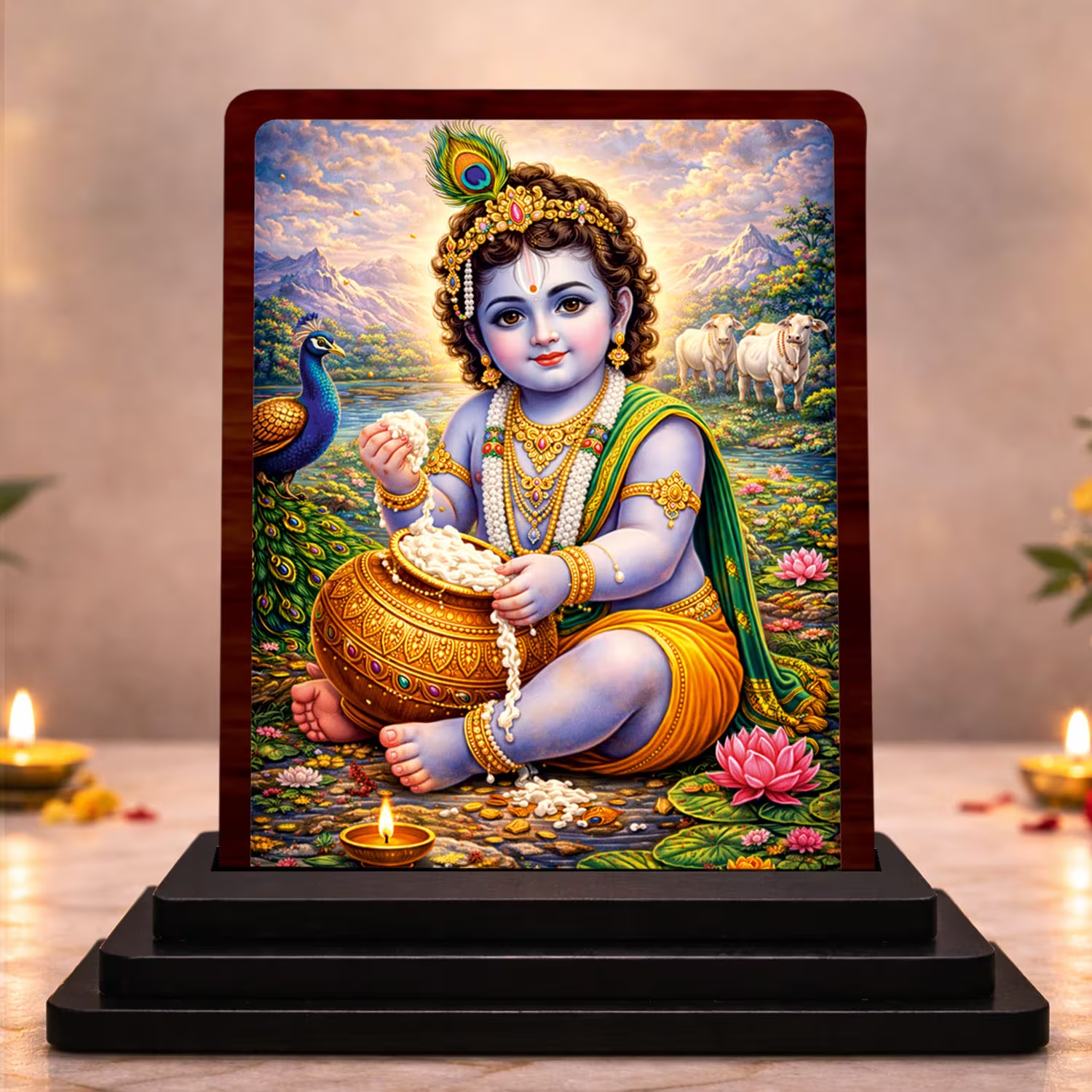
English Version
When people speak of krishna ji history, they often remember only one image: the flute in His hand, the smile on His lips, the blue-hued child of Vrindavan, or the wise charioteer of the Mahabharata. But in India, Krishna Ji has never lived in just one form. He has walked into homes, temples, villages, and festivals in many beloved roops—each region holding Him close in its own way, with its own songs, art, and prayer traditions.
This is the beauty of Krishna Ji: He is at once the playful Bal Krishna, the tender Makhan Chor, the divine lover of Radha, the protector of Govardhan, the guide of Arjuna, and the sacred presence that local communities continue to worship through living traditions. In one place, He is served as a child. In another, He is dressed like a royal king. Somewhere else, He is remembered through folk songs, temple rituals, or painted idols that have become part of the land itself.
Krishna Ji history: a story of love, leela, and living devotion
The heart of krishna ji history lies in leela—divine play. Scriptures, temple customs, and oral traditions all present Krishna Ji not as a distant God, but as one who enters human life with warmth, mischief, wisdom, and compassion. That is why His worship feels so intimate. Devotees do not only bow before Him; they speak to Him, sing to Him, feed Him, rock Him to sleep, and celebrate His presence like a family member.
Across centuries, this devotion created many regional expressions. Some places focused on His childhood; some on His role as a divine teacher; some on His royal form; some on His village life; and some on His bond with Radha and the gopis. These different emphases are not separate Krishnas—they are different windows into the same eternal presence.
The many roop of Krishna Ji in regional worship
One reason Krishna Ji remains so loved is that different communities have embraced His various forms according to their emotional devotion and local culture.
- Bal Krishna: Worshipped as the divine child, especially in homes and small temples.
- Makhan Chor: Loved for His playful childhood leelas in Gokul and Vrindavan.
- Radha-Krishna: Revered as the symbol of divine love and surrender.
- Dwarkadhish: Honored as the royal ruler of Dwarka, majestic and sovereign.
- Jagannath form: In the eastern tradition, Krishna appears in a uniquely sacred and powerful iconographic style.
- Venugopal or Gopala: The cowherd form, gentle with cows, flute, and forest beauty.
These forms have grown through centuries of bhakti, temple practice, poetry, dance, and local storytelling. In every region, devotees selected the aspect of Krishna Ji that matched their spiritual feeling most closely.
Regional traditions that keep Krishna Ji alive
To understand Krishna Ji deeply, one must listen to the regions that sing His name in their own tune. Each tradition adds a thread to the larger fabric of devotion.
1) Mathura and Vrindavan: the land of leela
Mathura and Vrindavan are among the most cherished centers of Krishna worship. Here, the devotion feels like a living memory. The streets, ghats, mandirs, and kirtans all seem to carry the fragrance of His childhood. In this region, Krishna Ji is remembered as the ever-present playful child, the lover of cows, the companion of the gopis, and the one whose leelas make the heart soft.
Many pilgrims come here not only to visit temples but to feel that they have stepped into a sacred story that still breathes.
2) Gujarat: Dwarkadhish and the royal Krishna
In Gujarat, Krishna Ji is especially revered as Dwarkadhish, the king of Dwarka. This is a powerful reminder that He is not only playful and tender, but also sovereign, protective, and dignified. Temple traditions here often reflect a sense of royal seva—offering, dressing, and honoring the deity with great respect.
This regional form highlights the leadership side of Krishna Ji: the one who guides, protects, and establishes dharma.
3) Odisha: Jagannath and the great household of faith
In Puri, Odisha, Krishna appears in the revered form of Lord Jagannath, deeply connected to Krishna devotion in a distinctive local tradition. The annual Rath Yatra is one of the most beloved festivals in India, where devotees gather with immense emotion to witness the Lord travel among His people.
Here, the deity is not kept far away. He comes out to meet the devotees. That simple truth carries a huge spiritual message: divinity moves toward the people who seek Him with love.
4) Karnataka: Udupi’s childlike and orderly bhakti
Udupi is famous for its Krishna temple tradition, where the worship style is disciplined, devotional, and deeply rooted in daily ritual. The deity is lovingly served with care and regularity, and the atmosphere reminds visitors that bhakti can be both tender and precise.
Udupi’s tradition shows that Krishna Ji is not worshipped only through emotion; He is also served through routine, humility, and sacred order.
5) Rajasthan: Nathdwara and Shrinathji
In Nathdwara, Krishna Ji is worshipped as Shrinathji, a form associated with Govardhan and a strong temple tradition of seva and darshan. The deity’s presence here has inspired art, textile traditions, and a deeply emotional style of worship. Devotees often feel they are receiving not just a view of the Lord, but a personal blessing through darshan.
This tradition beautifully shows how Krishna Ji history is carried by temple culture as much as by scripture.
Krishna Ji history in folk devotion and village memory
Formal temple traditions are only one part of the story. In many villages, Krishna Ji lives through folk devotion—through songs sung by elders, stories told by grandmothers, handmade swings during Janmashtami, and simple home altars where a small Bal Krishna is offered butter, tulsi, and love.
This is where the story becomes especially warm. A child hears about Krishna Ji not first in a textbook, but in the kitchen, in the courtyard, in the evening aarti, or in the melody of a local bhajan. Folk devotion keeps Krishna close to daily life. It reminds us that bhakti is not always grand; sometimes it is a bowl of makhan placed with love before a tiny idol.
Why Bal Krishna remains one of the most cherished forms
Among all the forms, Bal Krishna is especially close to the heart of families. His image as a child makes devotion feel soft, approachable, and full of affection. Parents and grandparents often tell stories of His childhood because those stories open the heart before the mind. The stealing of butter, the crawling child, the little flute player, the beloved son of Yashoda—each scene carries innocence and divine sweetness.
In many homes, the child form of Krishna Ji is kept in small temples or on prayer shelves because it invites daily remembrance. The deity feels near, as if He has come to sit quietly in the home and bless ordinary life.
Festival significance: when Krishna Ji fills streets and hearts
Krishna-related festivals are not only celebrations; they are moments when memory, devotion, and community come together. The most widely cherished is Janmashtami, the celebration of Krishna Ji’s birth. Across India, homes and temples are decorated, devotional songs are sung, and midnight worship marks the sacred arrival of the Lord.
Other festivals and temple observances also carry Krishna devotion in regional forms. In some places, Rath Yatra becomes a public expression of love. In others, temple processions, flower decorations, and special dressings create a festive darshan that devotees wait for all year.
These festivals show that Krishna Ji history is not only about the past. It is a living calendar of remembrance.
What Krishna Ji’s regional forms teach us
The different regional traditions around Krishna Ji offer a beautiful lesson: the divine can be known through many emotional pathways. Some people feel closest to Him as a child. Some as a lover of nature. Some as a king. Some as a teacher. Some as the Lord who steps out in a chariot to meet His people.
All these forms teach us something simple and profound:
- Love can be playful.
- Devotion can be disciplined.
- Faith can be local and yet universal.
- God can be near enough to touch the heart.
That is why Krishna Ji continues to be worshipped with such tenderness across India. He belongs to every region, yet He is never limited by any one region.
Krishna Ji in homes today
Even today, families keep Krishna Ji at the center of home worship. A small idol on a shelf, a photo in the prayer corner, a swing during Janmashtami, or a daily lamp before Bal Krishna can turn an ordinary room into a sacred space. Such practices are not merely decorative. They are acts of remembrance. They say, “You live here with us.”
For many devotees, a compact Bal Krishna form is especially meaningful because it fits easily into small home temples, desks, and prayer corners while still carrying a feeling of royal darshan and gentle blessing. In that spirit, you may explore the related product on our store as a devotional decor option for your sacred space.
FAQ
Who is Krishna Ji in Hindu devotion?
Krishna Ji is one of the most beloved forms of Bhagwan Vishnu, worshipped as the divine child, teacher, protector, and symbol of loving bhakti.
Why are there so many regional forms of Krishna Ji?
Because devotion grows within local culture. Different regions emphasize different aspects of Krishna Ji’s life, such as childhood, royal presence, temple seva, or divine love.
What is the importance of Bal Krishna in homes?
Bal Krishna makes devotion feel intimate and joyful. His child form is often used in home temples because it inspires affection, daily remembrance, and gentle prayer.
Which festivals are most closely linked with Krishna Ji history?
Janmashtami is the most important, while Rath Yatra and several regional temple festivals also hold deep Krishna significance.
What is the meaning of Krishna Ji’s flute in devotion?
The flute symbolizes divine call, attraction of the soul toward God, and the sweetness of surrender.
Closing thought
Krishna Ji history is not a single straight line. It is a living river that flows through many lands, many languages, and many hearts. In one place He is the child who stole butter; in another, the king of Dwarka; somewhere else, the Lord who rides in a grand chariot or appears in a uniquely sacred temple form. Yet everywhere, the feeling is the same: He comes close, and the heart softens.
That is the miracle of Krishna Ji—He is eternal, but never distant; vast, but always loving; universal, yet deeply personal.
Hindi Version
Jab hum krishna ji history ki baat karte hain, to aksar ek hi roop yaad aata hai—haath mein bansuri, hothon par muskaan, Vrindavan ka chanchal balak, ya Mahabharata ke gyaan dene wale saarthi. Lekin Bharat mein Krishna Ji kabhi ek hi roop tak simit nahi rahe. Woh gharon, mandiron, gaonon aur tyoharon mein alag-alag roopon mein baste aaye hain—har kshetra ne unhe apni bhasha, apne geet aur apni bhakti ke saath apnaya hai.
Yahi Krishna Ji ki sabse sundar baat hai: woh Bal Krishna bhi hain, Makhan Chor bhi, Radha ke priya bhi, Govardhan ke rakshak bhi, Arjun ke maargdarshak bhi, aur aise sakshat roop bhi jise local paramparaon ne apne jeevan ka hissa bana liya. Kahin unki seva bachche ki tarah hoti hai, kahin unhe raja ki tarah sajaya jata hai, aur kahin lok-geeton aur temple rituals ke through yaad kiya jata hai.
Krishna Ji history: leela, prem aur jeevit bhakti ki kahani
krishna ji history ka asli saar leela mein hai. Shastra, mandir parampara aur lok-kathayein sab unhe ek door ke Bhagwan ki tarah nahi, balki aise divya roop ki tarah dikhati hain jo haskar, khelkar, samjhaakar aur prem se jeevan mein aate hain. Isi liye unki bhakti itni apni si lagti hai. Bhakt unke saamne sirf jhukte nahi—unse baat karte hain, unke liye gaate hain, unhe bhog lagate hain aur apne parivaar ke sadasya ki tarah unka aadar karte hain.
Shatabdiyon ke saath Krishna bhakti ne alag-alag kshetriya roop liye. Kahin unka bachpan pramukh hua, kahin unka rajsi swarup, kahin unki gopiyon ke saath leela, aur kahin unka dharm-sthapak roop. Yeh sab alag Krishna nahi, balki ek hi anant roop ke alag darshan hain.
Krishna Ji ke alag roop aur kshetriya parampara
Krishna Ji ko alag-alag samudaayon ne apni bhavana aur sanskriti ke hisaab se apnaya.
- Bal Krishna: gharon aur chhote mandiron mein bachche ke roop mein pooje jaate hain.
- Makhan Chor: Gokul aur Vrindavan ki chanchal leelaon ke liye priya roop.
- Radha-Krishna: divya prem aur samarpan ka prateek.
- Dwarkadhish: Dwarka ke raja, shaktishali aur rakshak roop.
- Jagannath roop: Purab ki parampara mein ek vishisht aur atyant pavitra anubhav.
- Venugopal ya Gopala: bansuri aur gaayon ke saath van-pradesh ke komal roop.
Yeh sab roop bhakti, kavita, mandir-seva aur lok-kathaaon se nikle hain. Har kshetra ne Krishna Ji ka woh roop apnaya jo uske hriday se sabse zyada juda.
Kshetriya paramparaon mein Krishna Ji ki jeevit upasthiti
Krishna Ji ko gahraai se samajhne ke liye un kshetron ko sunna padta hai jo unka naam apni alag dhun mein lete hain. Har parampara, Krishna bhakti ki badi chadar mein ek anokha dhaaga jodti hai.
1) Mathura aur Vrindavan: leela ki dharti
Mathura aur Vrindavan Krishna upasana ke sabse priya kendra hain. Yahan bhakti ek yaad jaisi lagti hai—galiyan, ghats, mandir aur kirtan sab unke bachpan ki khushboo se bhare lagte hain. Is kshetra mein Krishna Ji ko hamesha chanchal, pyare, gaayon ke rakshak aur gopiyon ke sath prem karne wale roop mein yaad kiya jata hai.
Yahan aane wale yatri kewal mandir dekhne nahi aate, balki us pavitra kahani ka hissa banne aate hain jo aaj bhi saans leti si lagti hai.
2) Gujarat: Dwarkadhish ka rajsi roop
Gujarat mein Krishna Ji ko Dwarkadhish ke roop mein bahut shraddha se pooja jata hai. Yeh unka rajsi, rakshak aur maryadit roop dikhata hai. Yahan ki mandir paramparaon mein seva, shringar aur darshan ka aadar bahut gahra hota hai.
Is roop mein Krishna Ji humein yaad dilate hain ki woh sirf pyare balak nahi, balki dharm ke sanrakshak aur margdarshak bhi hain.
3) Odisha: Jagannath aur vishal bhakti
Puri, Odisha mein Lord Jagannath ke roop mein Krishna ki parampara bahut vishisht hai. Rath Yatra Bharat ke sabse priya tyoharon mein se ek hai, jahan hazaron bhakt apne poore mann se Bhagwan ke darshan ke liye ikattha hote hain.
Yahan sabse sundar sandesh yeh hai ki divyata bhakton se door nahi rehti; woh unse milne khud aati hai.
4) Karnataka: Udupi ki anushasit bhakti
Udupi Krishna mandir ki parampara apni niyamit seva, anushasan aur gahri bhakti ke liye prasiddh hai. Yahan Krishna Ji ki seva bahut prem aur lagan se hoti hai. Atmosphere yeh batata hai ki bhakti sirf bhav nahi, niyam aur nishtha bhi hai.
Udupi ki parampara Krishna Ji ki uss shakti ko dikhati hai jo niyamit seva aur vinamrta mein bhi chamakti hai.
5) Rajasthan: Nathdwara aur Shrinathji
Nathdwara mein Krishna Ji ko Shrinathji ke roop mein pooja jata hai. Govardhan se judi is parampara ne shringar, seva aur darshan ko atyant bhavuk bana diya hai. Bhakt yahan sirf ek murti nahi dekhte, balki apne liye ek anugrah ka anubhav karte hain.
Yeh parampara dikhati hai ki Krishna Ji history sirf granthon mein nahi, mandir sanskriti mein bhi jeevit rehti hai.
Lok bhakti aur gaon ki yaadon mein Krishna Ji
Sacchi kahani yahin aur sundar ho jaati hai. Kai gaonon mein Krishna Ji ki yaad lok-geeton, dadi-nani ki kahaniyon, Janmashtami ke jhoolon aur ghar ke chhote mandiron mein jeeti hai. Yahan unhe makhan, tulsi aur prem se bhog lagaya jata hai.
Ek bachcha Krishna Ji ko kisi kitab se pehle rasoi, aangan, sandhya aarti ya bhajan ki dhun se pehchanta hai. Lok bhakti unhe rozmarra ke jeevan ke bahut kareeb rakhti hai.
Bal Krishna roop itna priya kyon hai?
Bal Krishna parivaron ke dil ke bahut kareeb hote hain. Unka bachche ka roop bhakti ko komal, pyara aur apnapan bhara bana deta hai. Yashoda ke laadle, makhan chori karne wale, ghutnon ke bal chalne wale chhote Krishna—yeh sab drishya mann ko nirmal kar dete hain.
Isi liye ghar ke mandiron mein Bal Krishna ka roop bahut priy hai. Woh aisa lagta hai jaise Bhagwan ghar aakar chupchaap aashirwad de rahe hon.
Tyohar: jab Krishna Ji ghar-ghar aur gali-gali mein bas jaate hain
Krishna se jude tyohar sirf utsav nahi hote; woh yaad, bhakti aur samudaay ka milan hote hain. Inmein sabse pramukh hai Janmashtami—Krishna Ji ke janm ka pavitra utsav. Is din ghar aur mandir sajte hain, bhajan gaaye jaate hain aur madhyaratri pooja hoti hai.
Kuch kshetron mein Rath Yatra, mandir yatra, phoolon ka shringar aur vishesh darshan bhi Krishna bhakti ko saal bhar yaadgar banaye rakhte hain.
Krishna Ji ke alag roop humein kya sikhate hain?
Krishna Ji ki regional parampara humein yeh bahut pyara paath deti hai ki divyata ko anek bhavnaon se mehsoos kiya ja sakta hai. Koi unhe bachche ke roop mein paata hai, koi prem ke roop mein, koi raja ke roop mein, koi guru ke roop mein, aur koi unhe apni nagari mein aate huye Bhagwan ke roop mein.
- Prem chanchal bhi ho sakta hai.
- Bhakti anushasit bhi ho sakti hai.
- Vishwas sthaniya bhi ho sakta hai aur sarvabhaumik bhi.
- Bhagwan dil ke bahut kareeb bhi ho sakte hain.
Isi liye Krishna Ji Bharat ke har kshetra mein itne prem se puje jaate hain.
Aaj ke gharon mein Krishna Ji
Aaj bhi kai parivaar apne ghar ke mandir mein Krishna Ji ko sthaan dete hain. Chhoti murti, photo frame, Janmashtami ka jhoola ya Bal Krishna ke saamne roz ka deepak—yeh sab ghar ko pavitra bana dete hain. Yeh sirf sajavat nahi, yaad aur samarpan ka roop hai.
Isi bhav ke saath, ek compact Bal Krishna form chhote home temples, desks aur prayer corners ke liye bahut upyukt ho sakta hai. Aap chahein to Explore the related product on our store.
FAQ
Krishna Ji kaun hain?
Krishna Ji Bhagwan Vishnu ke sabse priya aur lokpriya roopon mein se ek hain, jinhe divya balak, guru, rakshak aur prem ke prateek ke roop mein pooja jata hai.
Krishna Ji ke itne alag roop kyon hain?
Kyonki bhakti local sanskriti ke saath badhti hai. Har kshetra Krishna Ji ke jeevan ke kisi na kisi roop ko aur gahraai se apnata hai.
Bal Krishna gharon mein kyon pooje jaate hain?
Bal Krishna bhakti ko pyara, apna aur rozmarra ka bana dete hain. Unka roop prem, seva aur yaad ko jagata hai.
Krishna Ji history se kaun se tyohar jude hain?
Janmashtami sabse mahatvapurn hai, aur kai kshetron mein Rath Yatra aur temple utsav bhi bahut maayne rakhte hain.
Krishna Ji ki bansuri ka kya arth hai?
Bansuri divya aahvan, aatma ki bhagwan ki ore khinch aur samarpan ki madhurta ka prateek hai.
Antim baat
Krishna Ji history ek seedhi rekha nahi, balki prem ki nadi hai jo alag-alag bhoomiyon, bhashaaon aur hridayon se hokar behti hai. Kahin woh makhan churane wale balak hain, kahin Dwarka ke raja, kahin rath par virajman mahan Bhagwan, aur kahin mandir ke pavitra roop. Lekin har jagah anubhav ek hi hai—woh paas aate hain aur mann pighal jata hai.
Yahi Krishna Ji ka chamatkar hai: woh anant hain, par door nahi; mahaan hain, par premal; sarvabhaumik hain, par bahut apne.