
Hanuman Jayanti Significance: A Dadi’s Story of Devotion, Rituals, and Faith
April 28, 2026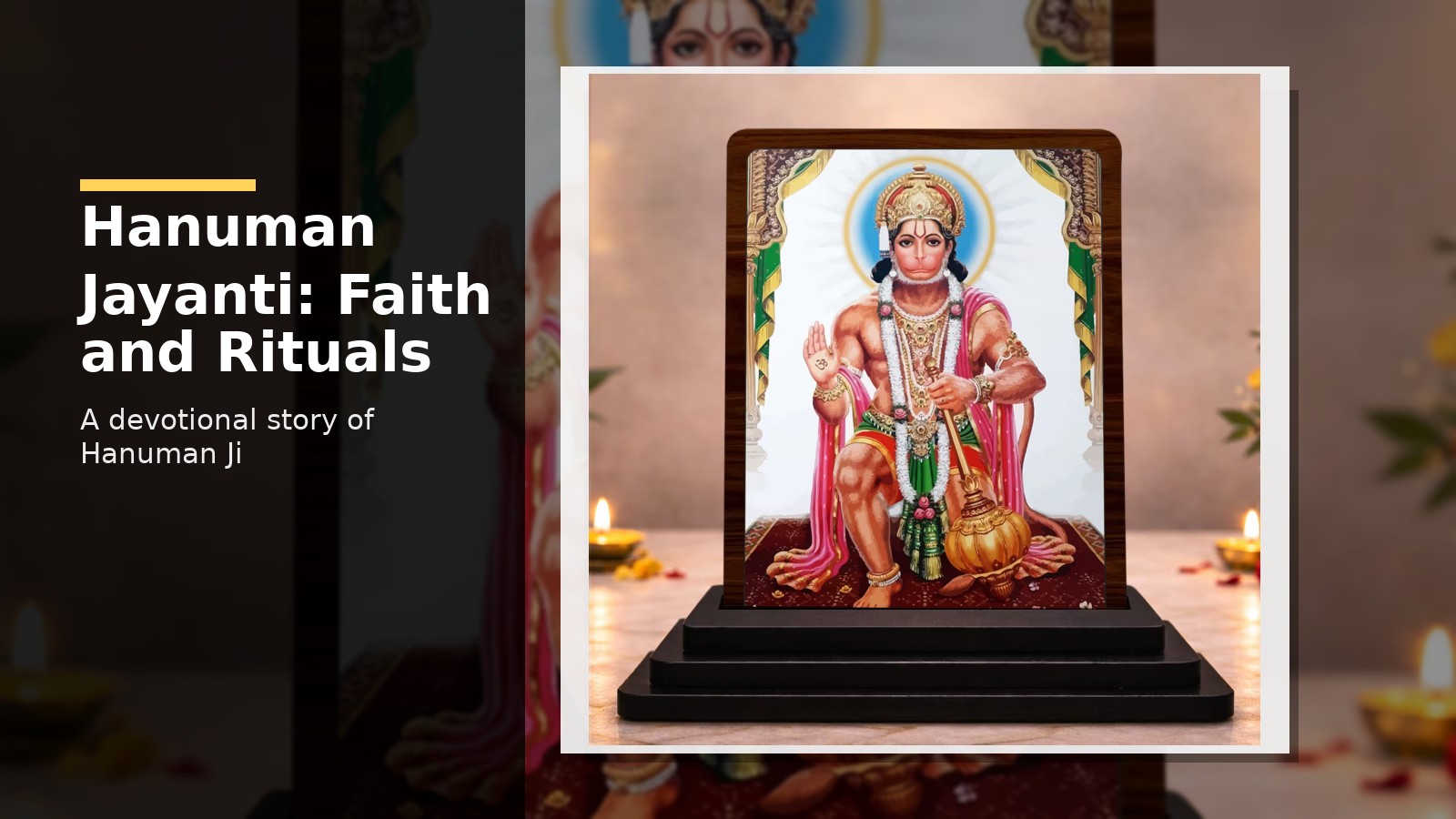
English Version
Hanuman jayanti significance is not only about one festival day on the calendar. For many families, it is the morning when the house feels a little quieter, the incense rises a little slower, and the heart remembers Hanuman Ji as the one who carries courage, loyalty, and humble service in his hands. I still remember how, in my childhood, Dadi would wake us early, wash the puja thali carefully, and say, “Aaj Hanuman Ji ko sirf phool nahi, apni nishtha bhi chadhaani hai.” Offer not just flowers today, but your faith too.
That simple line stayed with me. Because Hanuman Jayanti is celebrated not only to remember a divine birth, but to renew a way of living. It is a day of devotion, self-control, chanting, and gratitude. It reminds devotees that true strength is never loud; it is steady, selfless, and rooted in seva.
Who is Hanuman Ji?
Hanuman Ji is one of the most beloved forms of devotion in Indian spiritual life. Known as Bajrangbali, Anjaneya, and Sankat Mochan, he is worshipped as a symbol of unwavering bhakti, courage, intelligence, and protection. His life is deeply connected with Lord Rama, and through the Ramayana, he became the eternal example of service without ego.
People do not pray to Hanuman Ji only for strength in hardship. They also pray to learn how to remain humble while being powerful, how to stay devoted without asking for praise, and how to move through fear with a calm heart.
Hanuman Jayanti significance in devotional life
The festival of Hanuman Jayanti marks the birth anniversary of Hanuman Ji, though the exact celebration date can vary by region and tradition. In many places, devotees observe it with fasting, temple visits, recitation of Hanuman Chalisa, and special aarti. The deeper hanuman jayanti significance lies in this inward movement: devotees pause, clean their thoughts, and remember that devotion is a discipline, not just an emotion.
This day is especially meaningful because Hanuman Ji represents qualities that every household values:
- Strength to face difficult times
- Loyalty to dharma and truth
- Humility even after great achievement
- Protection from fear and negativity
- Seva as the highest form of worship
In many homes, the festival is also a quiet reminder that devotion can live in the smallest actions: lighting a diya, offering sindoor, chanting one name with attention, or helping someone without announcing it.
Stories that give the festival its heart
The stories of Hanuman Ji are remembered every year because they are not just tales of wonder. They are lessons in love and surrender. When he leaps across the ocean in search of Sita Mata, when he carries the Sanjeevani mountain to save Lakshman, when he bows before Shri Ram with folded hands, each moment teaches that power becomes sacred only when it is guided by devotion.
That is why Hanuman Jayanti feels so personal to many families. Children hear the stories and learn bravery. Elders hear them and remember patience. Young people hear them and understand that discipline and faith can stand together in difficult times.
Common rituals observed on Hanuman Jayanti
Across many communities, the rituals are simple, heartfelt, and deeply symbolic. While practices may differ by region, these are some of the most common traditions:
- Early morning bath and cleanliness before puja
- Visit to Hanuman mandir or a home shrine
- Hanuman Chalisa recitation and sundarkand paath in some homes
- Offering sindoor, flowers, jasmine garlands, or laddoos
- Lighting a diya and doing aarti with family
- Fasting or vrat, depending on family tradition
- Charity and seva, especially food donation or helping the needy
These rituals are not about display. They are about focus. They help devotees slow down, gather their thoughts, and offer the day to Hanuman Ji with sincerity.
Why sindoor, flowers, and laddoos matter
Many devotees wonder why certain offerings are especially associated with Hanuman Ji. Sindoor has a special place in Hanuman worship because of the well-known devotional story connected with his love and service toward Shri Ram and Sita Mata. Flowers express purity. Laddoos, offered as prasad, reflect sweetness and gratitude. Every offering carries a feeling more than a material value.
When a family places these items before the murti, the act becomes a quiet conversation: “We remember you. We trust you. Please keep us steady.”
Hanuman Chalisa and the power of regular remembrance
For many devotees, the Hanuman Chalisa is the center of Hanuman Jayanti observance. Its verses are sung with faith in homes, temples, and gatherings. The prayer is cherished because it is both poetic and practical. It asks for courage, clarity, and protection, but it also trains the mind to return again and again to divine remembrance.
That regular repetition is part of the festival’s deeper meaning. Hanuman Ji is not just celebrated once a year. He is remembered whenever fear arrives, whenever work feels heavy, whenever the heart needs steadiness. In that sense, Hanuman Jayanti opens the door to a year-long discipline of devotion.
Famous temples associated with Hanuman Ji
Across India, there are many revered Hanuman temples that draw devotees through the year, especially on Tuesdays, Saturdays, and Hanuman Jayanti. Some of the best known include:
- Hanuman Garhi, Ayodhya – a highly revered site for devotees of Shri Ram and Hanuman Ji
- Sankat Mochan Hanuman Temple, Varanasi – known for deep faith and steady devotion
- Jakhu Temple, Shimla – associated with the towering Hanuman presence in devotional memory
- Salasar Balaji, Rajasthan – a major pilgrimage center for many families
These temples are cherished not only for their architecture or fame, but because devotees feel a living connection there. The air of chanting, bells, and offerings gives people a sense of being held by tradition.
Spiritual meaning behind the festival
At its heart, Hanuman Jayanti is about becoming a little more like Hanuman Ji in the inner life. Not his form, of course, but his qualities. The festival asks us to be less restless, less ego-driven, and more devoted to what is right. It reminds us that the strongest heart is the one that serves without needing applause.
This is why the day feels both emotional and practical. It comforts those in distress, but it also calls for action: discipline in speech, restraint in habits, and kindness in conduct. In a world that often celebrates noise, Hanuman Ji celebrates devotion with dignity.
How families keep the tradition alive
Every family adds its own touch. Some make a small mandir corner with a Hanuman idol. Some gather in the evening for aarti after work. Some teach children the meaning of the Chalisa line by line. Some visit a temple together and share prasad on the way back. These moments may appear ordinary, but over the years they become memory, and memory becomes faith.
If you are building a small prayer space at home, a compact Hanuman image or idol can help keep the remembrance close and daily. A neatly placed devotional piece on a shelf, desk, or mandir corner can turn an everyday space into a quiet reminder of strength and bhakti. Explore the related product on our store.
Frequently asked questions
Why is Hanuman Jayanti celebrated?
Hanuman Jayanti is celebrated to honor the birth of Hanuman Ji and to remember his devotion, courage, and service to Shri Ram.
What is the main hanuman jayanti significance?
The main hanuman jayanti significance is spiritual renewal. It reminds devotees to strengthen faith, practice humility, and live with discipline and seva.
How do devotees observe Hanuman Jayanti?
Devotees usually fast, visit temples, recite Hanuman Chalisa, offer sindoor and prasad, perform aarti, and engage in charity or service.
Which prayers are most common on this day?
Hanuman Chalisa is the most widely recited prayer, and in some homes, Sundarkand paath is also performed.
Is Hanuman Jayanti only a temple festival?
No. It is also a family and personal devotion day, where people remember Hanuman Ji through prayer, reflection, and simple acts of kindness.
Closing reflection
Hanuman Jayanti is beautiful because it is both grand and simple. Grand, because it celebrates a beloved divine form whose presence fills temples and stories. Simple, because it asks only for sincerity, remembrance, and a heart ready to serve. That is the quiet power of Hanuman Ji: he makes devotion feel strong, and strength feel gentle.
And perhaps that is why, even after so many years, the same aarti, the same chalisa, the same red sindoor, and the same little lamp on the tray still touch us so deeply. They remind us that faith does not always arrive with noise. Sometimes it arrives like Dadi’s voice in the morning, soft but certain, asking us to bow, to remember, and to begin again.
Hindi Version
Hanuman jayanti significance sirf calendar ki ek tithi nahi hai. Bahut se gharon mein yeh woh subah hoti hai jab ghar thoda shaant lagta hai, agarbatti ki khushboo thodi dheere uthti hai, aur dil Hanuman Ji ko yaad karta hai—us roop mein jismein sahas, nishtha aur seva ek saath milte hain. Mujhe bachpan ki woh subah aaj bhi yaad hai, jab Dadi hum sab ko jaldi utha deti thi, puja thali saaf karti thi, aur kehti thi, “Aaj Hanuman Ji ko sirf phool nahi, apni nishtha bhi chadhaani hai.”
Yeh baat seedhi thi, par bahut gehri thi. Kyunki Hanuman Jayanti sirf janmotsav nahi, balki jeene ka tareeka yaad dilane wala din hai. Yeh bhakti, sanyam, jap, aur gratitude ka parv hai. Yeh batata hai ki asli shakti shor mein nahi, balki sthirata, namrata aur seva mein hoti hai.
Hanuman Ji kaun hain?
Hanuman Ji Indian spiritual jeevan ke sabse priya aur prabhavshali dev-roopon mein se ek hain. Unhe Bajrangbali, Anjaneya aur Sankat Mochan ke naam se bhi pooja jata hai. Ve asim bhakti, veerata, buddhi aur raksha ke prateek maane jate hain. Unka jeevan Shri Ram se anokhe roop se juda hua hai, aur Ramayana ke madhyam se ve bina ahankar ke seva ke adarsh ban gaye.
Log Hanuman Ji se sirf sankat ke samay bal maangne ke liye prarthana nahi karte. Ve isliye bhi prarthana karte hain taaki ve seekh saken ki shakti ke saath namrata kaise rakhen, bina prashansa ke bhi bhakti kaise nibhayein, aur darr ke beech bhi man ko kaise sthir rakhein.
Hanuman jayanti significance ka adhyatmik arth
Hanuman Jayanti Hanuman Ji ke janm ka smaran karne ka din hai, lekin iski tithi alag-alag paramparao mein thodi bhinn ho sakti hai. Kai sthanon par vrat, mandir darshan, Hanuman Chalisa path aur aarti ke saath yeh parv manaya jata hai. Iska gehra hanuman jayanti significance andar ke badlav mein hai: bhakt apne vicharon ko saaf karte hain, thoda rukte hain, aur yaad karte hain ki bhakti sirf bhavna nahi, anushasan bhi hai.
Yeh din isliye aur bhi mahatvapurn hai kyunki Hanuman Ji un sab gunon ke prateek hain jinhe har ghar samman deta hai:
- Bal mushkil samay ka samna karne ke liye
- Nishtha satya aur dharma ke prati
- Namrata badi uplabdhiyon ke baad bhi
- Raksha darr aur nakaratmakta se
- Seva ko sabse badi pooja maanne ke liye
Bahut se gharon mein yeh parv chhoti-chhoti kriyāon ka bhi smaran karata hai—diya jalana, ek man se naam japna, ya bina bataye kisi ki madad kar dena.
Woh kahaniyan jo parv ko jeevit banati hain
Hanuman Ji ki kahaniyan har saal isliye yaad ki jati hain kyunki ve keval chamatkar ki kahaniyan nahi, balki prem aur samarpan ki seekh hain. Jab ve Sita Mata ki khoj mein samudra langhte hain, jab Lakshman ke pran bachane ke liye Sanjeevani parvat utha lete hain, jab Shri Ram ke saamne jhuke hue haath jodte hain—har pal yahi sikhata hai ki shakti tabhi pavitra hoti hai jab use bhakti ka marg mile.
Isi liye Hanuman Jayanti bahut se parivaron ke liye vyaktigat ban jati hai. Bacche kahaniyan sun kar veerta seekhte hain. Bade log patience aur sthirta yaad karte hain. Aur jawan pidhiyan samajhti hain ki anushasan aur bhakti ek saath chal sakte hain.
Hanuman Jayanti par kiye jaane wale aam rituals
Alag-alag paramparaon mein riwaaz thode alag ho sakte hain, lekin kuch pramukh practices bahut jagah dekhi jaati hain:
- Subah snaan aur safaai ke baad puja
- Hanuman mandir darshan ya ghar ke mandir mein pooja
- Hanuman Chalisa path aur kuch gharon mein sundarkand paath
- Sindoor, phool, mala aur laddoo ka bhog
- Diya aur aarti parivaar ke saath
- Vrat, ghar ki parampara ke anusaar
- Seva aur daan, khaaskar annadan ya zaruratmandon ki madad
Yeh sab display ke liye nahi, balki dhyan ke liye hote hain. Inse man thoda dheere hota hai, aur bhakti adhik gahri.
Sindoor, phool aur laddoo ka mahatva
Bahut se bhakt yeh sochte hain ki Hanuman Ji ko kuch vishesh bhog hi kyon chadhta hai. Sindoor ka sambandh unki prasiddh bhakti-katha se joda jata hai. Phool shuddhata ka prateek hain. Laddoo prasad ke roop mein madhurata aur krtagyata dikhate hain. Har bhog ka arth vastu se zyada bhaavna mein hota hai.
Jab parivar murti ke aage yeh bhog rakhta hai, to ek nishabd samvad hota hai: “Hum aapko yaad karte hain. Hum aap par vishwas karte hain. Humein sthir rakhna.”
Hanuman Chalisa aur niyamit smaran ki shakti
Bahut se bhakton ke liye Hanuman Chalisa hi Hanuman Jayanti ka kendr hoti hai. Iske shlok gharon, mandiron aur sangathit path mein shraddha se gaaye jate hain. Yeh isliye priya hai kyunki yeh kavyaatmak bhi hai aur practical bhi. Yeh sahas, spashtata aur raksha ki prarthana karta hai, aur saath hi man ko baar-baar divine remembrance ki taraf laata hai.
Yeh niyamit dohrav hi parv ka gehra sandesh hai. Hanuman Ji ko sirf ek din ya ek tyohar mein nahi, balki har us samay yaad kiya jata hai jab darr aaye, kaam bhaari lage, ya dil ko sthirta ki zarurat ho. Is sense mein Hanuman Jayanti saal bhar ki bhakti ka darwaza kholta hai.
Hanuman Ji se jude prasiddh mandir
Bharat mein kai prasiddh Hanuman mandir hain jo saal bhar bhakton ko kheenchte hain, khaaskar Mangalvaar, Shanivaar aur Hanuman Jayanti par. Kuch prasiddh sthalon mein shamil hain:
- Hanuman Garhi, Ayodhya – Shri Ram aur Hanuman Ji ke bhakton ke liye atyant pavitra sthal
- Sankat Mochan Hanuman Temple, Varanasi – gahri shraddha aur sthir bhakti ka kendr
- Jakhu Temple, Shimla – Hanuman Ji ki unchi aur divya upasthiti se joda gaya sthaan
- Salasar Balaji, Rajasthan – bahut se parivaron ka mahatvapurn tirth
Yeh mandir sirf imarat ya prasiddhi ke liye priya nahi hote, balki isliye bhi ki bhakt wahan jeevant sambandh mehsoos karte hain. Ghanti, jap aur bhog ki dhvani parampara ka sparsh deti hai.
Parv ka adhyatmik sandesh
Hanuman Jayanti ka mool sandesh hai ki hum andar se Hanuman Ji jaise thode aur banen—unki murti jaise nahi, balki unke gunon jaise. Yeh parv kehta hai ki hum bechaini kam karein, ahankar kam karein, aur dharma ke prati adhik samarpit hon. Yahi sachchi shakti hai: bina prashansa ki chahat ke seva karna.
Isliye yeh din ek saath emotional aur practical dono lagta hai. Yeh sankat mein aashwasan deta hai, lekin saath hi aacharan, sanyam aur daya ka aagrah bhi karta hai. Aaj ki shor bhari duniya mein Hanuman Ji bhakti ko gaurav ke saath jeena sikhate hain.
Parivaar is parampara ko kaise jinda rakhte hain
Har parivaar apni alag chhata jodta hai. Kuch gharon mein chhota Hanuman mandir-kona hota hai. Kuch log shaam ko kaam se laut kar aarti karte hain. Kuch bacchon ko Chalisa ki panktiyon ka arth samjhate hain. Kuch parivaar mandir jaakar prasad saath le aate hain. Yeh chhote pal dekhne mein saadharan lagte hain, lekin saalon mein yeh yaad ban jate hain, aur yaad bhakti ban jati hai.
Agar aap ghar mein chhota sa prayer space bana rahe hain, to ek compact Hanuman idol ya image roz ki yaad ko paas rakhne mein madad kar sakta hai. Shelf, desk ya mandir corner par rakha gaya devotional piece ghar ke kisi bhi kone ko shanti aur bhakti ka sanket bana deta hai. Explore the related product on our store.
Frequently asked questions
Hanuman Jayanti kyon manaya jata hai?
Hanuman Jayanti Hanuman Ji ke janm aur unki bhakti, veerata aur Shri Ram ke prati seva ko yaad karne ke liye manaya jata hai.
Hanuman jayanti significance kya hai?
Hanuman jayanti significance ka mool arth hai atmaik punarjagaran. Yeh shraddha, namrata, anushasan aur seva ko majboot banane ki yaad dilata hai.
Hanuman Jayanti kaise manate hain?
Bhakt aam taur par vrat rakhte hain, mandir jaate hain, Hanuman Chalisa padhte hain, sindoor aur prasad chadhate hain, aarti karte hain aur daan ya seva karte hain.
Is din ka sabse prachalit paath kaunsa hai?
Hanuman Chalisa sabse adhik padhi jaane wali prarthana hai, aur kuch gharon mein Sundarkand paath bhi hota hai.
Kya Hanuman Jayanti sirf mandir ka parv hai?
Nahi. Yeh parivaar aur vyaktigat bhakti ka bhi din hai, jahan log prarthana, manan aur sadacharan ke through Hanuman Ji ko yaad karte hain.
Antim vichar
Hanuman Jayanti isliye sundar hai kyunki yeh ek saath mahan aur saral dono hai. Mahan, kyunki yeh ek priya divya roop ka utsav hai jiska prabhav mandiron aur kahaniyon mein jeevit rehta hai. Saral, kyunki yeh bas sachchai, smaran aur seva ke liye taiyaar dil maangta hai. Hanuman Ji ki asli shakti yahi hai: ve bhakti ko majboot banate hain aur shakti ko komal.
Shayad isi liye, itne saalon baad bhi wahi aarti, wahi Chalisa, wahi lal sindoor aur thali ka chhota diya hamein itna chhoo jata hai. Ve yaad dilate hain ki bhakti hamesha shor ke saath nahi aati. Kabhi-kabhi woh Dadi ki subah wali awaaz ki tarah aati hai—धीरे, par poori nishchayat ke saath—jo humein jhukne, yaad karne aur phir se shuru karne ko kehti hai.