
English Version
When people search for ganesh ji history, they are often looking for more than a single story. They want to know why Ganesh Ji feels so close to ordinary homes, why he appears in so many forms, and how one beloved deity can be worshipped with such different local customs across India. That is the beauty of Ganpati. He is one, yet he lives in many hearts, many languages, and many regional traditions.
In one place he is called Ganpati Bappa, in another Vighnaharta, in another Vinayaka or Pillaiyar. The names change, the songs change, the clay and stone forms change, but the feeling remains the same: “Come home, bless us, remove our obstacles, and sit with us like family.”
Ganesh Ji History: One Deity, Many Regional Traditions
The story of Ganesh Ji is not preserved in one single style. Across India, local devotion has shaped how people imagine him, sing to him, and place him in worship. This is why ganesh ji history is also a history of regional love.
In Maharashtra, Ganesh Chaturthi became a grand public celebration, especially in later centuries, with household devotion and community pandals both becoming part of the festival spirit. In Tamil Nadu, Ganesh is widely worshipped as Pillaiyar, often seen as the gentle first deity to be remembered before any beginning. In Karnataka, Andhra Pradesh, and Telangana, his worship is equally warm, with many local temples and village customs keeping his presence alive in everyday life. In North India too, his image stands at the doorway of beginnings, whether it is a house prayer, a wedding, a new business, or a child’s first school day.
That is what makes Ganesh Ji special. He is not distant. He belongs to the threshold of life—where something new is about to begin.
Who Is Ganesh Ji in Devotional Memory?
In devotional memory, Ganesh Ji is the son of Shiva and Parvati, the child whose form carries a deep spiritual lesson. His elephant head, large ears, curved trunk, and small eyes are not just beautiful details; they are symbols devotees have loved for centuries.
- Elephant head — wisdom, dignity, and deep memory
- Large ears — the ability to listen patiently
- Small eyes — focus and inner concentration
- Trunk — adaptability and strength
- Mouse vehicle — humility, and control over desire
These symbols are one reason Ganesh Ji is remembered first in many prayers. Devotees do not see only a deity of ritual. They see a gentle teacher who shows how to live with steadiness, simplicity, and awareness.
The Familiar Legends That Keep Him Close
Many families know the story of how Ganesh Ji became the remover of obstacles, or Vighnaharta. Some know the story of his cleverness, some remember his devotion to his parents, and some hear the tale of how he became the first to be worshipped. These stories are told again and again because they carry everyday meaning.
One of the most loved episodes is how Ganesh Ji’s devotion and intelligence are shown in family stories. He is not only powerful; he is tender, playful, and deeply loyal. That is why children, elders, and temple priests all feel they can approach him without fear. He is a god of beginnings, but also of comfort.
Regional Forms of Ganesh Ji Worship
Across India, devotees meet Ganesh Ji in different moods and forms. This regional variety is not contradiction; it is affection.
- Maharashtra: Ganpati is welcomed with a household-like intimacy, especially during Ganesh Chaturthi. In many homes, the idol is treated like an honored guest.
- Tamil Nadu: Pillaiyar worship often begins daily routines, with simple offerings and temple visits that feel deeply rooted in local life.
- Goa and Konkan: Family traditions and coastal customs give Ganesh worship a warm, ancestral character.
- Karnataka: Temples and home worship often center on Vinayaka, especially before auspicious events.
- North India: Ganesh Ji is commonly placed first in prayers, wedding rituals, shop inaugurations, and new ventures.
Every region adds its own color, but the heart remains the same: gratitude, blessing, and the wish for a smooth path ahead.
Famous Temples and Sacred Places Associated with Ganesh Ji
When devotees speak about ganesh ji history, temple traditions naturally come into the conversation. India is home to many revered Ganesh temples, each with its own atmosphere of faith.
Some of the most well-known include:
- Siddhivinayak Temple, Mumbai — one of the most famous and widely visited Ganesh temples in India
- Dagdusheth Halwai Ganpati, Pune — deeply beloved for public devotion and festival grandeur
- Kanipakam Vinayaka Temple, Andhra Pradesh — known for its powerful local devotion and sacred water lore
- Uchi Pillaiyar Temple, Tiruchirappalli — famous for its hilltop setting and strong regional reverence
- Shri Varasiddhi Vinayaka Temple, Karnataka — another important center of worship for many devotees
These temples are not only pilgrimage sites. They are living reminders that Ganesh Ji is carried in the daily faith of millions, not just in festival crowds.
Ganesh Chaturthi and the Joy of Public Devotion
For many families, the most visible moment in Ganesh Ji worship is Ganesh Chaturthi. The festival brings together home rituals, community prayers, music, art, and immersion ceremonies. What began as a devotional observance became, in many places, a collective expression of faith and identity.
Yet even in the midst of celebration, the emotional center remains simple: a clay idol is welcomed as a living guest, offered flowers, sweets, and prayers, and then sent off with love. The festival teaches a tender truth—what is loved with devotion is also released with devotion.
Why Ganesh Ji Feels So Close to Everyday Life
Among all divine forms, Ganesh Ji perhaps feels the most humanly near. Why? Because his stories touch the real anxieties of life: fear of delay, fear of failure, the hope of a new beginning, the wish for wisdom, and the need for peace at home.
In many households, his image is kept near the entrance, in the puja room, on a desk, or near sacred objects because he is believed to bless both the space and the people who work and pray there. His presence says: “Start with faith. Walk with patience. Do not rush your blessings.”
Devotional Meaning Hidden in His Many Forms
Different regions may sing different bhajans or shape his idol in different styles, but the spiritual message remains gentle and constant. Ganesh Ji teaches devotees to begin with humility, listen before speaking, act with wisdom, and remember that obstacles are not always meant to frighten us; sometimes they are meant to slow us down so we can grow properly.
This is why his worship is so deeply personal. A child may pray for school success, a parent for family peace, a shopkeeper for a good opening, and an elder for calm health. In each prayer, Ganesh Ji becomes the first confidant.
A Small Reminder for Your Sacred Space
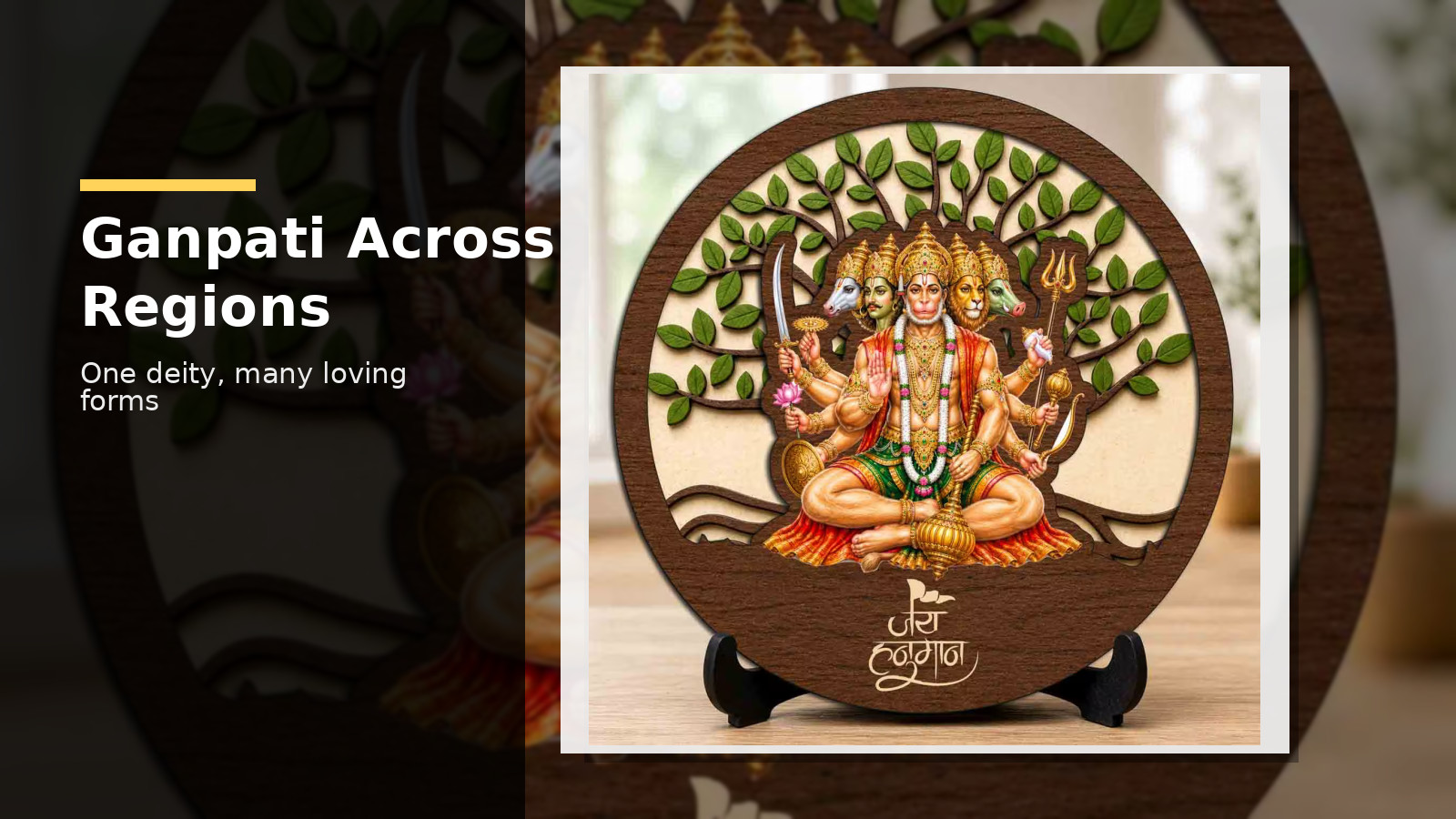
If you are creating a devotional corner at home, you may want an image that keeps this feeling alive in a neat and peaceful way. For a compact, indoor devotional setup, you can explore the related product on our store.
It is a simple way to keep the presence of Ganesh Ji near your puja room, desk, or festive corner with grace and ease.
Frequently Asked Questions
Why is Ganesh Ji worshipped first?
In devotion, Ganesh Ji is seen as the remover of obstacles and the blessing of beginnings. That is why his name is remembered before important rituals and new ventures.
What are the most common regional names of Ganesh Ji?
He is known by many names such as Ganpati, Vinayaka, Vighnaharta, and Pillaiyar, depending on region and tradition.
Why does Ganesh Chaturthi differ from place to place?
Because local traditions have shaped the way people celebrate. The core devotion is the same, but songs, offerings, and public customs reflect the culture of each region.
Which temples are strongly associated with Ganesh Ji?
Siddhivinayak in Mumbai, Dagdusheth Halwai Ganpati in Pune, Kanipakam Vinayaka Temple, and Uchi Pillaiyar Temple are among the most famous.
What is the spiritual lesson in Ganesh Ji’s form?
His form teaches wisdom, patience, humility, and the ability to move through life with steady awareness.
Hindi Version
जब लोग ganesh ji history खोजते हैं, तो वे सिर्फ एक कथा नहीं, बल्कि एक ऐसा दिव्य संबंध ढूँढ रहे होते हैं जो घर-घर में महसूस किया जाता है। Ganesh Ji इतने प्रिय क्यों हैं? वे अलग-अलग क्षेत्रों में अलग रूपों और नामों से क्यों पूजे जाते हैं? और कैसे एक ही देवता अनेक परंपराओं में भी अपनेपन से बसे रहते हैं? यही Ganpati की सबसे सुंदर बात है—वे एक हैं, पर लाखों दिलों में कई रूपों में विराजमान हैं।
कहीं उन्हें Ganpati Bappa कहा जाता है, कहीं Vinayaka, कहीं Pillaiyar, और कहीं Vighnaharta। नाम बदलते हैं, आरती बदलती है, फूल और प्रसाद बदलते हैं, लेकिन भाव नहीं बदलता—“हे गणेश जी, हमारे घर आइए, आशीर्वाद दीजिए, और हमारे रास्ते के विघ्न हर लीजिए।”
Ganesh Ji History: अलग-अलग क्षेत्रों में एक ही प्रेम की कहानी
ganesh ji history केवल पौराणिक कथाओं का संग्रह नहीं है। यह भारत की regional devotion का जीवंत इतिहास भी है। हर क्षेत्र ने Ganesh Ji को अपने तरीके से अपनाया, गाया, सजाया और जीवन का हिस्सा बनाया।
महाराष्ट्र में गणेश चतुर्थी घर और समाज—दोनों की आस्था का उत्सव बन गई। तमिलनाडु में Ganesh Ji को Pillaiyar के रूप में बहुत स्नेह से पूजा जाता है। कर्नाटक, आंध्र प्रदेश और तेलंगाना में भी उनके मंदिर और घरेलू पूजा की परंपराएँ बहुत गहरी हैं। उत्तर भारत में वे हर शुभ शुरुआत से पहले याद किए जाते हैं—चाहे नया घर हो, नया काम हो, विवाह हो या बच्चे की पढ़ाई की शुरुआत।
यही कारण है कि Ganesh Ji को सिर्फ देवता नहीं, बल्कि “शुभ आरंभ” का सजीव आशीर्वाद माना जाता है।
Ganesh Ji कौन हैं?
भक्तों की स्मृति में Ganesh Ji, भगवान शिव और माता पार्वती के पुत्र हैं। उनका हाथी-मस्तक, बड़े कान, छोटी आँखें, और सूँड़ केवल रूप नहीं, बल्कि गहरे spiritual meaning से भरे हुए प्रतीक हैं।
- हाथी का सिर — बुद्धि, गरिमा और स्मरण शक्ति
- बड़े कान — धैर्य से सुनने की क्षमता
- छोटी आँखें — एकाग्रता और भीतर की दृष्टि
- सूँड़ — लचीलापन और शक्ति
- मूषक वाहन — विनम्रता और इच्छाओं पर नियंत्रण
इसीलिए वे केवल पूजा के देव नहीं, बल्कि जीवन जीने की सीख देने वाले गुरु जैसे भी लगते हैं।
लोकप्रिय कथाएँ जो उन्हें हर घर के पास लाती हैं
Ganesh Ji से जुड़ी कथाएँ पीढ़ियों से सुनाई जाती रही हैं। कहीं वे विघ्नों को हरने वाले हैं, कहीं अपने माता-पिता के प्रति अद्भुत भक्ति दिखाते हैं, और कहीं अपनी बुद्धि से सबका मन जीत लेते हैं।
इन कहानियों की खूबसूरती यही है कि वे दूर नहीं लगतीं। Ganesh Ji शक्तिशाली होने के साथ-साथ कोमल, बालसुलभ और अपनापन देने वाले लगते हैं। इसलिए बच्चे भी उन्हें पसंद करते हैं, बड़े भी, और बुज़ुर्ग भी।
क्षेत्रीय रूपों में Ganesh Ji की पूजा
भारत के अलग-अलग हिस्सों में Ganesh Ji की पूजा में एक खास रंग दिखाई देता है। यह भिन्नता दूरी नहीं, प्रेम की विविधता है।
- महाराष्ट्र: गणपति को घर के सदस्य की तरह माना जाता है और गणेश चतुर्थी पर भव्य स्वागत होता है।
- तमिलनाडु: Pillaiyar पूजा रोज़मर्रा की जिंदगी का हिस्सा है और बहुत सहज भाव से की जाती है।
- गोवा और कोंकण: पारिवारिक परंपराएँ Ganesh worship को और भी स्नेहपूर्ण बनाती हैं।
- कर्नाटक: Vinayaka के रूप में वे शुभ कार्यों की शुरुआत में याद किए जाते हैं।
- उत्तर भारत: हर नए कार्य, मंदिर-पूजा, दुकान-उद्घाटन और विवाह में पहले उन्हीं का स्मरण होता है।
हर क्षेत्र ने अपने रंग जोड़े, पर प्रेम की धारा एक ही रही।
Ganesh Ji से जुड़े प्रसिद्ध मंदिर और तीर्थ
जब हम ganesh ji history की बात करते हैं, तो मंदिरों की परंपरा भी सामने आती है। भारत में अनेक प्रसिद्ध Ganesh temples हैं, जिनमें श्रद्धा की अद्भुत ऊर्जा महसूस होती है।
- Siddhivinayak Temple, Mumbai — भारत के सबसे प्रसिद्ध गणेश मंदिरों में से एक
- Dagdusheth Halwai Ganpati, Pune — भव्य सार्वजनिक भक्ति के लिए प्रसिद्ध
- Kanipakam Vinayaka Temple, Andhra Pradesh — स्थानीय श्रद्धा और पवित्र परंपराओं के लिए प्रसिद्ध
- Uchi Pillaiyar Temple, Tiruchirappalli — पहाड़ी स्थान और गहन आस्था के लिए जाना जाता है
- Shri Varasiddhi Vinayaka Temple, Karnataka — अनेक भक्तों के लिए अत्यंत पूज्य स्थान
ये मंदिर केवल दर्शन-स्थल नहीं, बल्कि जीवित भक्ति के केंद्र हैं।
Ganesh Chaturthi: भक्ति, आनंद और विदाई का सुंदर भाव
Ganesh Ji की पूजा का सबसे उजला रूप Ganesh Chaturthi में दिखाई देता है। घरों में मिट्टी की मूर्ति लाई जाती है, फूल, मोदक, दीप और आरती से स्वागत होता है, और फिर प्रेमपूर्वक विसर्जन किया जाता है।
यह पर्व हमें सिखाता है कि जो प्रेम से घर में आया, उसे प्रेम से विदा भी किया जाता है। यही भक्ति की कोमलता है।
Ganesh Ji इतने अपने क्यों लगते हैं?
Ganesh Ji हमारे रोज़मर्रा के जीवन से जुड़े हैं—नए काम की चिंता, परीक्षा का डर, कारोबार की शुरुआत, घर की शांति, और मन की स्थिरता। वे इन सबके बीच आश्वासन की तरह खड़े लगते हैं।
इसलिए कई घरों में उनकी छवि पूजा घर, डेस्क, प्रवेश द्वार या पवित्र कोने में रखी जाती है। उनका संदेश सरल है: “धीरे चलो, श्रद्धा से चलो, और शुरुआत मेरे नाम से करो।”
उनके रूप में छिपा spiritual meaning
Ganesh Ji के अलग-अलग regional forms हमें यह सिखाते हैं कि भक्ति का एक ही तरीका नहीं होता। किसी जगह भजन अलग है, किसी जगह मूर्ति की शैली अलग है, किसी जगह पूजा का क्रम अलग है—लेकिन भीतर का भाव एक है: विनम्रता, बुद्धि, धैर्य और शुभ आरंभ।
वे हमें याद दिलाते हैं कि बाधाएँ हमेशा डराने के लिए नहीं होतीं; कई बार वे हमें ठहरना, समझना और सही ढंग से आगे बढ़ना सिखाती हैं।
अपने पवित्र स्थान के लिए एक छोटा सुझाव
अगर आप घर में एक शांत, सुंदर और devotional corner बना रहे हैं, तो Ganesh Ji की छवि ऐसा होना चाहिए जो मन को सुकून दे। इसी भाव के साथ आप Explore the related product on our store.
यह आपके puja room, desk या festive corner में एक सादा लेकिन श्रद्धामय उपस्थिति जोड़ सकता है।
अक्सर पूछे जाने वाले प्रश्न
Ganesh Ji की पूजा सबसे पहले क्यों की जाती है?
क्योंकि उन्हें विघ्नहर्ता और शुभ आरंभ के देवता माना जाता है। इसलिए किसी भी धार्मिक कार्य से पहले उनका स्मरण किया जाता है।
Ganesh Ji के क्षेत्रीय नाम कौन-कौन से हैं?
उन्हें Ganpati, Vinayaka, Vighnaharta और Pillaiyar जैसे नामों से जाना जाता है।
Ganesh Chaturthi हर जगह अलग क्यों होती है?
क्योंकि हर क्षेत्र ने अपनी स्थानीय परंपराएँ, गीत, प्रसाद और पूजा-शैली जोड़ दी हैं। मूल भक्ति वही रहती है।
Ganesh Ji के कौन से मंदिर बहुत प्रसिद्ध हैं?
Mumbai का Siddhivinayak, Pune का Dagdusheth Ganpati, Kanipakam Vinayaka Temple और Uchi Pillaiyar Temple बहुत प्रसिद्ध हैं।
Ganesh Ji के रूप का सबसे बड़ा संदेश क्या है?
उनका रूप हमें बुद्धि, विनम्रता, धैर्य और एकाग्रता का संदेश देता है।