
Buddha History: The Story of Awakening
May 8, 2026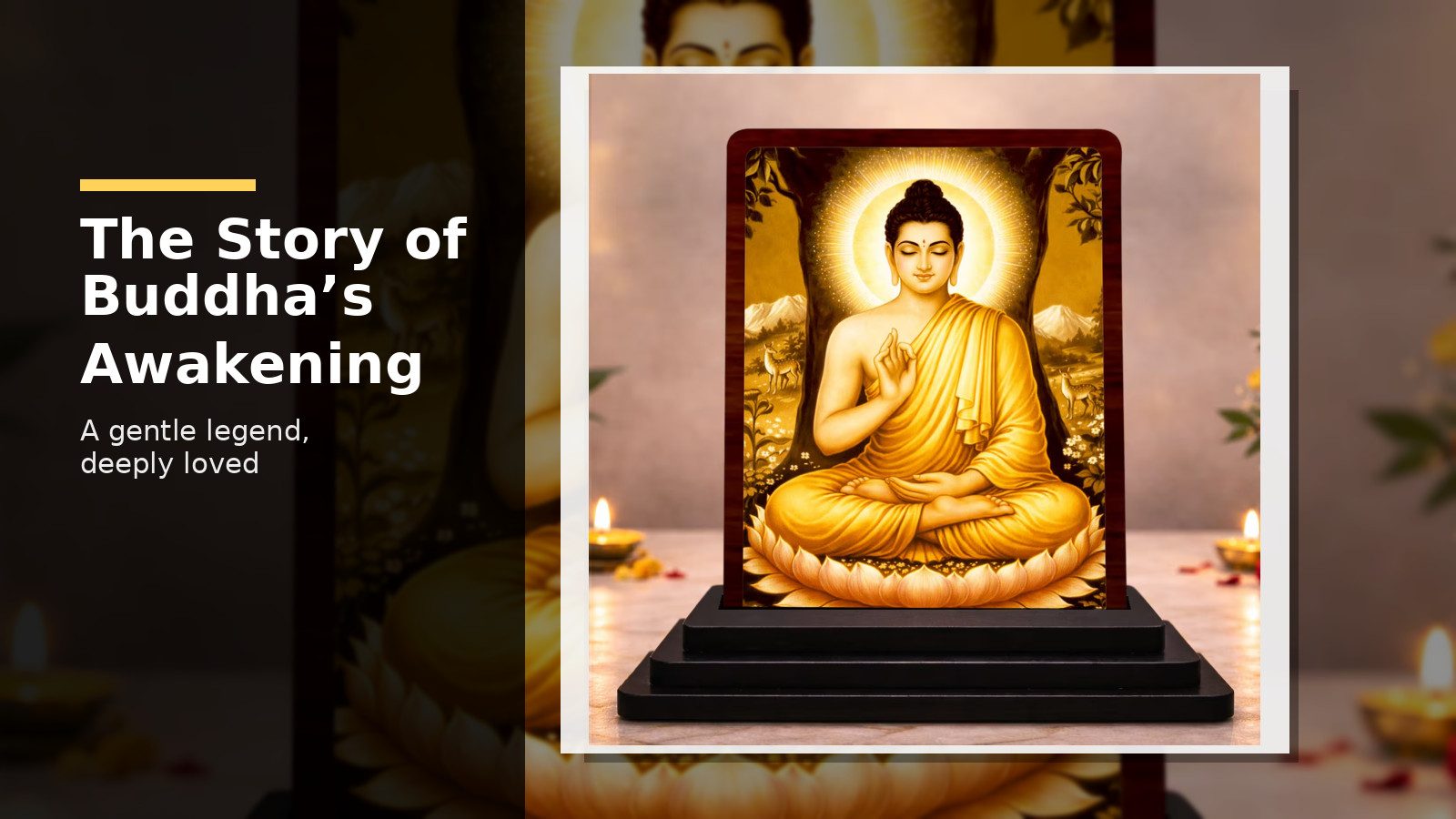
English Version
When elders speak softly about buddha history, it often feels less like a lesson and more like a lamp being lit in a quiet room. The story of Buddha is not only about one prince leaving a palace. It is about a human being asking the oldest question of all: why do we suffer, and how do we find peace?
In many homes, grandmothers and grandfathers tell this story with a kind of tenderness. They begin with a child born into comfort, shielded from pain, yet destined to walk toward truth. That is why Buddha’s origin story has remained so loved across centuries. It carries beauty, renunciation, compassion, and the calm courage to look at life honestly.
Who Was Buddha?
Buddha is remembered as Siddhartha Gautama, the prince of the Shakya clan, born in Lumbini. He later became known as the Enlightened One, or the Buddha, after attaining awakening beneath the Bodhi tree at Bodh Gaya. In devotional memory, he is not worshipped as a creator, but honored as a teacher of wisdom, compassion, and the middle path.
His life story continues to inspire because it is deeply human. He was born into privilege, yet he did not stay inside comfort. He stepped out to understand aging, sickness, and death. That decision became the turning point of a tradition that spread across Asia and shaped countless hearts.
The Origin Story: A Prince, a Palace, and a Restless Heart
The earliest legends say that Siddhartha’s father, King Suddhodana, wanted to protect him from sorrow. So the young prince grew up surrounded by beauty, music, and ease. The palace was meant to keep the world away. But life has its own way of calling a soul forward.
One day, Siddhartha saw what later traditions remember as the four sights: an old man, a sick person, a dead body, and a wandering renunciant. These images opened his heart. He understood that no wealth or power could stop aging, illness, or death. Yet he also saw that there must be a path beyond fear.
That is where the emotional heart of buddha history truly begins. The prince did not run away from life. He ran toward a deeper understanding of life.
The Great Renunciation and the Search for Truth
After leaving the palace, Siddhartha followed teachers, practiced severe austerities, and tested many paths. But neither luxury nor extreme hardship gave him what he sought. This is one reason his teaching feels timeless: he discovered that balance matters. Too much indulgence and too much denial both lead away from clarity.
At Bodh Gaya, he sat beneath the Bodhi tree in deep meditation. There, the world of distraction fell away. He awakened to profound insight about suffering, its causes, and the way beyond it. This moment is remembered as enlightenment, and it is the heart of Buddha’s sacred story.
Why Buddha’s Early Legends Matter
Early legends are not only old stories. They are devotional mirrors. They help followers understand the qualities Buddha represents:
- Compassion for all living beings
- Wisdom that comes from direct seeing
- Peace that does not depend on outer success
- Renunciation that is rooted in purpose, not bitterness
- Mindfulness as a daily way of living
These meanings are why Buddha’s story is loved in temples, meditation halls, and quiet household corners. People do not only remember what he taught. They remember how he lived.
Buddha in Devotional Tradition
In many Buddhist traditions, Buddha is honored with flowers, lamps, incense, chanting, and meditation. His image often sits in a peaceful posture, reminding devotees to slow down and breathe. A calm face, half-closed eyes, and the mudra of reassurance or meditation all point toward inner steadiness.
Devotion here is gentle. It is less about asking for miracles and more about learning how to live with awareness. For many families, Buddha’s presence in the home brings a feeling of stillness, especially in a world that moves quickly and often noisily.
Symbolism Connected with Buddha
Several sacred symbols are closely linked with Buddha’s life and teaching:
- Threefold refuge — the Buddha, the Dhamma, and the Sangha
- The Bodhi tree — awakening, shelter, and truth
- The lotus — purity rising from muddy waters
- The wheel of Dharma — the path of teaching and right understanding
- Peaceful mudras — inner balance and reassurance
These symbols are not decorative only. They carry a message: suffering can be understood, and the mind can be trained toward freedom.
Famous Places of Worship and Memory
Some places are especially important in the memory of Buddha’s life:
- Lumbini — his birthplace
- Bodh Gaya — the place of enlightenment
- Sarnath — where he gave his first sermon
- Kushinagar — where he attained parinirvana
For devotees and pilgrims, these places are not merely points on a map. They are stages in the journey of awakening. Each one carries a different shade of Buddha’s life: birth, realization, teaching, and final release.
Buddha’s Message in Everyday Life
Even today, the story of Buddha speaks clearly. It reminds us to pause before reacting, to listen before judging, and to meet pain with understanding rather than anger. His teaching does not demand that we become someone else. It asks us to see clearly who we are.
That is why buddha history is not only for scholars or monks. It belongs to anyone who has ever felt restless, disappointed, or quietly searching. In the middle of ordinary life, Buddha’s story says: peace is possible.
Festival and Devotional Importance
Buddha’s life is especially remembered during celebrations such as Buddha Purnima, which honors his birth, enlightenment, and parinirvana. On this day, many devotees reflect on kindness, discipline, and inner clarity. Temples are decorated, prayers are offered, and teachings are remembered with gratitude.
For households that keep a Buddha image in a prayer area or peaceful corner, the festival often becomes a moment to renew intention. It is a gentle reminder to live with compassion and restraint in the months ahead.
Why the Story Still Feels Close to the Heart
The beauty of Buddha’s origin story is that it never feels distant. A palace, a difficult question, a search for truth, a tree, and a moment of awakening — these are simple images, yet they hold immense depth. Perhaps that is why so many people return to this story again and again.
It teaches that comfort alone is not enough, that truth may require leaving familiar spaces, and that serenity is not an accident. It is a practice.
FAQ: Buddha History and Early Legends
Was Buddha a god?
Buddha is generally understood as an awakened teacher, not a creator god. He is revered for his enlightenment and teachings.
Why is Bodh Gaya so important?
Bodh Gaya is where Siddhartha Gautama attained enlightenment beneath the Bodhi tree. It is one of the holiest places connected with Buddha history.
What do the four sights mean?
The four sights are the old man, sick person, dead body, and renunciant. They awakened Siddhartha to the reality of suffering and the search for truth.
What is the devotional meaning of Buddha’s image at home?
A Buddha image in the home often represents peace, mindfulness, and a gentle reminder to live with compassion and balance.
Which festival is most closely linked with Buddha?
Buddha Purnima is the main festival associated with Buddha’s birth, enlightenment, and parinirvana.
A Quiet Note for Your Space
If Buddha’s story speaks to your heart, you may also enjoy keeping a calm reminder of that presence in your home or workplace. A small devotional piece can serve as a daily pause for reflection. Explore the related product on our store.
हिंदी संस्करण
जब घर के बड़े-बुज़ुर्ग धीमे और स्नेह से buddha history सुनाते हैं, तो वह कहानी कम और दीपक की रोशनी ज़्यादा लगती है। बुद्ध की कथा सिर्फ़ एक राजकुमार के महल छोड़ने की कहानी नहीं है। यह उस इंसान की यात्रा है जो जीवन के सबसे पुराने सवाल के पास पहुँचा: दुख क्यों है, और शांति कैसे मिले?
दादी-नानी जैसी आवाज़ में कही गई यह कथा हमेशा मन को छूती है। एक ऐसा बालक, जिसे सुख-सुविधा में पाला गया, फिर भी जिसने सत्य की ओर कदम बढ़ाया। इसी कारण बुद्ध की जन्म-कथा, उनकी खोज और उनका जागरण आज भी लोगों के दिल में बसते हैं।
बुद्ध कौन थे?
बुद्ध को सिद्धार्थ गौतम के रूप में याद किया जाता है, जो शाक्य वंश के राजकुमार थे और लुंबिनी में जन्मे थे। बाद में बोधगया के बोधि वृक्ष के नीचे ज्ञान प्राप्त करने के बाद वे बुद्ध, यानी जाग्रत या Enlightened One, कहलाए।
भक्ति परंपरा में बुद्ध को सृष्टिकर्ता नहीं, बल्कि करुणा, विवेक और मध्यम मार्ग के शिक्षक के रूप में सम्मान दिया जाता है। उनकी जीवन-कथा इसलिए भी प्रिय है क्योंकि वह बहुत मानवीय है।
उत्पत्ति की कथा: राजमहल और बेचैन मन
पुरानी कथाओं के अनुसार, राजा शुद्धोदन ने सिद्धार्थ को दुख से दूर रखने की कोशिश की। उनके लिए महल में सुंदरता, संगीत और आराम का संसार रचा गया। लेकिन जीवन की पुकार बहुत गहरी होती है।
कथाओं में जिन चार दृश्यों का उल्लेख आता है — वृद्ध, रोगी, मृत शरीर और संन्यासी — उन्होंने सिद्धार्थ के मन को झकझोर दिया। उन्होंने समझा कि वैभव भी बुढ़ापे, बीमारी और मृत्यु को रोक नहीं सकता।
buddha history का यही वह क्षण है जहाँ से कथा सचमुच शुरू होती है। राजकुमार भागे नहीं; वे सत्य की ओर चले।
महान त्याग और सत्य की खोज
महल छोड़ने के बाद सिद्धार्थ ने अनेक गुरुओं से शिक्षा ली, कठोर तप किया और जीवन के कई मार्गों को परखा। लेकिन न तो भोग-विलास और न ही अत्यधिक कठोरता उन्हें शांति दे सकी। इससे बुद्ध की शिक्षा का एक बहुत सुंदर संदेश मिलता है — संतुलन ही सही मार्ग है।
बोधगया में बोधि वृक्ष के नीचे गहन ध्यान करते हुए उन्हें गहरी अंतर्दृष्टि प्राप्त हुई। वहीं उन्हें दुख, उसके कारण और उससे पार जाने के मार्ग का बोध हुआ। यही उनका ज्ञान-प्राप्ति का क्षण है।
बुद्ध की प्रारंभिक कथाएँ क्यों महत्वपूर्ण हैं?
ये कथाएँ केवल पुरानी दंतकथाएँ नहीं हैं। ये भक्ति और जीवन-दर्शन की दर्पण हैं। वे बुद्ध के गुणों को समझाती हैं:
- करुणा — सभी प्राणियों के लिए
- ज्ञान — सीधे देखने और समझने की क्षमता
- शांति — जो बाहरी सफलता पर निर्भर नहीं
- त्याग — उद्देश्य के साथ, कठोरता के लिए नहीं
- स्मृति और जागरूकता — रोज़मर्रा के जीवन का हिस्सा
इसी कारण बुद्ध की कथा मंदिरों, ध्यान-स्थलों और घर के शांत कोनों में सम्मान से याद की जाती है।
भक्ति परंपरा में बुद्ध
बौद्ध परंपराओं में बुद्ध को फूल, दीप, धूप, मंत्र और ध्यान के साथ स्मरण किया जाता है। उनकी शांत मुद्रा, आधे झुके नेत्र और स्थिर चेहरा मन को भीतर की शांति की ओर ले जाते हैं।
यह भक्ति बहुत कोमल है। इसमें चमत्कार से अधिक जागरूकता, और माँग से अधिक साधना का भाव होता है।
बुद्ध से जुड़े प्रतीक
बुद्ध के जीवन और शिक्षाओं से जुड़े कुछ प्रमुख प्रतीक हैं:
- त्रिरत्न — बुद्ध, धम्म और संघ
- बोधि वृक्ष — जागरण और आश्रय
- कमल — कीचड़ में खिली पवित्रता
- धर्मचक्र — शिक्षा और सही समझ का मार्ग
- शांत मुद्राएँ — संतुलन और आश्वासन
ये प्रतीक केवल सजावट नहीं हैं। ये बताते हैं कि दुख को समझा जा सकता है और मन को मुक्त होने के लिए प्रशिक्षित किया जा सकता है।
प्रमुख तीर्थ और स्मृति-स्थल
बुद्ध के जीवन से जुड़े कुछ अत्यंत महत्वपूर्ण स्थान हैं:
- लुंबिनी — जन्मस्थान
- बोधगया — ज्ञान प्राप्ति का स्थान
- सारनाथ — प्रथम उपदेश का स्थान
- कुशीनगर — महापरिनिर्वाण का स्थान
भक्तों के लिए ये स्थान केवल नक्शे पर बिंदु नहीं हैं। ये बुद्ध के जीवन-यात्रा के पड़ाव हैं — जन्म, बोध, उपदेश और अंतिम मुक्ति।
बुद्ध का संदेश आज के जीवन में
आज भी बुद्ध की कथा हमें ठहरना सिखाती है, प्रतिक्रिया देने से पहले सोचना सिखाती है, और दुख के सामने क्रोध नहीं, समझ रखना सिखाती है। उनका संदेश यह नहीं कि हम कोई और बन जाएँ; बल्कि यह कि हम अपने भीतर स्पष्टता से देखें।
इसीलिए buddha history केवल विद्वानों या साधकों के लिए नहीं है। यह हर उस व्यक्ति की कथा है जो भीतर से शांति खोज रहा है।
बुद्ध पूर्णिमा और भक्ति का महत्व
बुद्ध पूर्णिमा पर बुद्ध के जन्म, ज्ञान प्राप्ति और महापरिनिर्वाण — तीनों को स्मरण किया जाता है। इस दिन श्रद्धालु करुणा, अनुशासन और आंतरिक शांति पर ध्यान देते हैं। मंदिर सजते हैं, प्रार्थनाएँ होती हैं, और बुद्ध की शिक्षाएँ कृतज्ञता के साथ याद की जाती हैं।
घर में बुद्ध की प्रतिमा रखने वाले लोगों के लिए यह दिन अपनी साधना को फिर से संकल्प देने का अवसर बन जाता है।
यह कहानी आज भी इतनी अपनी क्यों लगती है?
बुद्ध की जन्म-कथा इसलिए प्रिय है क्योंकि वह दूर की बात नहीं लगती। राजमहल, एक कठिन प्रश्न, सत्य की खोज, बोधि वृक्ष और जागरण — ये सरल चित्र हैं, लेकिन उनके भीतर गहराई बहुत है।
यह कथा सिखाती है कि आराम ही सब कुछ नहीं, सत्य के लिए परिचित जगह छोड़नी पड़ सकती है, और शांति अपने-आप नहीं आती — उसे साधना पड़ता है।
अक्सर पूछे जाने वाले प्रश्न
क्या बुद्ध भगवान थे?
आम तौर पर बुद्ध को सृष्टिकर्ता देवता नहीं, बल्कि एक जाग्रत शिक्षक माना जाता है।
बोधगया इतना महत्वपूर्ण क्यों है?
यहीं सिद्धार्थ गौतम को बोधि वृक्ष के नीचे ज्ञान प्राप्त हुआ था।
चार दृश्य क्या थे?
वृद्ध, रोगी, मृत शरीर और संन्यासी — इन्हीं ने सिद्धार्थ को जीवन के सत्य की ओर मोड़ा।
घर में बुद्ध की प्रतिमा का क्या अर्थ है?
यह शांति, करुणा और जागरूक जीवन का प्रतीक मानी जाती है।
बुद्ध से कौन-सा पर्व सबसे अधिक जुड़ा है?
बुद्ध पूर्णिमा बुद्ध के जीवन से सबसे महत्वपूर्ण रूप से जुड़ी हुई है।
आपके शांत कोने के लिए एक विनम्र संकेत
अगर बुद्ध की यह कथा आपके मन को छूती है, तो अपने पूजा-स्थान या कार्यस्थल में एक शांत स्मृति रखना अच्छा लगता है। Explore the related product on our store.