
Jagannath History: Kahani, Rahasya Aur Bhakti
May 3, 2026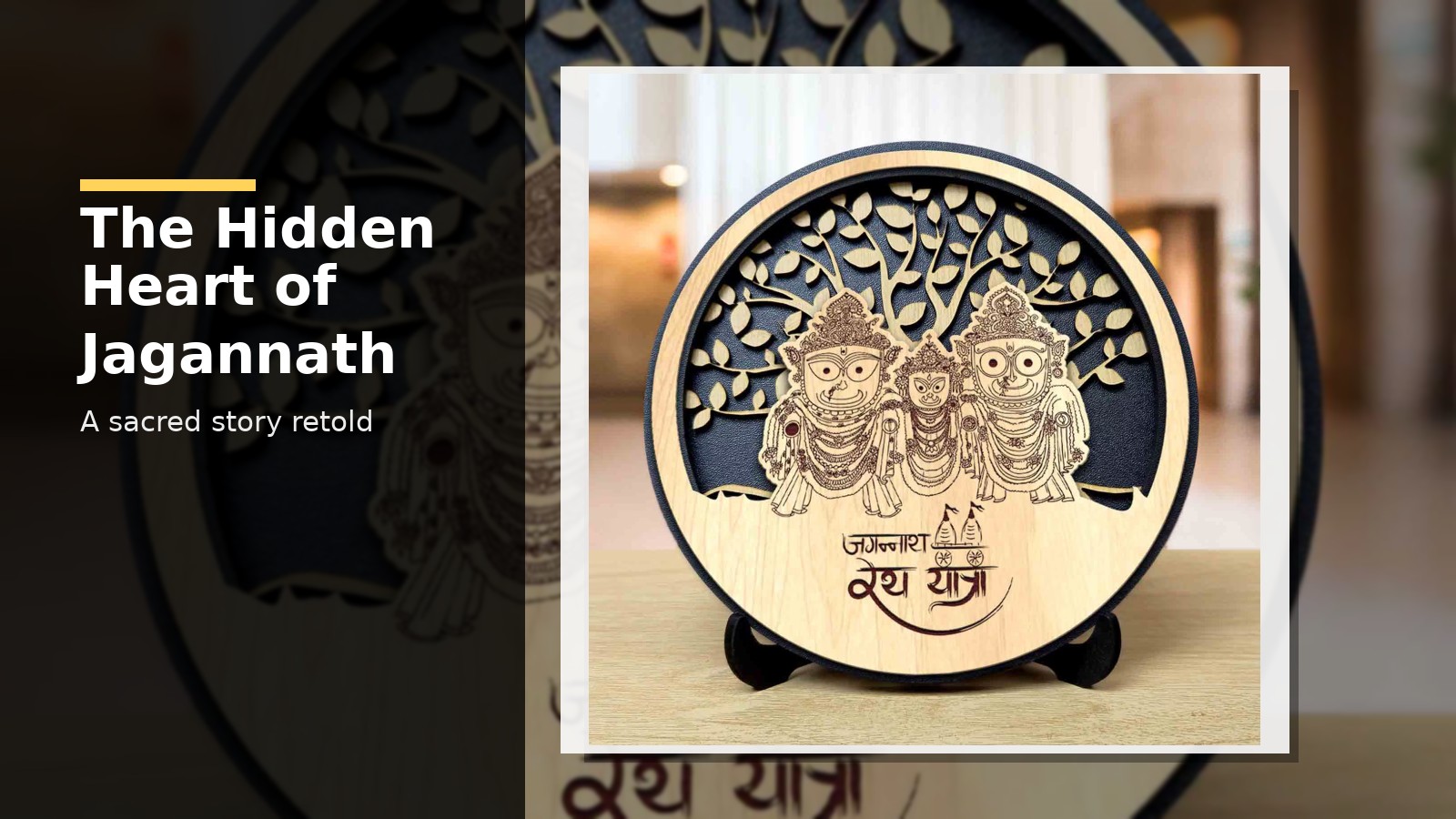
English Version
When people speak of jagannath history, they often remember the grand chariots, the crowds at Puri, and the sound of devotion rising like a tide. But behind that familiar image lives a softer, deeper story—one that feels almost like a family tale repeated by elders in the glow of evening lamps. Lord Jagannath is not only worshipped as a mighty deity; He is loved as a presence who comes close to ordinary lives, kitchen offerings, festival songs, and the intimate faith of home altars.
The name Jagannath itself carries a vast meaning: “Lord of the Universe.” Yet the way devotees relate to Him is surprisingly personal. He is the Lord who is offered simple food, the Lord who travels on a chariot like a visiting king, and the Lord whose form invites questions, wonder, and surrender all at once. That is why his story continues to feel fresh even after centuries—because it is not only history, but living devotion.
Who is Lord Jagannath?
Jagannath is worshipped most famously in Puri, Odisha, as part of the holy triad along with Lord Balabhadra and Devi Subhadra. His form is unique and unforgettable: large round eyes, a broad face, and a form that seems to hold both mystery and mercy. For many devotees, this special image is not a lack of detail—it is a spiritual invitation. Jagannath is seen beyond human likeness, beyond narrow form, and yet deeply accessible to the heart.
In devotion, Jagannath is often understood as a form of Lord Krishna. This connection gives His worship a warm emotional quality. The child who loves butter, the cowherd who plays the flute, the friend of the humble, and the king of all beings—these shades of Krishna’s grace all seem to rest quietly in Jagannath’s presence.
The old legend that still feels new
One of the most beloved threads in Jagannath tradition is the story of how the Lord chose to be worshipped in a form that the world might find unusual. The familiar legends around His manifestation tell of divine will appearing through wood, devotion, and destiny. The story of King Indradyumna and the divine craftsman Vishwakarma is often remembered in connection with the origin of the idols at Puri. Whether told in temples or at home, the tale carries the same emotional truth: the Divine does not always arrive in the shape we expect.
There is something deeply moving in that idea. Many people come to faith expecting perfection, polish, or a form they can neatly explain. But Jagannath history gently teaches another lesson: the sacred can appear in a form that is simple, incomplete to human eyes, and still overflowing with divinity. That is why so many devotees feel that Jagannath is not distant. He is close, alive, and accepting.
Why the wooden form matters
One of the most distinctive aspects of Jagannath worship is the wooden idol tradition. The deity is not represented in stone or metal in the usual way. Instead, the form is renewed through sacred ritual, symbolizing continuity through change. In devotional life, this becomes a powerful reminder: what is truly divine is not trapped by one material shape.
The periodic renewal of the deities at Puri is known to devotees as a profound sacred event. It reflects the rhythm of life itself—arrival, presence, transformation, and continuity. In this way, jagannath history is not only about an ancient temple; it is also about how faith understands time. Nothing holy is frozen. Everything sacred continues to live.
Puri Temple and the living center of faith
The Jagannath Temple in Puri is one of the most revered pilgrimage centers in India. For countless devotees, a visit to Puri is not just a journey; it is a homecoming of the soul. The temple’s spiritual atmosphere, daily rituals, and the deep discipline of worship make it a place where tradition is felt rather than merely observed.
Some of the most cherished features of Puri’s devotion include:
- The daily darshan of Lord Jagannath, Balabhadra, and Subhadra
- The sacred Mahaprasad, which devotees regard with special reverence
- The temple’s centuries-old rhythm of ritual and service
- The intimate connection between public celebration and private prayer
For many families, the thought of Puri enters the home through prayer, food offerings, festival images, and stories told to children. In that sense, the temple is not only a destination. It becomes a way of living with reverence.
Rath Yatra: when the Lord comes out to meet everyone
No discussion of Jagannath can be complete without Rath Yatra, the great chariot festival that draws millions. Yet beyond its magnificence lies its deepest message: the Lord does not remain hidden behind temple walls. He comes out to be seen, approached, and celebrated by all.
This is why Rath Yatra touches people so strongly. It is not only a procession; it is a divine gesture of accessibility. The chariot becomes a moving symbol of grace. Children, elders, pilgrims, and first-time visitors all feel that same stirring in the heart—that Jagannath belongs to everyone who calls Him with love.
In many homes, even a small remembrance of Rath Yatra can awaken devotion:
- small songs and kirtan at home
- fragrant offerings made before a home mandir
- stories shared about the chariot journey
- simple prayers asking for protection, peace, and grace
Symbolism that speaks without words
Jagannath’s form is full of symbolism. His large eyes suggest watchfulness and compassion. His distinct image reminds devotees that God is not confined by ordinary expectations. His association with chariots speaks of movement, journey, and divine invitation. Even the temple rituals around Him point toward a central spiritual truth: the Lord is both majestic and near.
For devotees who keep a home altar, Jagannath often represents a gentle balance—He is powerful enough to inspire awe, yet tender enough to fit into daily life. Morning lamps, a flower, a short prayer, or a silent bow can all become meaningful when offered with sincerity.
Famous places and devotional memory
While Puri remains the heart of Jagannath worship, the devotion has traveled widely. Across India and beyond, communities continue to sing His name, celebrate Rath Yatra, and remember Him through temple traditions. Certain places are especially associated with the spread of Jagannath devotion, and each one adds another layer to the living story of the Lord.
What remains constant is the emotional center of the worship: Jagannath is the Lord who draws people together. In temple, in procession, and in the quiet of a home corner, His presence has a way of making faith feel shared, warm, and enduring.
Why devotees feel so deeply connected
There are many deities in the Hindu tradition, each with their own sacred beauty, but Jagannath has a special tenderness in the hearts of devotees. Perhaps it is because His worship feels both royal and familiar. He is the King of the Universe, yet He is served like a beloved family member. He is grand, yet approachable. Majestic, yet comforting.
This blend of grandeur and intimacy is what gives jagannath history its lasting emotional power. It is not simply an account of a temple or festival. It is a story of how the Divine meets human life in the simplest places—at the dining floor, in the prayer room, at the roadside chariot, and in the heart that remembers with love.
A gentle devotional thought for today
If Jagannath’s story has stayed alive for so many centuries, perhaps it is because it answers a timeless human longing: to be seen, guided, and held by something greater than ourselves. In the old legends, in the yearly Rath Yatra, and in the quiet lamp lit at home, Jagannath continues to say the same thing without words—come as you are, and let devotion make the distance small.
If you would like to bring that sacred feeling into your own space, you may explore the related product on our store and keep a devotional reminder close to your home temple or desk.
FAQ
Why is Jagannath worship considered unique?
Jagannath worship is unique because of the deity’s distinctive form, the wooden idol tradition, the deep significance of Puri temple rituals, and the inclusive spirit of Rath Yatra.
Is Jagannath associated with Lord Krishna?
Yes, many devotees understand Jagannath as a form of Lord Krishna, which gives His worship a loving, intimate, and deeply devotional character.
What does Rath Yatra teach devotees?
Rath Yatra teaches that the Divine comes close to everyone. It is a festival of accessibility, grace, movement, and shared celebration.
Why do devotees keep Jagannath in the home mandir?
Many families keep Jagannath in the home mandir because He represents protection, peace, daily devotion, and the feeling that the Lord is part of household life.
Hindi Version
Jab hum jagannath history ki baat karte hain, to aksar Puri ke vishal rath, bhakton ki bheed, aur dhadakte bhakti-ras ka khayal aata hai. Lekin is parichit drishya ke peeche ek aur kahani bhi hai—zyada narm, zyada gehri, aur aisi jo kisi dadi ya nani ki sunai purani lekin nayi lagne wali katha jaisi mehsoos hoti hai. Prabhu Jagannath sirf ek mahaan devta nahi, balki ek aisi upasthiti hain jo ghar ke mandir, bhojan ke bhog, aur rozmarra ki aastha tak aa jati hai.
Jagannath ka naam hi ek vishal arth rakhta hai: “Jagat ke Nath.” Lekin unse bhakton ka rishta bahut apna-sa hai. Ve aise Prabhu hain jinhe sadhaaran bhog arpit kiya jata hai, jo rath par savar hokar jan-samanya ke beech aate hain, aur jin ki murti bhakti, rahasya aur samarpan ko ek saath jaga deti hai. Shayad isi wajah se unki kahani kitni bhi purani ho, hamesha nayi lagti hai.
Prabhu Jagannath kaun hain?
Jagannath ki sabse prasiddh aradhana Puri, Odisha mein hoti hai, jahan ve Balabhadra aur Devi Subhadra ke saath puje jate hain. Unka roop bahut vishesh aur yaadgar hai: bade gol netra, vishal mukh, aur ek aisi akriti jo rahasya aur karuna dono ko saath rakhti hai. Bahut se bhakton ke liye yeh roop adhoora nahi, balki ek aadhyatmik sandesh hai. Jagannath ko manushya-sadrish seemaon se pare, lekin hriday ke bahut nikat mana jata hai.
Bhakti parampara mein Jagannath ko Bhagwan Krishna ka roop bhi maana jata hai. Isi sambandh se unki upasana mein prem, mamta aur madhur bhav aa jata hai. Gaiyon ke charavah, murli bajane wale, bhakton ke mitra aur sabke raja—Krishna ki ye sab chhaviyaan Jagannath ke roop mein ek narm prakash ki tarah samayi hui lagti hain.
Woh purani katha jo aaj bhi nayi lagti hai
Jagannath parampara ki ek priy dhara yeh batati hai ki Prabhu ne aisa roop chuna jo duniya ko thoda alag aur ashcharyajanak lage. Raja Indradyumna aur Vishwakarma ki katha ko aksar Puri ke vigrahon ki utpatti se joda jata hai. Mandir mein ho ya ghar mein, is katha ka bhav ek hi rehta hai: Paramatma hamesha wahi roop nahi lete jo hum pehle se soch kar baithe hote hain.
Is baat mein ek bahut gehri shanti chhupi hai. Bahut se log poornata, chamak-dhamak, ya aise roop ki umeed rakhte hain jo turant samajh aa jaye. Lekin jagannath history yeh sikhati hai ki divyata kabhi-kabhi aise roop mein bhi aa sakti hai jo saral ho, manushya ki nazar mein alag ho, aur phir bhi poori tarah anugrah se bhara ho. Isi liye Jagannath ko door nahi, bahut kareeb mehsoos kiya jata hai.
Neem ki lakdi aur murti ka mahatva
Jagannath upasana ki ek sabse alag pehchan unki lakdi ki murti parampara hai. Aam taur par devtaon ki murtiyan patthar ya dhaatu mein hoti hain, lekin Jagannath ki akriti ek pavitra anushthan ke saath naye roop mein aati rehti hai. Bhakti mein yeh bahut mahatvapurn sandesh hai: jo sach mein divya hai, woh ek hi material roop mein band nahi ho jata.
Puri mein vigrahon ka punar-nirman ya punar-pratishtha bhakton ke liye ek gambhir aur pavitra anubhav hota hai. Yeh jeevan ki gati ko yaad dilata hai—aagaman, upasthiti, parivartan, aur nirantarata. Isi tarah jagannath history sirf ek mandir ki kahani nahi, balki samay ko samajhne ka bhakti-may drishtikon bhi hai. Pavitrata jamti nahi; woh jeeti rehti hai.
Puri Mandir: bhakti ka jeevit kendr
Puri ka Jagannath Mandir Bharat ke sabse shraddha-bhare tirth sthalon mein se ek hai. Anek bhakton ke liye Puri ki yatra sirf safar nahi, balki aatma ka ghar lautna hai. Mandir ka anushasan, dincharya, aur seva-parampara ise aisa sthal banati hai jahan dharm sirf dekha nahi, mehsoos kiya jata hai.
Puri bhakti ki kuch priy baatein:
- Jagannath, Balabhadra aur Subhadra ke nitya darshan
- Pavitra Mahaprasad, jise bhakt atyant shraddha se grahan karte hain
- Hundiyon purani ritual aur seva ki laya
- Jan-samuh ki khushi aur niji prarthna ka sundar sangam
Bahut se parivaaron ke liye Puri ka naam ghar ke mandir, bhog, tyohar aur bachchon ko sunai jaane wali kathaon ke saath aata hai. Isliye yeh mandir sirf ek sthaan nahi, jeevan jeene ka dharmik tareeka ban jata hai.
Rath Yatra: jab Prabhu sabse milne bahar aate hain
Jagannath ki baat ho aur Rath Yatra ka zikr na ho, aisa ho hi nahi sakta. Lekin is mahotsav ki asli mahima uski bhavna mein hai: Prabhu mandir ki deewaron ke andar band nahi rehte, ve bahar aakar sabko darshan dete hain.
Isi wajah se Rath Yatra hriday ko chhoo leti hai. Yeh sirf ek shobha-yatra nahi, balki anugrah ka chalti-phirti pehlu hai. Ratha bhakti ka aisa chinh ban jata hai jo bachche, vriddh, yatri aur pehli baar aane wale sabko ek hi bhav se jod deta hai—Jagannath un sabke hain jo unhe prem se pukarte hain.
Gharon mein bhi Rath Yatra ka smaran bhakti jaga deta hai:
- ghar mein chhota kirtan ya bhajan
- home mandir mein sugandhit phool aur bhog
- rath yatra ki kahaniyan bachchon ko sunana
- shanti, suraksha aur kripa ke liye saral prarthna
Prateek aur arth jo bina bole bhi bolte hain
Jagannath ke roop mein gahra prateekatmak arth chhupa hai. Unki vishal aankhen jagrukta aur karuna ka sanket deti hain. Unka alag roop yaad dilata hai ki Bhagwan ko samanya umeedon mein kaid nahi kiya ja sakta. Ratha ka chinh gati, yatra aur divine invitation ka sandesh deta hai. Mandir ke anushthan bhi yahi batate hain ki Prabhu mahan bhi hain aur nikat bhi.
Jinke ghar mein pooja-sthal hota hai, unke liye Jagannath ek santulit bhavna le aate hain—veer, shaktishali, aur saath hi roz ke jeevan mein samane wale. Ek diya, ek phool, ek chhoti prarthna, ya ek narm pranam bhi shraddha se diya jaye to bahut mahatvapurn ho jata hai.
Pramukh tirth aur bhakti ki yaadein
Puri Jagannath bhakti ka hriday hai, lekin unki bhakti iska simit roop nahi. Bharat aur duniya ke anek bhakton ne unka naam, unki yatra, aur unke darshan ko apni parampara ka hissa bana liya hai. Jahan-jahan Jagannath ka sankirtan aur Rath Yatra ki smriti pahunchi, wahan-wahan bhakti ne ek naya rang liya.
Sach to yeh hai ki Jagannath ki aradhana ka kendr ek hi bhav hai: ve logon ko jodte hain. Mandir mein, rath par, ya ghar ke chhote se kone mein—unki upasthiti aastha ko garima aur apnapan deti hai.
Bhakton ko unse itna prem kyon hai?
Hindu parampara mein anek devta hain, lekin Jagannath bhakton ke hriday mein ek vishesh komalta rakhte hain. Shayad isliye ki unki upasna mein rajsatta bhi hai aur ghar-jaisi narmi bhi. Ve jagat ke nath hain, phir bhi parivar ke apne-se sadasya jaise seva paate hain. Ve mahan hain, par door nahi. Bhavya hain, par santvana bhi hain.
Yahi rajsi aur aatmiya sangam jagannath history ko itni gehri bhavnatmak shakti deta hai. Yeh sirf mandir ya tyohar ka vivaran nahi, balki is baat ki kahani hai ki Divya kaise insani jeevan ke sabse saral sthanon mein aa jata hai—rasoi, pooja ghar, rath ki raah, aur prem se bhare hriday mein.
Aaj ke liye ek narm bhakti-vichar
Shayad Jagannath ki kahani itni sadiyon se jeevit isliye hai kyunki woh insani mann ki ek purani pyas ka uttar deti hai: kisi bade, karunamay aur apne-se adhik shakti se dekhe jaane ki ichchha. Purani kathaon mein, har saal ki Rath Yatra mein, aur ghar ke diye mein, Jagannath bina bole yahi kehte hain—jaisi bhi sthiti ho, prem se aao; bhakti doori ko chhoti kar deti hai.
Agar aap is pavitra bhav ko apne ghar mein mehsoos karna chahte hain, to aap Explore the related product on our store. karke apne home temple ya desk ke paas ek devotional reminder rakh sakte hain.
FAQ
Jagannath ki upasna ko vishesh kyon maana jata hai?
Jagannath ki upasna unke alag roop, lakdi ki murti parampara, Puri mandir ki pavitrata, aur Rath Yatra ke samaveshi bhav ke kaaran vishesh maani jati hai.
Kya Jagannath ko Krishna ka roop maana jata hai?
Haan, bahut se bhakt Jagannath ko Bhagwan Krishna ka roop mante hain. Isi se unki bhakti mein prem aur madhurta aa jati hai.
Rath Yatra bhakton ko kya sikhati hai?
Rath Yatra yeh sikhati hai ki Divya sabke paas aata hai. Yeh anugrah, gati, aur sabke saath milkar manaane ka tyohar hai.
Ghar ke mandir mein Jagannath rakhne ka kya bhav hai?
Bahut se parivaar Jagannath ko ghar ke mandir mein rakhte hain kyunki ve suraksha, shanti, aur dincharya mein bhakti ka saath dete hain.