
Buddha History, Parivar aur Bhakti ki Gungunahat
April 26, 2026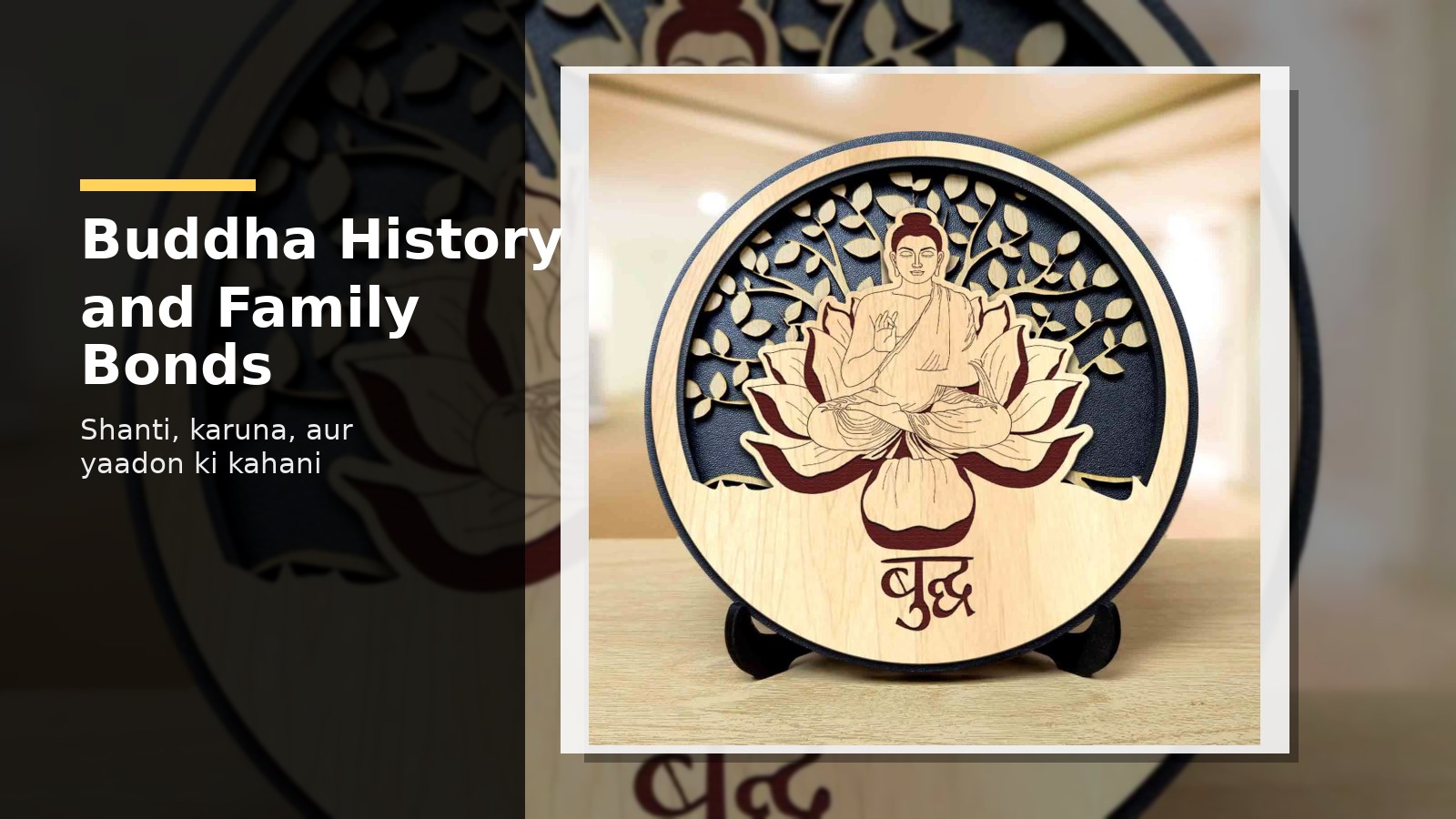
English Version
When we speak of buddha history, we are not only speaking of a great teacher; we are also touching a deeply human story of family, love, departure, and awakening. Buddha’s life reminds us that spiritual wisdom does not grow far away from ordinary life. It often begins right inside the home, among relationships, responsibilities, and the quiet ache of the heart.
There is something very tender about Buddha’s journey. He was born as Prince Siddhartha in a royal family, surrounded by comfort, care, and expectation. His early life was shaped by his father, King Shuddhodana, and his mother, Queen Maya. After her early passing, he was raised with affection in the palace setting, where the bond of family remained important even as his inner questions began to deepen. This is why Buddha history feels so close to many households: it is a story of a son, a husband, a father, and finally a seeker who chose compassion for all beings.
Who Was Buddha?
Buddha means “the awakened one.” Before his enlightenment, he was Siddhartha Gautama, a prince from the Shakya clan. He is remembered not as a god in the usual sense, but as a profoundly enlightened teacher whose life became a path for millions seeking peace. His teachings formed the heart of Buddhism and continue to guide people toward mindfulness, compassion, and freedom from suffering.
In many homes, Buddha is remembered with a quiet reverence. People place his image in a prayer corner, near a meditation space, or on a calm shelf where the mind naturally slows down. That stillness is part of his message: pause, breathe, reflect, and see life with clarity.
Family in Buddha’s Life: The Human Side of Awakening
One reason Buddha history remains so moving is that it is not disconnected from family life. In fact, family becomes the emotional background against which his awakening unfolds. His father hoped he would become a powerful ruler. His wife, Yashodhara, shared the palace life and later the pain of his departure. His son, Rahula, is often remembered in Buddhist tradition as a symbol of the personal sacrifice Siddhartha made in search of truth.
These relationships remind us that spiritual choices are never made in a vacuum. Behind every step on the path, there are hearts that feel, wait, and remember. That is why many devotees and admirers read Buddha’s life not only as history, but as a family story filled with silence, longing, and ultimately compassion.
The Turning Point: Leaving the Palace
The most known part of Buddha history is his departure from palace life. After witnessing old age, sickness, and death, Siddhartha became deeply aware of the fragility of human existence. The comfort of the palace could no longer answer the questions rising in his heart. He chose renunciation, leaving behind luxury in search of truth that could free all beings from suffering.
This turning point is often remembered with emotion because it speaks to a universal experience: at some point, every human being faces questions that comfort alone cannot answer. Buddha did not run away from life; he went deeper into it. He searched for the root of suffering and found a path of balance, awareness, and inner discipline.
Buddha’s Teachings and Their Spiritual Meaning
After years of meditation and practice, Buddha attained enlightenment under the Bodhi tree in Bodh Gaya. From that awakening came teachings that remain central to Buddhist tradition:
- The Four Noble Truths — life includes suffering, suffering has a cause, suffering can end, and there is a path leading to that end.
- The Eightfold Path — right view, right intention, right speech, right action, right livelihood, right effort, right mindfulness, and right concentration.
- Karuna or compassion — seeing the pain of others and responding with kindness.
- Mindfulness — staying aware of the present moment with honesty and calm.
These are not just philosophical ideas. They are practical ways of living. In a busy household, in a stressful office, or in a quiet prayer room, Buddha’s message still feels alive because it asks us to become more gentle with ourselves and others.
Symbols Associated with Buddha
When people think of Buddha, certain symbols naturally come to mind. These symbols are not merely decorative; they carry deep devotional and spiritual meaning.
- The Bodhi tree — awakening, patience, and spiritual victory.
- The lotus — purity rising from mud, representing inner beauty and growth.
- The meditating posture — stillness, balance, and self-control.
- The Dharma wheel — the teaching of the path and the movement of truth.
Even a simple Buddha idol in a peaceful corner can remind the family to soften their words, breathe more slowly, and value harmony in daily life.
Famous Places Connected with Buddha
Buddha history is also rooted in sacred geography. Some of the most revered places associated with his life and teachings include:
- Bodh Gaya — where Buddha attained enlightenment under the Bodhi tree.
- Sarnath — where he gave his first sermon after awakening.
- Kushinagar — where he attained Mahaparinirvana.
- Lumbini — the believed birthplace of Siddhartha Gautama.
For devotees and spiritual travelers, these places are not just landmarks. They are living reminders of a teacher whose presence continues through his words, symbols, and silence.
Buddha and the Festival Spirit in the Home
In many homes, especially during Buddhist observances and cultural gatherings, Buddha’s presence is felt as a calm blessing. Families may clean their prayer space, light a lamp, offer flowers, and sit together in quiet reflection. Even when there is no grand festival, the mood around Buddha is often festival-like in a gentle way: peaceful, grateful, and rooted in remembrance.
This is where Buddha history becomes personal. A grandmother may tell a child to sit quietly for a minute in front of Buddha’s image. A father may explain that true strength is not anger, but self-control. A mother may remind the family that compassion begins at home. Such moments are small, yet they carry the essence of Buddha’s teaching.
Why Buddha Remains Loved in Devotion
Buddha is loved because he speaks to pain without fear. He does not promise a life without struggle; he shows a way through struggle. That honesty makes his message timeless. In devotion, he represents serenity, wisdom, and the courage to look within.
For many people, keeping a Buddha image nearby is a reminder to live with dignity and softness. It can become a quiet anchor in the home, office, or meditation corner. If you are creating such a peaceful space, a thoughtfully made piece like the Buddha Round Engraved Idol can add a gentle spiritual presence without overwhelming the room.
Common Questions About Buddha History
Was Buddha a god or a human being?
Buddha was a human being who attained enlightenment. He is honored as a fully awakened teacher whose wisdom continues to guide people.
Why is Buddha important in family life stories?
Because his journey includes relationships with parents, wife, and son. His story shows how spiritual seeking can grow out of real family experience.
What is the main message of Buddha history?
The main message is that suffering can be understood and overcome through awareness, compassion, and the right path of living.
Why do people keep Buddha idols at home?
People keep Buddha idols for peace, meditation, reflection, and a reminder to live with calm and kindness.
Final Reflection
Buddha history is not only about one man who left a palace. It is about what happens when a human heart becomes large enough to hold the suffering of the world. It is about family bonds, inner searching, and the courage to choose truth over comfort. That is why Buddha’s story still feels so alive in our homes and hearts.
When we remember Buddha, we remember that peace is not far away. It begins with one mindful breath, one kind word, one quiet moment of understanding.
Hindi Version
Jab hum buddha history ki baat karte hain, to hum sirf ek mahapurush ki kahani nahi sunte. Hum ek aise jeevan ko chhoote hain jisme parivar, prem, virag, aur jagran sab ek saath bandhe hue hain. Buddha ka jeevan humein yaad dilata hai ki aadhyatmik gyaan kisi alag duniya se nahi aata; vah ghar ke andar, rishton ke beech, aur dil ki chup si pukaar mein bhi janm le sakta hai.
Buddha ka janm Prince Siddhartha ke roop mein ek raja parivar mein hua. Unke pita Raja Shuddhodana the aur mata Queen Maya. Mata ke dehant ke baad unka palan-poshan mahal ke sneh aur vyavastha mein hua. Isliye Buddha history bahut se logon ko apni lagti hai, kyunki ismein putra, pati, pita, aur ant mein ek satya-anveshi ki kahani hai.
Buddha Kaun The?
Buddha ka arth hota hai “jagrit vyakti” ya “awakened one.” Enlightenment se pehle ve Siddhartha Gautama the, jo Shakya vansh se the. Unhe kisi samanya arth mein devta nahi, balki ek param jagrit shikshak ke roop mein yaad kiya jata hai. Unki shikshaon ne Buddhism ki neev rakhi aur aaj bhi logon ko shanti, karuna aur mindfulness ka marg dikhati hai.
Bahut se gharon mein Buddha ki murti ya pratima ko pooja kshetra, dhyan sthal, ya shaant shelf par rakha jata hai. Yeh sirf sajavat nahi hoti; yeh yaad dilati hai ki rukna bhi ek sadhana hai. Saans lo, dekho, samjho, aur dheere-dheere jeevan ko spasht roop mein dekho.
Parivar: Buddha Ki Kahani Ka Narm Aur Gahra Paksh
Buddha history ka ek bahut hi karun aur manushya-sulabh pehlu unka parivar hai. Unke pita chahte the ki ve ek mahan raja banein. Unki patni Yashodhara ne mahal ka jeevan aur baad mein viyog ka dukh dekha. Unke putra Rahul ka naam bhi parampara mein us tyag ki yaad dilata hai jo Siddhartha ne satya ki khoj mein kiya.
Yeh sab sambandh humein batate hain ki aadhyatmik nirnay kabhi shunya mein nahi liye jate. Unke peeche ankhon ke aansu, intezaar, yaadein, aur prem hota hai. Isi wajah se Buddha ki kahani sirf itihaas nahi lagti; woh ek parivarik kahani bhi lagti hai.
Mahal Chhodna: Woh Mod Jahan Se Kahani Badal Gayi
Buddha history ka sabse prasiddh mod unka mahal tyagna hai. Budhape, bimari aur mrityu ko dekhkar Siddhartha ke man mein yeh gahan prashn utha ki kya sukh ke mahal se bhi peeda ka sach badal sakta hai. Unhone sab kuchh chhodkar satya ki khoj ka marg chuna.
Yeh faisla isliye yaadgar hai kyunki yeh har insaan ke anubhav se judta hai. Ek samay aata hai jab suvidha se prashnon ka uttar nahi milta. Buddha ne jeevan se munh nahi moda; unhone uski gehraai mein utarkar dukh ka mool samjha.
Buddha Ki Shikshaein Aur Unka Aadhyatmik Arth
Enlightenment ke baad Buddha ne Bodh Gaya ke Bodhi vriksh ke neeche gyaan prapt kiya. Unki shikshaein aaj bhi atyant mahatvapurn hain:
- Chaar Arya Satya — jeevan mein dukh hai, dukh ka karan hai, dukh ka ant sambhav hai, aur us ant tak pahunchne ka marg bhi hai.
- Ashtangik Marg — sahi drishti, sahi sankalp, sahi vak, sahi karm, sahi aajeevika, sahi prayas, sahi smriti, aur sahi samadhi.
- Karuna — doosron ke dukh ko samajhkar dayalu hona.
- Mindfulness — vartaman pal ko shanti aur satyata ke saath jeena.
Yeh sirf darshanik baatein nahi hain. Yeh jeene ke practical tareeke hain. Ghar, daftar, ya dhyan-kaksh—har jagah Buddha ka sandesh aaj bhi utna hi jeevit lagta hai.
Buddha Se Jude Prateek
Buddha ko yaad karte hi kuchh prateek turant man mein aate hain. Yeh prateek sajavat se kahin zyada gehra arth rakhte hain:
- Bodhi vriksh — jagran aur dhairya ka prateek.
- Kamal — keechad mein bhi pavitrata aur vikas ka sandesh.
- Dhyan mudra — shanti, santulan aur atma-niyantran.
- Dharma chakra — satya aur marg-darshan ka prateek.
Ek shaant kone mein rakhi gayi Buddha ki pratima bhi parivar ko yaad dilati hai ki vani mein komalta, vyavahar mein santulan, aur man mein shanti rakhi ja sakti hai.
Buddha Se Jude Prasiddh Sthal
Buddha history ke kuchh atyant pavitra sthal yeh hain:
- Bodh Gaya — jahan unhe Bodhi vriksh ke neeche enlightenment prapt hui.
- Sarnath — jahan unhone apna pehla updesh diya.
- Kushinagar — jahan unka Mahaparinirvana hua.
- Lumbini — jise Siddhartha Gautama ka janm-sthal mana jata hai.
Yeh sthal sirf nakshay par bane naam nahi hain. Yeh un charanon ki yaad hain jinhone duniya ko ek naye drishtikon ka uphaar diya.
Ghar Mein Bhakti Aur Buddha Ka Shant Aabhaas
Bahut se gharon mein Buddha ka smaran kisi bade utsav ki tarah nahi, balki ek shant aur pavitra anubhav ki tarah hota hai. Diya jalana, phool rakhna, kuchh pal chup baithna—yeh sab chhoti baatein lagti hain, par inmein gahri bhakti hoti hai.
Daadi-nani jaise pyaar se kah sakti hain ki “Buddha ke saamne zara dheere baitho, man ko shaant hone do.” Yeh kehna hi Buddha ki shiksha ka saar hai. Pita yeh samjha sakte hain ki asli shakti gusse mein nahi, sanyam mein hai. Maa yaad dila sakti hain ki karuna ghar se shuru hoti hai.
Kyon Aaj Bhi Buddha Itne Priya Hain?
Buddha isliye priya hain kyunki ve dukh ko chhupate nahi, uska saamna karna sikhate hain. Ve yeh vaada nahi karte ki jeevan mein kabhi kasht nahi aayega. Ve yeh dikhate hain ki kasht ke beech bhi ek marg hai—samajh, karuna aur sahi jeevan ka marg.
Isi liye kai log ghar mein Buddha ki pratima rakhte hain. Yeh yaad dilati hai ki shanti bahar nahi, andar bhi sthapit ki ja sakti hai. Agar aap apne pooja sthal ya ghar ke kone ko aur nirmal roop dena chahte hain, to Buddha Round Engraved Idol ek sundar aur sahaj spiritual touch de sakta hai.
Aam Prashn
Kya Buddha devta the?
Buddha ko mukhyataya ek jagrit manushya aur mahaan shikshak maana jata hai, jinhone enlightenment prapt ki.
Buddha ki kahani mein parivar kyun mahatvapurn hai?
Kyunki unka jeevan maa, pita, patni aur putra ke sambandhon se juda hua tha. Unki kahani ek jeevant parivarik anubhav ko darshati hai.
Buddha history ka mukhya sandesh kya hai?
Mukhya sandesh hai ki dukh ko samjha ja sakta hai aur karuna, mindfulness, aur sahi marg se us par vijay paayi ja sakti hai.
Log Buddha ki murti ghar mein kyun rakhte hain?
Shanti, dhyan, aur dayaluta ki yaad ke liye.
Antim Vichar
Buddha history humein batati hai ki ek manushya ka jagran poori manavta ke liye prakash ban sakta hai. Unki kahani mahal se shuru hokar shanti tak pahunchti hai. Usmein parivar ka dard bhi hai, satya ki khoj bhi, aur aisa sandesh bhi jo aaj ghar-ghar tak pahunchta hai.
Jab hum Buddha ko yaad karte hain, to hum yaad karte hain ki shanti bahut door nahi. Woh ek saans, ek dayalu shabd, aur ek shaant pal se shuru ho sakti hai.